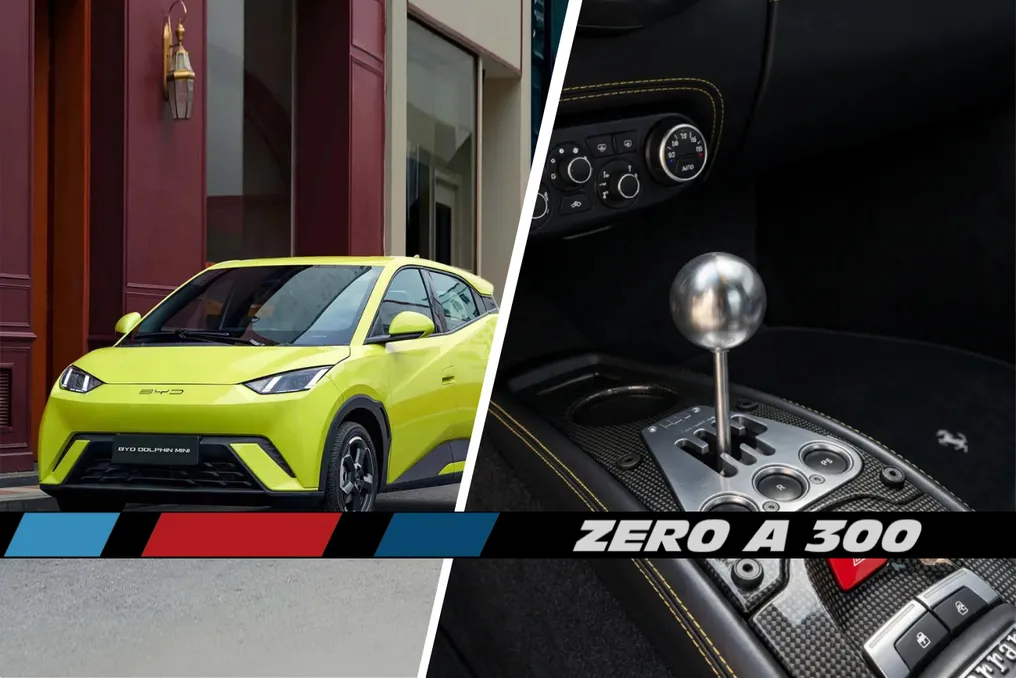
The BYD Dolphin Mini reached third place in the ranking of best-selling vehicles in Brazil during September, marking the first time an electric car has entered the overall top 3 of the market. The model registered sales of 9,385 units, trailing only the Fiat Strada and the Volkswagen Polo.
The Brazilian light vehicle market ended September with a total of 265,275 registrations, representing a 1.6% increase compared to August and surpassing the numbers from September 2025 by 14.5%. In the accumulated total for 2026, the volume reached 2,148,732 vehicles, configuring an 18.7% growth. Of this total, almost half of the sales, specifically 48.5%, occurred through the direct sales channel.
For the ranking analysis, data from JATO Dynamics was used, which allows comparison between the general ranking and retail under the same basis, although there are small discrepancies with Bright Consulting. For example, the Haval H6 appears with 6,433 units in Bright, while JATO registers 6,234 and places it in 11th position.
In the general ranking, the Fiat Strada maintained the lead with 16,002 units, followed by the Volkswagen Polo with 11,095. The BYD Dolphin Mini occupied the third position with 9,385 units, nearly tied with the Volkswagen T-Cross, which was fourth with 9,339. Other models in the top 10 included Volkswagen Tera (8,725), Fiat Argo (8,603), Fiat Pulse (7,150), Chevrolet Onix (7,133), Fiat Mobi (6,395), and Hyundai HB20 (6,314).
It was observed that the Strada and Polo remained relatively stable in the first two positions, but there was significant movement below them in September. The Dolphin Mini advanced from fifth to third place and renewed its monthly record. The T-Cross rose from eighth to fourth place, while the Tera dropped from third to fifth. The Fiat Pulse showed strong ascent, moving from 19th in August (with 4,775 units) to seventh place in September (with 7,150).
When segmenting direct sales from retail sales, the scenario changes significantly. This division refers to the revenue generated by the manufacturer or the dealership, and not necessarily the distinction between companies and individuals, since buyers such as taxi drivers or ride-share drivers may appear in both channels depending on the invoicing method.
In the retail channel, the Dolphin Mini took the lead with 5,886 units. The Volkswagen Tera was second with 4,183, followed by the Fiat Strada with 4,078. Other notable models in retail were Caoa Chery Tiggo 7 (4,015), T-Cross (3,806), Toyota Yaris Cross (3,741), Omoda 5 (3,615), Fiat Toro (3,437), Hyundai Creta (3,409), and Volkswagen Polo (3,297).
The highlight of the Dolphin Mini was not limited to the third general place; it also led retail sales with 5,886 units, although this number does not cover all individual purchases, as BYD sells the Dolphin Mini to ride-share drivers via direct sales.
The dynamics of Strada and Polo show notable differences: of the 16,002 Stradas sold, only 4,078 were registered in retail, representing just over 25%. Similarly, for the Polo, 3,297 of 11,095 units were sold in retail, less than 30%. This implies that approximately three out of every four Stradas and seven out of ten Polos had their revenue generated by the factory.
The case of the Hyundai HB20 is even more pronounced: it finished in tenth place in the general ranking with 6,314 units, but appears only in 41st in retail, with 1,069 units, indicating that more than 80% of its monthly sales were invoiced by the factory.
In contrast, the Caoa Chery Tiggo 7 jumped from 21st in the general ranking to fourth in retail, with 4,015 units sold in total and 4,015 in retail. The Omoda 5 presents an interesting data point: JATO registers 3,616 total registrations and 3,615 in retail, ranking it as the seventh best-selling car in this channel, despite being only 25th in the general ranking. The Yaris Cross and Creta also feature among the top ten in retail, models that fall outside the general top 10 due to the high volume of direct sales from manufacturers like Fiat, Volkswagen, Chevrolet, and Hyundai.
September concluded with 22.9% of light vehicles registered being electrified, an increase from 11.4% the previous year. Chinese brands represented 21.4% of the market, compared to 10.1% in September 2025.
RAM 1500 sales increase by 73% with the return of the V8
The demand for powerful engines was evidenced by the performance of the RAM 1500: after the manufacturer reintroduced V8 engines in the pickup truck, sales in the last quarter grew by 73% compared to the same period in 2025. The launch of the Ram 1500 Rumble Bee, whose entry version has a 5.7-liter V8, was the main catalyst for this interest. The demand was so intense that the entire initial stock sold out in just 90 minutes after the start of orders.
The first deliveries to the selected customers are scheduled for the fourth quarter of 2026. With this performance, Ram established itself as the sole leader in the growth of the Stellantis group in the third quarter of 2026. Driven by renewed interest in large pickups and new high-performance variants, Ram saw its total sales rise by 29% in the quarter, while the complete pickup line grew by 34%. In the overall Stellantis landscape, this resulted in a 3% increase, with 324,277 vehicles sold in the quarter.
Besides the advance of the Ram 1500 (+42%), other group models showed good performance, including the Dodge Durango (+18%), the Jeep Grand Wagoneer (+14%), and the Chrysler Pacifica (+7%). The Jeep Cherokee Hybrid also recorded its best sales month in September. Michael Orange, responsible for retail sales and network performance for Stellantis in the US, attributed these results to a 'disciplined strategy in a highly competitive market.'
Rezvani announces kit to transform any DCT into a 'manual'
Following the launch of supercars by Koenigsegg and Ferrari equipped with dual-clutch transmissions and manual controls, and with Porsche showing similar intentions, the aftermarket sector entered the fray. Rezvani, known for the Rezvani Beast, announced that it will soon make available a kit designed to convert any dual-clutch transmission into a system called 'manual'. It is important to note that this is not a genuine manual gearbox, but rather an interface with an H-shaped lever that simulates gear shifting action.
A crucial distinction lies in the fact that while existing systems incorporate a third pedal to enhance the credibility of the experience, the Rezvani kit will not include this component. Developed by Limitless Engineering, a new division created by Ferris Rezvani, the device was named Quickshift. The entrepreneur's intention is to 'recover the tactile sensation and nostalgia of changing gears in a gated gearbox', while maintaining the responsiveness and efficiency of modern transmissions.
According to Rezvani's perspective, contemporary automotive industry offers extremely fast vehicles but has lost the emotional connection with the driver, and this innovation aims to restore that bond. Technically, the lever operates as an electronic selector that communicates with the gearbox control unit, enabling shifts and downshifts with rev-matching function (the known 'electronic heel-toe'). The absence of the left pedal is intentional, as the system promises to be fully reversible, capable of being installed in a few hours without requiring permanent cuts or alterations to the vehicle structure. The first functional unit was tested on the console of a Ferrari 458 Italia, but Limitless claims the module is adaptable to the electronics of virtually any dual-clutch car on the market.
Two questions arise when analyzing this proposal. Firstly, the cost: Rezvani has never been associated with affordable projects, suggesting that converting a vehicle like a dual-clutch Golf into a 'near-manual' car would be financially unfeasible. The second point is more conceptual: without the clutch pedal, the only change in the experience would be the sound of the click when shifting gears, which might not justify losing the great advantage of a dual-clutch gearbox (much faster shifts) for only half the experience of a true manual transmission.
AC Schnitzer has a new owner and escapes bankruptcy
The traditional tuner specializing in BMW, AC Schnitzer, which faced a real risk of closure, has been acquired and is safe for now. Founded in 1987 in Aachen, Germany, the tuner has almost four decades of experience with BMW vehicles, having developed projects for Mini, Land Rover, and motorcycles. However, rising operating costs and market changes threatened the company's future.
Concerns intensified when, in March of this year, AC Schnitzer announced the cessation of its operations until the end of 2026. This announcement was motivated by the decision of the former controller, the KOHL Group, to cease manufacturing components to focus exclusively on retail and services.
Salvation came with the acquisition by AM Group Holding BV, a Dutch conglomerate focused on automotive preparation and customization, which will officially take control of the brand starting in November. This transition brings positive prospects, as AC Schnitzer will become part of an ecosystem that includes specialists in carbon fiber parts manufacturing (UBC) and one of the largest distributors in the sector in Europe (GP Products), in addition to high-end partner brands such as Urban and Heritage.
Although immediate survival is secured, the next challenge will be managerial. To maintain its relevance in the face of increasingly fierce competition, the renowned German workshop will need to reinvent its presence in the aftermarket, honoring its historical legacy while adapting to the demands of the modern scenario.