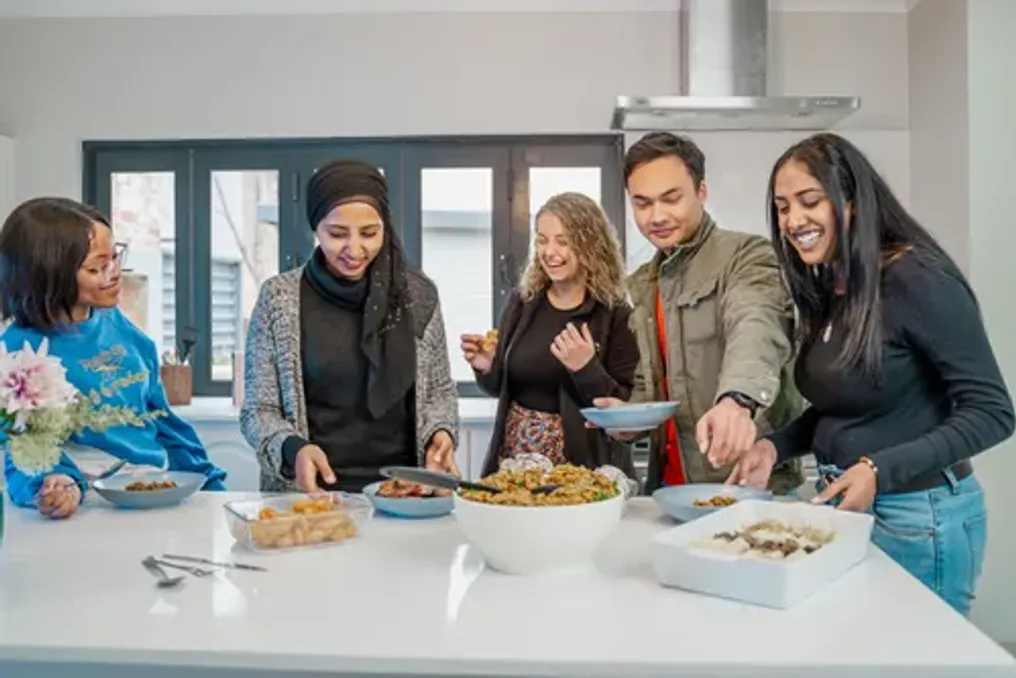
Access to nutritious food is a problem for parents in Africa, despite expert recommendations
Read more
IOL
iol.co.za

Access to nutritious food is a problem for parents in Africa, despite expert recommendations

Experts note that stronger support, accessible nutrient-rich foods, and more effective policies are needed to improve child nutrition in Africa.

Across Sub-Saharan Africa, parents are often advised on what to feed their children: it is recommended to consume more protein, fruits, vegetables, dairy products, and other nutrient-rich foods. However, for millions of households, the problem is not just a lack of nutritional knowledge. Even if parents understand which foods their children need, the recommended dishes may be unavailable or difficult to access.

According to Professor Christine Tyard-Krugel, an associate professor at the Center of Excellence in Nutrition at Northwestern University (NWU) and a certified dietitian, the concept of accessibility varies depending on the specific household. She emphasizes that accessibility depends on the family's financial capacity, not the product itself, although some foods provide significantly more nutrients or energy per unit of money spent than others.

Children need energy for growth, protein for tissue formation, as well as a reliable source of vitamins and minerals. Iron, zinc, vitamin A, and iodine are particularly important for brain and immune development. While staple foods usually provide energy, obtaining sufficient protein and micronutrients creates financial pressure on family budgets.

Tyard-Krugel points out that dark leafy greens, pumpkin, orange sweet potatoes, mangoes, and papaya can relatively affordably provide Vitamin A. Legumes, peas, and peanuts are among the cheapest sources of iron, zinc, and folate in the region. In South Africa, where products were compared directly, legumes showed the best nutrient-to-rand ratio.

Small dried fish, eaten whole including bones, are particularly valuable as they contain protein, iron, calcium, and Vitamin B12 in one affordable product.

Nevertheless, the accessibility problem remains serious. Even the cheapest nutritious foods cost two to ten times more per calorie than maize meal. Eggs, chicken, and beef remain out of reach for African households because they are too expensive.

This does not mean that families should completely give up maize, rice, cassava, or other common staple foods. These foods remain the basis of the diet because they are accessible and provide the energy children need. The greatest improvement can be achieved by what is served with them. It is advised to cook legumes with the staple food, such as beans, peas, or ground peanuts, add a spoonful of oil to increase energy and Vitamin A absorption, and add leaves at the end of cooking rather than boiling them into a puree.

Families should also remove moldy or discolored maize and peanuts before cooking, as mold can contain toxins linked to poor child growth. For children under two years old, breastfeeding remains critical: exclusively for the first six months, and then with complementary feeding until two years and beyond. Furthermore, mothers need adequate nutrition, time, and workplace protection for this to be possible.

When porridge is introduced at six months, it must be mixed correctly to ensure adequate nutrition. Tyard-Krugel warns that liquid porridge fills a small stomach but does not nourish a growing child.

Cost remains the main obstacle to dietary diversification. Last year, two-thirds of Africa's population could not afford a healthy diet, with animal products contributing significantly to this increased cost. Moreover, different foods create various practical barriers. Legumes are a separate issue: they are cheap to buy but expensive to prepare, requiring hours of fuel, which costs either money or the woman's time. Fruits and vegetables are cheap in season but spoil quickly without refrigeration equipment.

Rural communities face greater distances, limited choices, and higher prices. Within households, the person controlling the income can also determine whether the child receives nutritious food.

Tyard-Krugel argues that African governments must focus on making existing policies work. Many countries require the fortification of wheat flour or salt, but these rules mainly apply to industrial producers. Poorer households often buy products at small local mills that are not part of these systems.

Similarly, there are methods capable of reducing aflatoxin contamination in maize and peanuts by over 90% in field trials. Data on whether farmers adopt these measures is scarce, and existing evidence indicates a very low rate of adoption. The technology works, but delivery is lacking.

Governments must also develop dietary guidelines. Only 12 African countries have them, although implementing them is relatively inexpensive. Child allowances and cash transfers should be assessed based on the actual cost of a healthy diet, not 'what the budget allows.' She believes that the zero VAT rate on food should be reviewed, as the benefits are more likely to go to wealthier households, and savings do not necessarily reach consumers.

School feeding programs can make a significant contribution. The number of African children receiving school meals has increased from 66 million in 2022 to 87 million in 2024. Programs that procure goods from local farmers can simultaneously improve children's diets and strengthen the local economy.

However, school meals usually start when children are five or six years old, which is long after the critical first 1000 days of life. They cannot compensate for lost growth.

Ultimately, the responsibility cannot rest solely on parents. Parents do not always lack nutritional knowledge. While providing parents with sound nutritional advice is necessary, issues such as lack of money, time, and opportunity are barriers that must be addressed. Advice that ignores these realities can be harmful in itself. Advice that a family cannot afford does not just fail to help; it subtly shifts the blame onto the person with the least ability to change anything.
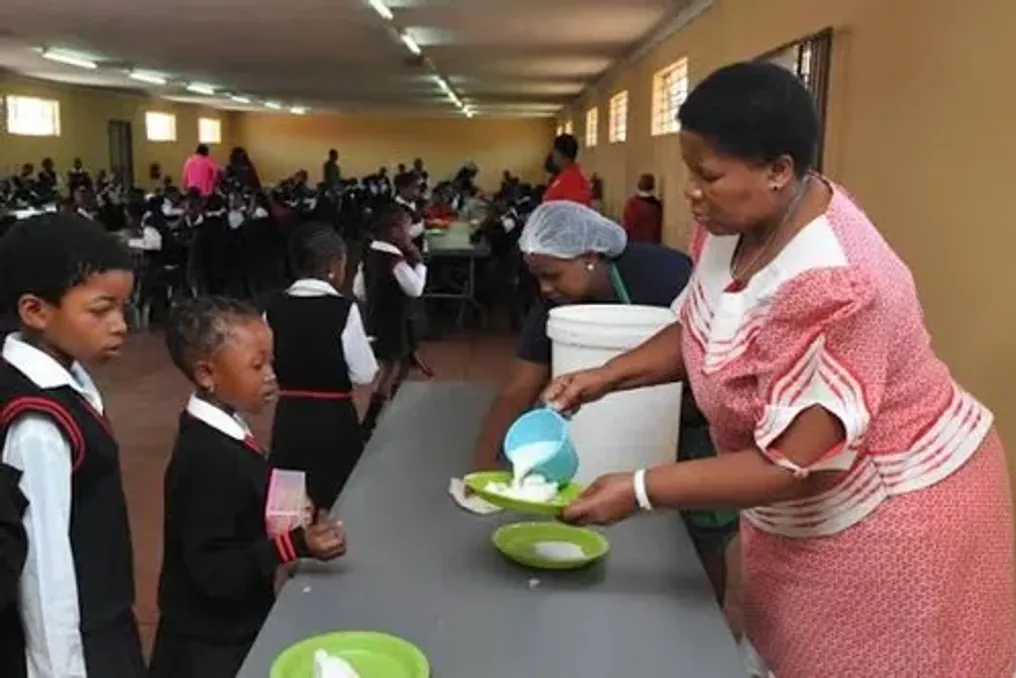
Similar stories

The Role of Technology in Improving South Africa's National School Feeding Program
Read more
iol.co.za

The Role of Technology in Improving South Africa's National School Feeding Program

The National School Nutrition Programme (NSNP) provides meals for nearly 10 million children in South Africa, representing a massive social responsibility. A natural question arises: given the scale of the program, why are technologies not being used to identify problems?

The need for systematic inspections, reporting, and compliance is acknowledged, but their sufficiency for a program of this magnitude is questioned. With technologies available for tracking parcels or monitoring bank transactions, the question arises whether similar tools can help understand what is happening in school kitchens and feeding systems in real time.

Technology should not replace personnel—kitchen staff, inspectors, or program managers—but rather serve as a tool that provides them with more comprehensive information, early warnings, and greater transparency. For example, a recent investigation revealed that 8,504 schools across seven provinces participating in the NSNP were operating without Acceptability Certificates, which confirm that food preparation facilities meet basic hygiene and safety standards.

The absence of these certificates points to monitoring issues within such a large program. When feeding almost 10 million children daily, one cannot limit knowledge to month-end events or complaints. Systems are required that allow government bodies and managers to see what is happening as it occurs, shifting from a reactive to a proactive approach.

This means the ability to quickly assess where food supplies are running low, where kitchen infrastructure is struggling, where menus are being violated, portions are changing, food safety requirements are not met, or the number of complaints is rising. It is necessary to identify patterns, rather than treating every problem as an isolated incident.

What Children Tell Researchers

A study conducted by the Centre for Social Development in Africa (CSDA) and the Food Evolution Research Centre (FERC) at the University of Johannesburg surveyed 182 children aged 10 to 12 across four provinces. It examined children's experiences with school feeding during and after the COVID-19 pandemic.

Children noted that school lunches give them energy, help them concentrate in class, and serve as a vital food source when food is scarce at home. However, they also pointed out program shortcomings: smaller portions, reduced variety, and declining food quality. Others reported feelings of hunger, fatigue, and inability to concentrate normally due to insufficient food.

Nutritional analysis also found that most NSNP meals did not meet the target contribution of 25–30% of the recommended daily intake of macro- and micronutrients. Nevertheless, the study identified positive outcomes associated with the program, such as improved attendance, punctuality, and vitality. This underscores that while the program can be extremely valuable, it may not be reaching its full nutritional potential.

What Brazil Can Teach Us

Examples from other countries demonstrate that improved monitoring is possible. At the CSDA forum at the University of Johannesburg, the experience of Brazil was discussed. Brazil has one of the largest and oldest school feeding programs—PNAE—which has been operating since 1955 and serves over 40 million children in 150,000 public schools.

Edenliza Costa de Souza Carvalho from the Brazilian National Fund for Educational Development presented information on the program, which integrates data on schools, financial transfers, dietitians, school feeding councils, accountability, and on-site monitoring. The value of this approach lies not just in having more information, but in the ability to collect various types of data to form a clearer picture of what is happening locally.

An important lesson for South Africa is that technology should not merely speed up meal counting or create large spreadsheets. It must help understand the conditions determining the safety, nutritional value, and delivery method of these meals to children. The ability to see in one system that a specific group of schools consistently reports issues with refrigeration equipment, decreased safety compliance, or increased portion complaints provides entirely different information than simply knowing the number of meals served. This allows for identifying the root cause of a problem and intervening before it becomes a crisis.

A local level example: The Tiger Brands Foundation. The foundation invested in monitoring, evaluation, research, and training systems 15 years ago when it launched its school breakfast program. It focused on standardizing data collection, strengthening reporting, and using digital tools to improve information accessibility. Its Nutrition Improvement Platform combines a web system with an offline mobile application, allowing data collection even with unstable connectivity. The foundation also uses an AI-based chatbot to provide staff access to a knowledge base and real-time monitoring data.

The essence of these innovations is not the technologies themselves, but what they enable us to do with the resulting information. If children constantly complain about small portions, this information must be visible and influence decisions. If food quality drops in a certain area, managers must identify this pattern. If a school fails to meet safety standards, the system should help determine not only the existence of the problem but also its possible cause.

Technology Cannot Build a Kitchen

Of course, technology is not a magic bullet; a dashboard will not build a kitchen, nor will AI train a food production worker. A mobile app will not create a refrigerator or plumbing where none exists. Technologies also do not replace the people who run school feeding programs. Their greatest value lies in reducing the time between a problem arising and someone finding out about it.

The CSDA and FERC studies did not just identify nutritional gaps; they pointed to practical improvements, including increasing fresh fruit, improving protein sources, increasing quantity, improving kitchen and storage infrastructure, strengthening menu adherence, and providing additional training for food production workers. This is what evidence should allow us to do: move from identifying a problem to understanding the next steps.

Therefore, when discussing thousands of schools struggling with basic food safety compliance, the response must be broader than mere outrage or another round of inspections. We must ask: what information was available, who had access to it, how were different pieces of information connected, and did responsible parties have the resources and authority to act?

Ultimately, this debate is less about technology and more about whether our investments are transforming into real impact. Investments have been made in school feeding, research, monitoring, digital systems, and new technologies. The current task is to connect these investments to see the complete picture, not just isolated fragments. Brazil demonstrates the possibilities of integrating data on finance, infrastructure, nutrition, and accountability, while the Tiger Brands Foundation shows how digital tools can be designed considering on-the-ground realities. And the CSDA and FERC studies remind us that all of this ultimately relates to the child in the classroom.

For this child, the school feeding program is not a budget, a dashboard, or a metric. It is the presence of enough food on the plate, its safety, its nutritional value, and its ability to provide enough energy for concentration, participation, and learning. If we are serious about ensuring nutritious food for 10 million children, we must be equally serious about understanding where the system works and where it does not.

Popular