Ticket Booking Rule: How to Get a Confirmed Ticket Even After the Running Schedule Has Been Created
Read more
Aaj Tak
www.aajtak.in

Ticket Booking Rule: How to Get a Confirmed Ticket Even After the Running Schedule Has Been Created

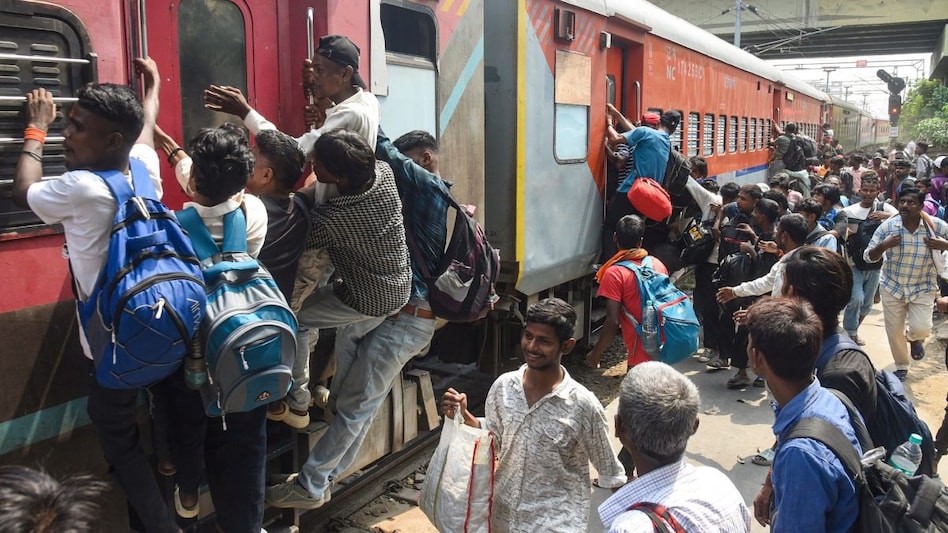
Due to the start of the holiday season and the increased number of people traveling from Delhi and Mumbai home, there is a sharp rise in demand for tickets, with many trains already fully booked and waiting lists also being long. Although the railway has announced the launch of special trains, the probability of getting a confirmed ticket even on them seems low.

Nevertheless, there are rules that allow passengers to obtain a confirmed ticket. Indian Railways has developed specific provisions under which a confirmed ticket can be obtained even after the chart (running schedule) has been prepared.

Suppose you have booked a ticket on a full train, and the chart is ready. However, if someone suddenly cancels their confirmed ticket after the chart is made, you might get a seat, but this requires rebooking. Next, we explain how a confirmed ticket can be obtained.

Indian Railways has launched a service called 'Current Booking'. This service guarantees passengers only a confirmed ticket, excluding RAC or waitlisted tickets. Under this service, if a ticket was not received before the train's departure, one can check for available seats. This requires the seat to be available and the booking window set by the railway company to be open.

If there was a long wait previously on the train, but a seat became available after the chart was prepared, the passenger can book it through the current booking function.

A senior railway official told Indian Express that if there are vacant seats or compartments left on the train after the chart preparation, they can be booked under Current Booking. This means that if a ticket was initially unavailable but later became available, the seat can be secured.

During the reservation process, the seat availability status may change due to cancellations or other reasons. When the chart is prepared, the system takes into account both RAC seats and waitlist positions. Nevertheless, if a seat or compartment remains vacant on any section of the route or during the journey, it may be provided for current booking. For example, if a passenger cancels their ticket and their seat becomes free, it may later be offered to another passenger for booking.

According to the IRCTC Current Booking guidelines, this feature has several important rules. Current booking is available for both regular passengers and agents. Through this service, only an electronic ticket (E-Ticket) can be booked. Only a confirmed ticket is issued; RAC or waitlisted tickets are not provided. The booking must be made within the time limit set by the railway.
Similar stories

From October 1st, the railway will strengthen ticket checks: documents will be required in addition to the ticket or pass
Read more
www.aajtak.in

From October 1st, the railway will strengthen ticket checks: documents will be required in addition to the ticket or pass

Passengers planning a train trip in October should know that simply having a ticket in their pocket will not be enough. Starting October 1st, the railway company is launching a large-scale ticket inspection campaign. During this check, not only the tickets themselves but also identity documents and proof of entitlement to discounted travel will be examined.

Special attention will be paid to those who purchased tickets through the PTO (Privilege Ticket Order) system, an electronic pass (e-pass), or utilized a special reservation quota or discount. It is crucial for such passengers to have the necessary papers with them during the journey.

The Central Railway will conduct a special ticket inspection from October 1st to October 31st, 2026. Railway employees will verify the authenticity of the ticket and check whether the passenger meets the criteria allowing them to travel with that ticket. Thus, the check goes beyond the mere presence of a ticket; now the basis for obtaining the ticket and compliance with the requirements for its use are being verified.

According to Dr. Swapnil Nila of the Central Railway, passengers traveling on discounted fares or established reservation quotas must carry their original identification document. If multiple people are traveling on one ticket, at least one of them must have the necessary document that complies with railway rules. These documents will allow staff to verify that the ticket was issued to the correct passenger.

This is one of the most important points. According to railway rules, if the necessary original documents are not found during the inspection, passengers traveling with the ticket may be considered traveling without a valid ticket under applicable regulations. That is, even with a ticket, the absence of a document can cause problems. Therefore, if the ticket was purchased at a discounted fare or special quota, it is necessary to check for all documents in advance.

Railway employees will also check tickets issued via e-pass and PTO, in addition to tickets with discounts and established quotas. Passengers with such tickets will also need to present their original passport. Furthermore, before starting the journey, the e-pass or PTO must be exchanged with an authorized official according to the rules.

Unreserved tickets will also be checked as part of this special campaign. The railway ticket inspector can confirm and check the ticket using the TTE application if necessary. This means that even if you do not have a reserved seat and are traveling with an unreserved ticket, its validity can be checked.

According to railway rules, various documents are recognized for identification during travel. However, it should be remembered that for passengers whose ticket is linked to any right, simply having any form of ID may not be enough; documents confirming that right may be required.

According to the Central Railway, the goal of this inspection is to prevent violations related to tickets and reservations. The railway will focus on preventing financial losses, controlling the improper use of reserved seats, and preventing fraudulent use of benefits, passes, and other privileges.

Popular