
Differences in Academic Year Schedules: Why Some UAE Schools Have an October Break While CBSE Schools Do Not
Read more
Khaleej Times
www.khaleejtimes.com

Differences in Academic Year Schedules: Why Some UAE Schools Have an October Break While CBSE Schools Do Not

For some families in the United Arab Emirates, October signifies a well-deserved five-day school holiday, while for others it is a time for exams, mastering new topics, and returning to the full pace of the academic year. This raises the question of why students in some international program schools receive an interim break, whereas many schools with Indian and Asian curricula, including CBSE schools, do not.

The main reason lies in how different curricula structure their academic years, the number of instructional days required by schools, and the calendars approved by educational authorities. Schools following the unified UAE academic calendar hold an interim break for the first semester from October 12 to 16, 2026, with students returning on October 19. However, schools using other curricula or operating under different regulatory agreements may have different schedules.

In schools with international programs, the October break is usually integrated into the rhythm of the academic year, providing students and teachers a pause after several weeks of continuous learning. Sarah O'Regan, Director and CEO of GEMS Wellington Academy in Silicon Oasis, reported that the school aligned its schedule with the directives of the UAE Ministry of Education. She noted: 'Our mid-semester break is from October 12–16. The UAE Ministry of Education asked schools to align their academic calendars, as some schools initially planned the break for October 12, and others for October 19. Therefore, we agreed on the start date of October 12.'

According to O'Regan, this break is important not only as a chance to rest but also because students face academic, social, and digital pressure, making recovery time critical. She emphasized that for modern children, rest is not just stepping away from studies, but a necessity to cope with cognitive demands, social complexity, performance pressure, and the constant stream of digital stimulation. She added that such a pause can contribute to learning rather than hinder it, as rest is part of the knowledge consolidation process.

Thomas Kinnersley, Director of Nord Anglia International School Abu Dhabi, views the October break similarly as an integral part of the academic cycle, not an interruption. He believes that a timely mid-semester break is a vital component of a successful academic year, not a break from it. In his words, education demands a lot from children who concentrate daily, solve problems, manage relationships, and respond to challenges. The benefits are felt by teachers too: teaching is an intellectually and emotionally demanding process, and staff well-being directly impacts the experience children receive at school. The break allows teachers to step away from the semester pace, spend time with family, and return with the energy and mental clarity needed for the best work with students.

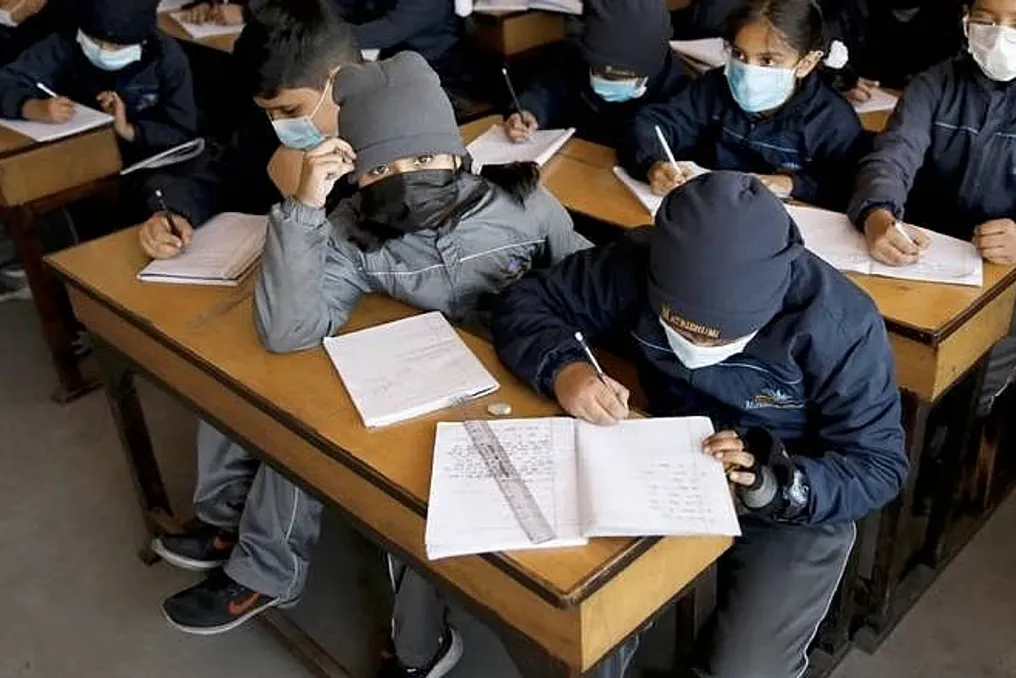
The difference becomes apparent when considering the structure of the academic year. Approximately a quarter of students in private UAE schools study in schools with the Indian curriculum, including CBSE, ICSE, and Kerala state board schools. Their academic year has a completely different rhythm, running from April to March to align with the cycle of public examinations in India. In many CBSE schools, October coincides with the first-semester examination period or immediately follows it. Instead of taking a pause for a dedicated holiday break, schools continue studying the next part of the curriculum.

Abhilasha Singh, Director of Shining Star International School in Abu Dhabi, confirmed this situation at her CBSE school. She stated: 'CBSE schools do not have a mid-semester break. In October, we have our first-semester exams, and after that, we immediately move on to the program for the coming months.' She also pointed out that the required number of working days limits flexibility for an additional break. Singh noted that there is a difference between the UAE school calendar and the number of working days observed by schools in India, and that the 'content-heavy nature of the curriculum' further narrows the possibilities for introducing extra breaks. She added: 'We would certainly like to have a mid-semester break, but our program is very content-dense. We already lose almost 20–30 days compared to over 207 working days in the Indian academic calendar (referencing India). Thus, our next break will be during National Day holidays, with a few days of Diwali holidays falling in between.'

Schools with Pakistani and Bangladeshi curricula are similarly exempt from a unified calendar, as their academic years are synchronized with the respective educational boards. The key takeaway is that there is no single template for October holidays across all private schools in the UAE. International schools may incorporate a mid-semester break into the approved academic calendar, whereas CBSE and other Asian schools may organize October around exams and continued instruction, with longer breaks at other times of the academic year.

Nawfal Ahmed, Founder and Managing Director of Woodlem Education, reiterated that CBSE schools generally adhere to the working day requirements set by the relevant educational authority. He explained: 'CBSE schools generally do not have a mid-semester break in October, even if it marks the end of the semester. The number of working days is prescribed by the relevant government educational authority and can vary across emirates, and our school fully complies with these requirements.' For schools without an October break, wellness initiatives can be integrated into routine school life. Ahmed concluded: 'However, well-being is not just a semester-bound program; it is an intrinsic and valuable part of our school culture, which is consistently embedded in our approach to supporting teachers and students.'
Similar stories

Changes to KHDA Inspection System for Private Schools in Dubai for 2026–2027
Read more
www.khaleejtimes.com

Changes to KHDA Inspection System for Private Schools in Dubai for 2026–2027

Dubai's private schools have entered the 2026–2027 academic year with an updated quality assurance system from KHDA, as most established educational institutions resumed inspections after a two-year hiatus from full checks.

In June, the Knowledge and Human Development Authority (KHDA) confirmed that quality assurance visits will commence at the beginning of the new academic year, but schools should not expect a return to the previous inspection cycle in exactly the same form.

Under the revised approach, schools may receive either a comprehensive inspection or a more targeted monitoring visit. KHDA will determine the appropriate type of visit using existing data on performance and school information, instead of following a single inspection schedule. Another significant change concerns the notification period: schools will be notified no later than 24 hours before the inspection team arrives. This means that leaders and teachers must maintain readiness throughout the entire academic year, rather than preparing specifically for a scheduled visit.

Currently, the private school sector in Dubai serves approximately 387,000 students from 185 nationalities across more than 220 schools. KHDA has confirmed that quality assurance visits will take place in the 2026–2027 academic year, but there is no single schedule for all private schools in Dubai.

The authority is adopting a more flexible method, determining the time and method of assessment based on individual school data. One category has a clear requirement: private schools completing their third year of operation in Dubai will undergo a comprehensive quality review. Schools in their first or second year will not be subjected to a full inspection.

For well-established schools, the type and timing of the visit will depend on KHDA's assessment of circumstances, performance, and the school's improvement stage. Not every private school in Dubai will undergo a comprehensive inspection in 2026–2027.

KHDA uses a data-driven process to determine which schools require a comprehensive assessment and which are better assessed through monitoring. The information considered includes the school profile, history of previous inspections, student achievements, self-assessment data, and external evaluation data. Education specialists will analyze this information and use moderation to ensure consistency in decisions.

When selecting a school for a comprehensive visit, the assessment will cover the full UAE School Inspection Structural Framework. A detailed report will be issued, and an overall school rating will be published. However, for schools reaching their third year of operation, the comprehensive review is automatic.

A monitoring visit is a more focused form of quality assurance. Instead of examining every area covered by a comprehensive inspection, a smaller group will review specific areas or 'areas of inquiry' identified through KHDA's analysis of the school. The resulting report will indicate strengths and areas requiring further development. Nevertheless, this visit will not result in a new overall KHDA rating.

This means that parents or schools should not automatically interpret a monitoring visit as evidence of poor school performance. It is part of a new system designed to align with the nature of KHDA's interaction with the individual school improvement path. Thus, a school receiving a monitoring visit will retain its existing public overall rating.

Some schools will receive an overall rating and a new published rating during a comprehensive review. Schools selected for monitoring will receive a report on the reviewed areas, but their existing overall rating will remain unchanged. This will lead to a transition period where the last available rating will differ from school to school.

It is important to note that inspection standards remain based on the UAE School Inspection Structural Framework 2015–2016 and the DSIB Inspection Guide. The main change lies in how KHDA allocates its quality assurance resources, which are typically more detailed and conducted by education assessment specialists, culminating in a detailed report that includes an overall school rating and ranking. This does not replace the framework used to assess schools.

Institutions should continue to familiarize themselves with the established inspection standards while preparing for a more flexible inspection process. The UAE Ministry of Education has introduced a new inspection framework for public schools, but this framework does not apply to private schools in Dubai.

The reduction in notification time has been significantly decreased compared to the previous five working days. This step aims to give inspectors a fuller picture of normal school life, rather than allowing schools several days to prepare specifically for an inspection. This means inspectors expect to see teaching, learning, student well-being, and the daily operations of the school under conditions close to normal school routine. For school leaders and teachers, the practical implication is simple: preparation for inspection can no longer be viewed as a process starting a few days before the announced visit.

A key focus area in 2026–2027 will be the impact of schools' improvement work during the two-year inspection hiatus. Inspectors will examine what schools have done during this period and, importantly, whether these actions have led to measurable improvements for students. The emphasis, therefore, is not just on whether the school implemented new initiatives, but on the impact these efforts have had on the students.

Schools participating in the Excel Anywhere program will also undergo progress checks as part of the quality assurance process. This initiative was introduced as part of Dubai's Education 33 strategy to support improvement in schools with a high enrollment of Emirati students. KHDA also indicated that quality assurance work will consider broader circumstances in which schools operated, including recent regional events and disruptions affecting education.

The issue of inclusivity remains an important element of Dubai's school quality assurance system, including support for Students with Special Needs. The UAE School Inspection Structural Framework considers inclusivity alongside areas such as teaching and learning, curriculum, leadership, and student well-being. KHDA data shows that in 2023–24, 76 percent of Dubai's private schools received a 'Good' rating or higher for inclusive education. The focus on inclusivity also aligns with Dubai's broader Education 33 strategy and its All Rise initiative, which aims to strengthen educational opportunities and outcomes for students. For schools, this means that inclusive practice cannot be viewed as a separate area outside the inspection process. Evidence of how schools support diverse learners can be relevant in several quality assurance areas.

School self-assessment remains an important source of information for KHDA. In the previous inspection system, schools provided a Self-Evaluation Form (SEF) before the inspection. Since schools are now notified no later than 24 hours in advance, the role of continuous self-assessment becomes particularly significant. During the inspection hiatus, schools were required to provide regular SEF updates as part of ongoing monitoring. The current KHDA approach requires schools to maintain an accurate picture of their own strengths, weaknesses, and improvement efforts throughout the year. The practical takeaway for school leaders is that evidence of improvement should not only be collected after the inspection announcement.

It is important to distinguish between two concepts: the KHDA Compliance Guide, released in September 2026, establishes a separate process for compliance visits. These may include scheduled annual visits, complaint-driven or request-driven inspections from KHDA or other government departments, follow-up visits, and joint visits with other governmental bodies. Compliance visits may also occur without prior notice. In contrast, quality assurance visits relate to the assessment of educational quality and improvement through a comprehensive or monitoring visit.

This distinction is important for parents: a KHDA visit does not automatically mean that the school's overall educational rating is being reviewed or changed. The type of visit determines what is assessed and whether a new overall rating will be issued. The return of quality assurance visits will gradually provide families with more current information about private schools in Dubai after the inspection hiatus. However, parents should check the type of visit the school received before assuming its KHDA rating has been updated. A comprehensive review provides an overall rating and ranking. A monitoring visit provides a focused report but does not change the school's existing published rating.

CBSE organizes re-examinations for 12th-grade graduates in the UAE and six other countries
Read more
www.khaleejtimes.com

CBSE organizes re-examinations for 12th-grade graduates in the UAE and six other countries

For 12th-grade students, CBSE in the United Arab Emirates (UAE) and six other countries has provided an opportunity to retake subjects that were previously canceled due to the regional conflict. The Central Board of Secondary Education (CBSE) will conduct exams in 40 subjects—20 academic and 20 specialized—in seven affected West Asian countries: UAE, Bahrain, Iran, Kuwait, Oman, Qatar, and Saudi Arabia. This decision was made after the introduction of a special assessment scheme in the affected countries.

It is important to note that these special examinations differ from the standard Class 12 Supplementary Examination, which is usually intended for students categorized as 'Compartment' or those wishing to improve their results according to CBSE rules.

This opportunity is available to regular students meeting the requirements of schools affiliated with CBSE in the affected West Asian countries whose Lists of Candidates (LOC) were submitted for the Main Examination 2026, and whose results were declared under the special assessment scheme. Private candidates may also apply if they submitted forms for the Main Examination 2026 and their results were determined under this scheme.

Students choose the subjects they wish to participate in themselves. Furthermore, the marks obtained in these new exams will replace previous results, and the result of this new exam will be final.

The application period for eligible regular and private candidates is set from September 22 to September 26, 2026. There is no fee for participating in the examination. Regular candidates must personally provide their LOC, while private candidates are required to submit their examination forms in person within the specified timeframe. CBSE has stated that the exam date and detailed schedule will be announced after the submission of LOCs and forms, emphasizing that the deadline will be strictly observed without any extensions.

The exams will take place exclusively in the seven affected West Asian countries and will not be organized in other nations. According to the CBSE notification, the examination venues for students in the UAE will remain unchanged. Students who were absent from the Main Examination 2026 for any reason are not eligible for this new exam; new regular or private candidates who did not participate in the Main Examination 2026 also cannot apply. Additionally, subject changes are not permitted, and students cannot take an exam in a subject already conducted by CBSE.

No, they are not the same. Under the standard CBSE system, students who do not meet the qualification criteria in one subject may be placed in the Compartment category and get another chance to pass that subject. In 2023, CBSE renamed the former 'Compartment Exam' to the Supplementary Examination, citing the National Education Policy 2020's emphasis on providing students with additional opportunities to improve their performance. For Class 12, the usual supplementary route also allows eligible students who have already taken the exam to improve their knowledge in one subject according to applicable rules. CBSE registrations for 2026 still separately indicate the Class 12 Supplementary Examination from the special examination organized for students in West Asia.

A student who fails to meet the qualification requirements in one subject may be placed in the Compartment category and participate in the Supplementary Examination in accordance with CBSE rules. The special assessment notification issued for the disrupted exams in West Asia also mentioned that Compartment exams would be held after the declaration of results for students who failed to meet the qualification requirements in one subject, if circumstances permit. For students who passed the exam, standard CBSE rules allow them to improve their performance in one subject in the supplementary exam, provided applicable conditions are met.

This is an important distinction for families in the UAE. Since 2026, CBSE introduced a Two-Exam Policy for Class 10. This means that Class 10 students can take a second exam, according to the 2026 rules. Dr. Shiba Jojo, Director of GEMS Our Own English High School, explained: 'From this year, CBSE has introduced two exams for Class 10 students. The first exam will be in February/March, and the second in May.' She added that among the students eligible for the second exam are those who were placed in Compartment after the first exam, those eligible for improvement in three core subjects, those falling under both Compartment and Improvement provisions simultaneously, those who took a subject replacement exam, and those who participated in the February/March exam.

However, this two-exam system does not mean that Class 12 students receive two regular exams. For Class 12, the standard system remains based on the Main Examination, followed by the Supplementary Examination and other post-examination opportunities if necessary. CBSE registrations for 2026 separately specify the Class 12 Supplementary Examination. Nadia Zinar, Head of Assessment at Woodlem Park School, Ajman, noted that this difference is particularly important for families in the UAE. She said that for Class 12 students, those placed in Compartment can participate in the Supplementary Examination if they meet the requirements. Zinar emphasized that students who have already taken the exam can also have the opportunity to improve their results in one subject according to CBSE rules. She concluded: 'It is crucial for families in the UAE to understand the exact category of the student's result, their eligibility, allowed subjects, deadlines, and registration requirements. Parents should always rely on their school's examination department and official CBSE notifications, not on information circulated on social media.'

Experts explain to parents when to worry about teenagers' reluctance to attend school
Read more
www.khaleejtimes.com

Experts explain to parents when to worry about teenagers' reluctance to attend school

For some families in the UAE, morning hours before school can turn into daily negotiations: helping a teenager get out of bed, addressing complaints of fatigue, and determining whether it is simply a reluctance to start the day or if a more serious problem is hidden.

Specialists note that the reasons why a teenager does not want to go to school can be diverse. They range from lack of sleep and late gadget use to academic pressure, issues with friends, anxiety, or a feeling of disconnection from the educational process.

Occasional unwillingness to attend classes is usually considered normal during adolescence. However, if this state becomes constant, begins to affect attendance, or is accompanied by physical or emotional symptoms, parents should look for causes beyond the morning routine.

Stephanie Watson, Deputy Head of Secondary at the British International School Abu Dhabi, emphasized that the reasons can vary greatly: some students worry about grades or performance, while others may face difficulties with friendships, social pressure, or anxiety.

Watson stated: 'We understand that occasional reluctance to come to school can be a normal part of adolescence. However, when this reluctance becomes constant or starts affecting attendance, well-being, or engagement, we investigate more closely what might be causing it.'

Joseph Sebastian, Vice President of Administration and Student Affairs and Head of Pastoral Care, Inclusion, and Wellbeing at Woodlem Park School Dubai, noted that teenagers can experience difficulties in the mornings for numerous reasons, including lack of sleep, long commutes, bullying, and academic pressure.

He added: 'Teenagers may be reluctant to attend school in the morning for a number of reasons, including insufficient sleep, late-night screen use, long journeys, academic pressure, friendship problems, bullying, anxiety, or a feeling of detachment from school. Natural changes in circadian rhythms during puberty can also make early rising particularly difficult.'

Sebastian stressed the importance of distinguishing between episodic and recurring behavior. He explained that random complaints, tiredness, or a slow morning usually do not cause concern. Nevertheless, repeated refusal accompanied by headaches, stomach aches, tearfulness, irritability, withdrawal, declining academic performance, changes in friendships, or frequent absences may indicate a deeper issue.

Furthermore, parents are advised to pay attention to whether the reluctance occurs before any specific lesson, test, or on certain days.

Clinical psychologist Asra Sawar from Aster Clinic, Discovery Gardens, and Bur Dubai reported that tiredness itself does not necessarily indicate a problem. She noted that a tired teenager might complain upon waking but usually calms down after waking up and their daily routine begins. If there is an underlying problem, distress is often more stable, such as anxiety before school, physical symptoms in the morning at school, or a strong reaction to a specific class, teacher, or peer group.

Sawar advised parents to consider what is happening outside of school. Excessive screen time, social media pressure, attempts to fit in, maintaining an image, and meeting academic or family expectations can emotionally exhaust teenagers. Parents should try to understand the situation rather than immediately labeling it as laziness.

Dr. Riyad Jabbar Khodrier, consulting psychiatrist at NMC Royal Hospital, Sharjah, pointed out that sleep is another important aspect. He recommended that parents first focus on when the difficulty arises and if anything else has changed. He explained that a tired teenager might have trouble waking up but feel better after adequate sleep and generally adapt at school. A teenager suffering from anxiety or another school-related problem may experience pre-school stress, regularly complain of morning malaise at school, or fear a specific lesson, person, or situation.

Khodrier added that adolescents aged 13 to 18 typically require eight to ten hours of sleep, so establishing a sleep schedule is an important first step when a child has trouble getting up in the morning.

One parent from the UAE, Najila Abdullah, whose daughter is in Grade 12 and son in Grade 9, shared that setting clear boundaries regarding phones and study time helped her children establish a routine. She admitted that the children are mostly motivated and enjoy going to school, but sometimes her daughter feels very tired and experiences mood swings or feels unwell due to physical changes.

Abdullah also mentioned that the family now adheres to a strict phone policy: devices are kept out of bedrooms at night. She collects the phones at 10:00 PM because she noticed they were online at 4 or 5 AM. Now, the rule in the house is that everyone, including adults, must keep phones out of bedrooms, and old mechanical clocks are used for alarms.

Schools also assert that reducing uncertainty can help students who are anxious about attending classes. Watson mentioned that BIS Abu Dhabi focuses on providing students with clarity regarding grades, schedule changes, upcoming events, and support plans. Her pastoral teams work closely with students and families to understand the root cause of any reluctance to attend school. Instead of focusing solely on behavior, they aim to identify and address the underlying reason so that students feel confident, supported, and can participate fully in school life.

Sebastian advises parents to start a conversation rather than immediately applying consequences. He emphasized that when a child repeatedly says they do not want to go to school, it is important to remain curious about what is causing that feeling. By working together to understand the root cause, practical strategies and support can be found to help students feel successful, connected, and confident at school.

Khodrier similarly advises parents to directly ask the teenager what makes school difficult, without accusation, and to listen first before contacting the school. He concluded: 'Parents can ask without blame: 'What seems most difficult about attending school right now?' Listen first, and then, if necessary, contact the school. There is no single sign that proves the cause; if the pattern continues or affects attendance and daily life, seek professional help.'

Popular