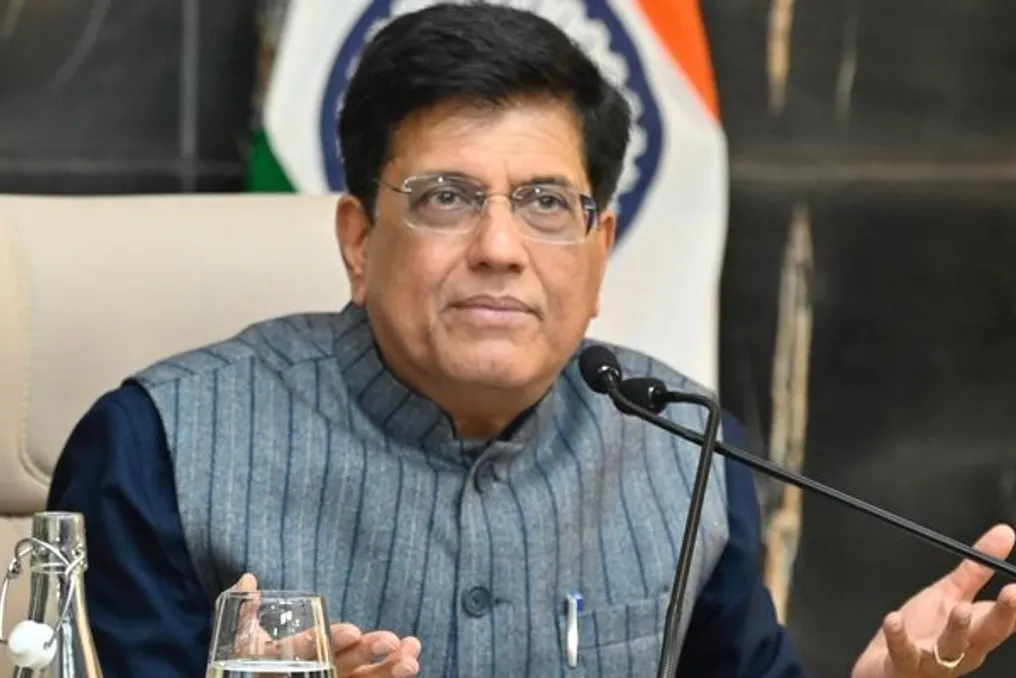
Indian Trade Minister Goyal states at G20 summit that there is no structural surplus of production capacity
Read more
YourStory [india, en]
yourstory.com

Indian Trade Minister Goyal states at G20 summit that there is no structural surplus of production capacity

The Minister of Commerce and Industry, Piyush Goyal, stated that India does not have a structural surplus of production capacity in the sectors defined by the G20 Presidium, emphasizing that the country's production capabilities meet both domestic and global needs.

He noted that the issue lies not in the industrial capacity itself, but in distortions that can arise from hidden subsidies and support, leading to geographical concentration of production. The Minister added that diversifying supply chains and production is a legitimate goal, but it cannot be used as a pretext for taking measures outside the rules of the World Trade Organization (WTO) or for shifting the burden of correction onto developing countries, which need to maintain room for implementing industrial policy.

Goyal confirmed that India's production capacity meets its domestic and global needs, and that there is no structural surplus in the sectors indicated by the G20 Presidium. He also expressed India's solidarity with other G20 members regarding concerns that support distorting trade in some countries leads to dumping and predatory pricing. In response to such practices, India uses scientifically based WTO measures, including anti-dumping and countervailing duties.

These statements are significant against the backdrop of the U.S. Trade Representative (USTR) initiating two separate Section 301 investigations on March 11 and 12 covering 60 economies regarding forced labor and excess industrial capacity. A conclusion was reached on one investigation concerning forced labor, resulting in a 10% tariff being imposed on countries, including India; the results of the second investigation are pending.

The U.S. has highlighted issues of excess capacity in sectors such as steel, textiles, aluminum, automobiles, batteries, cement, chemicals, electronics, energy products, glass, machine tools, machinery, non-ferrous metals, paper, plastics, processed food and beverages, robotics, satellites, semiconductors, vessels, solar modules, and transport equipment.

In a statement from the Ministry of Commerce, quoting Goyal, it is said that India shares the concern of many members regarding how trade-distorting support in some economies leads to dumping and predatory pricing, and that India counters this through scientifically based WTO measures, such as anti-dumping and countervailing duties, which are subject to judicial review.

Goyal also emphasized that India is the world's fastest-growing major economy, possessing an internally driven economy that serves 1.4 billion people, and is actively building value creation supply chains from design to finished product, acting as a reliable link in global supply chains.

The Minister participated in the closing day of the G20 Trade Ministers meeting in Milwaukee, Wisconsin, where he spoke at sessions dedicated to structural capacity surplus and production, the update of the Most Favored Nation principle, ending forced labor in global supply chains, and the closing of the meeting.

Speaking on ending forced labor in global supply chains, Goyal stated that India's commitment to eradicating forced labor is absolute and unconditional. He added that border measures must be based on specific and verifiable evidence, not assumptions about an entire country, region, or sector, and must comply with due legal process and WTO rules. He pointed out that the International Labour Organization (ILO) is the competent, universal, and tripartite body on labor standards.

India supports the goal of eliminating forced labor and voluntary exchange of best practices among G20 members, provided that such cooperation does not involve monitoring members, creating new obligations, or using information as a basis for unilateral trade actions. Regarding the update of the Most Favored Nation principle, the minister noted that India's trade with G20 members depends on a transparent, non-discriminatory, and rules-based trading system. He stressed that the Most Favored Nation principle is a key guarantee of this system, ensuring the application of equal conditions for both the smallest and largest trader. Goyal also emphasized that consensus remains a central element of the WTO, and a special and differential treatment regime must be maintained so that developing countries can catch up with developed economies. Furthermore, he called for the restoration of the two-tier dispute settlement system.

Similar stories

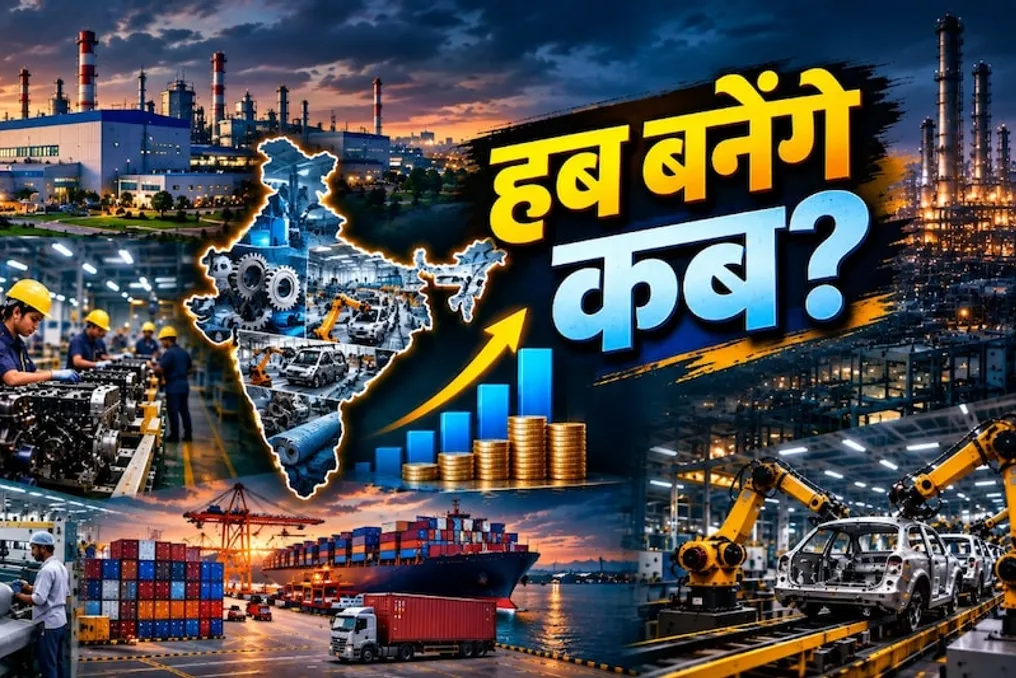
Comparison of Indian and Chinese Production Capacities: Prospects for Becoming a Global Manufacturing Hub
Read more
www.aajtak.in

Comparison of Indian and Chinese Production Capacities: Prospects for Becoming a Global Manufacturing Hub

There is an aspiration to make India a major manufacturing center. The global community is paying attention to India because the status of a manufacturing hub is critically important for strengthening any country's economy. However, the question arises: can India become the next global manufacturing hub?

When goods such as automobiles, mobile phones, and clothing begin to be manufactured in the country, import costs are significantly reduced. This leads to job creation for millions of young people, increased household income, and prevention of liquidity problems in the market. Furthermore, when a country begins to meet its needs and export products, foreign currency flows into the country. This is why the establishment of an Indian manufacturing hub is a key element of its economic stability and self-sufficiency.

India relies on production to realize its dream of transforming into a developed nation by 2047. As part of this process, India has intensified its industrial activities under the slogans 'Make in India,' 'Atmanirbhar Bharat,' and with the help of the 'PLI Scheme.' Nevertheless, the question remains open: when and how will this goal be achieved? Where does India stand in this global race, and how far behind China is it? What challenges does the country face?

Analyzing statistical data, India has achieved an initial advantage in the production race, but it is still far from the ultimate goal. India's share in the total global production volume is about 2%. Although India has already become the fifth-largest manufacturing country in the world, its scale remains limited.

On the other hand, China is rightly called the 'world's factory.' Its share in global production approaches 30%. China's annual industrial output exceeds $4.5 trillion, while India's figure is around $500 billion. Thus, China surpasses India by approximately nine times in terms of production volume.

The truth is that India cannot overtake China overnight, but changes have already begun. Global corporations are now adopting a 'China plus one' policy, meaning they aim to locate their factories in countries other than China. This presents a golden opportunity for India, especially considering the growing trade tensions between the US and China. Many American companies operating in China are viewing India as an attractive alternative.

The US also intends to break China's monopoly, but simultaneously does not want to allow India to become an 'economic superpower.' The recently passed US law, the 'Graham Sanctioning Act,' grants the right to impose high tariffs on countries purchasing Russian oil, which poses a challenge even for India. Since production is closely linked to energy, India imports over 85% of its required crude oil. Rising crude oil prices directly increase the cost of transporting goods, electricity tariffs, and raw material prices in India. This raises the cost of production in India, making it more expensive than goods from China, Vietnam, or Bangladesh.

The high cost of oil procurement depletes significant foreign exchange reserves of India. When government and company funds are spent on paying oil bills, capital for investment in infrastructure, new technologies, and research and development (R&D) becomes insufficient.

Over the last decade, India has made significant adjustments to its industrial policy. Under the 'Make in India' and 'Atmanirbhar Bharat' initiatives, production processes have been simplified, and special emphasis has been placed on 'Ease of Doing Business' to increase domestic production.

In accordance with the PLI programs, multi-billion dollar incentives have been provided for more than 14 sectors, including electronics, semiconductors, automotive, pharmaceuticals, and solar panels. As a result, India is now the second-largest mobile phone producer, and a significant portion of iPhones is assembled there.

Production in India will only grow if infrastructure is strengthened. In this regard, over the last decade, the construction of expressways, dedicated freight corridors, the PM Gati Shakti project, and new ports has helped reduce both the cost and time for transporting goods within the country. Simultaneously, India has attracted large investments in chip production, which is the foundation of future technologies.

Despite all efforts, the share of production in India's GDP has remained at 16–17% in recent years. The main reasons for this are four serious obstacles.

1. High logistics costs: The cost of transporting goods from factories to ports in India accounts for about 13–14% of GDP, whereas in China or Vietnam, this figure is maintained at 8–9%. Reducing this gap is a top priority.

2. Complex legislation and bureaucracy: Although attention has been paid to simplifying rules in recent years, at the state level, procedures for obtaining land acquisition permits, labor legislation, and environmental assessments can still take months. Active work is being done on this.

3. Skills shortage: India has a huge youth population, but modern factories and automation require different competencies.

Ashwini Vaishnaw stated that India is rapidly becoming a semiconductor manufacturing hub
Read more
www.aajtak.in

Ashwini Vaishnaw stated that India is rapidly becoming a semiconductor manufacturing hub

Union Minister Ashwini Vaishnaw noted that the history of the semiconductor industry's development in India has been quite fascinating. Initially, there were significant doubts regarding this sector, but the government's clear vision and honesty allowed these concerns to turn into reality.

During a meeting with CEOs of global semiconductor companies, the Union Minister presented them with the current state of affairs in the country with great respect.

Popular