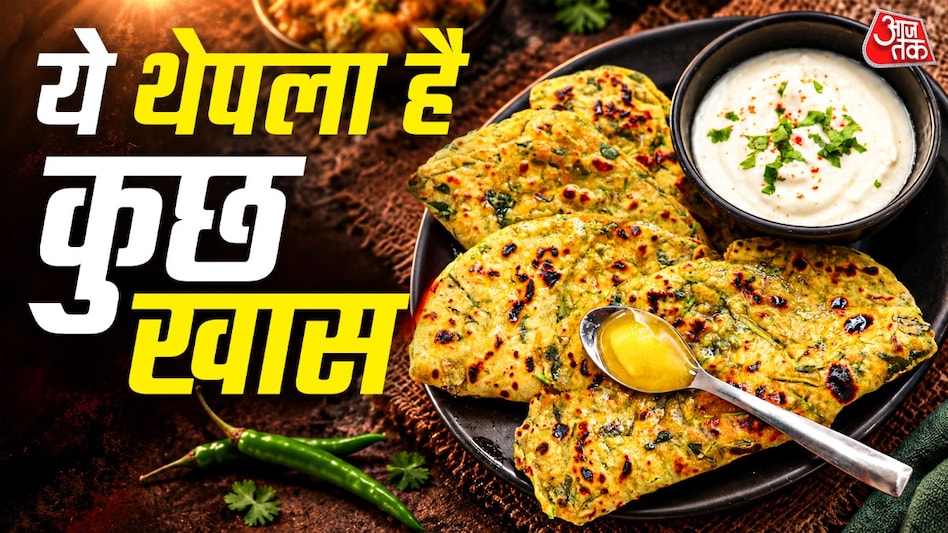
If you are tired of monotonous breakfasts consisting of poha, upma, or heavy parathas, fresh Gujarati Thepla with mint and spicy green pepper will be an ideal, light, and appetizing alternative. Especially during the winter period, fresh mint is not only delicious in taste but also very beneficial for health and digestion.
Some children may be reluctant to eat mint due to its slight bitterness. However, if you knead the dough by adding a little yogurt, chickpea flour (besan), and fenugreek seeds, the Thepla will become very soft, and the bitterness will completely disappear. This option is perfect for breakfast, lunch in a school container, or a snack on the go. Below is the simplest and ideal recipe for preparation.
For preparation, you will need: 2 cups of wheat flour, 1 cup of fresh mint leaves (finely chopped), 2 tablespoons of chickpea flour (for flavor and binding), 3 tablespoons of fresh yogurt (the secret ingredient for soft Thepla), 1 tablespoon of ginger and green pepper paste, 1 tablespoon of white fenugreek, 1/2 teaspoon of cumin (crushed by hand), 1/2 teaspoon of turmeric powder, 1/2 teaspoon of Kashmiri red chili powder, 1/4 teaspoon of asafoetida, 2 tablespoons of oil (for greasing and frying) plus oil or ghee for frying, salt to taste.
First, the mint leaves must be torn and thoroughly washed two or three times with water to remove all dirt. Then, they should be dried on a cotton cloth and finely chopped. In a large bowl, mix the wheat flour, chickpea flour, finely chopped mint, white fenugreek, cumin, turmeric, red chili, asafoetida, ginger and green pepper paste, and salt to taste.
Next, add 2 tablespoons of oil and 3 tablespoons of fresh yogurt. Yogurt helps the Thepla remain very soft and tender for a long time. Mix all the dry ingredients thoroughly by hand. Since mint and yogurt contain moisture, first knead the dough without adding water. After that, gradually add warm water as needed to form a very soft dough. Cover the dough with a layer of oil and leave it for 10 minutes.
Form small balls from the dough. Roll one ball in dry flour and flatten it into a thin sheet, like thin bread. The thinner the Thepla is rolled, the tastier and softer it will be. Heat the pan over high heat. Place the rolled Thepla on the hot pan. When small bubbles appear on one side, immediately flip it. Then brush both sides with a little oil or ghee and fry, pressing lightly with a spatula. It is important not to cook the Thepla for too long over low heat, otherwise, it will become hard; it needs to be quickly fried over medium-high heat.
The finished, hot, soft, and aromatic Thepla is ready! It can be served with fresh mango or a spicy lemon marinade, as well as masala tea.