The Department of Health welcomed a significant change in the long-standing position of Jehovah's Witnesses regarding blood transfusions. This development may reduce the burden on doctors who have faced difficult choices when trying to save patients' lives.
Earlier this week, the Governing Body of Jehovah's Witnesses announced that deciding whether to accept erythrocytes, leukocytes, plasma, or platelets from another person's blood is a matter of personal conscience. The organization stated: 'Similarly, each Witness must decide whether they will donate blood with the clear purpose of providing components or fractions for use by another person.'
According to this announcement, this adjustment followed earlier updates concerning blood fractions and the use of one's own blood during medical procedures. It emphasized: 'Since the Bible does not comment on such decisions, they are a matter of individual conscience. The same justification now applies to the four main blood components.'
For decades, the religious ban on blood transfusions created difficulties for healthcare workers, especially in emergency and intensive care units, where receiving blood can be the decisive factor between life and death.
Department representative Foster Mohale noted that the religious stance caused frustration among doctors when patients died despite the availability of potentially life-saving blood transfusions. Mohale stated: 'Blood transfusion is a vital intervention that directly addresses life-threatening deficiencies in oxygen delivery and hemostasis (stopping bleeding) and allows for complex medical procedures that would otherwise be unsafe.'
He highlighted the historical significance of blood transfusions in saving lives, explaining that religious objections for many years put medical professionals in a difficult position. Mohale added: 'It has saved millions of lives throughout history, so its ban was frustrating for doctors when they saw someone who could have been saved by a simple blood transfusion pass away.'
Health Minister Dr. Aaron Motsoaledi praised Jehovah's Witnesses for what he called a 'giant step.' He noted that this decision relieved a significant burden on medical staff, who sometimes had to go to court to save children whose parents objected to transfusions on religious grounds.
However, the department clarified that Jehovah's Witnesses still prohibit whole blood transfusions, asserting that this restriction does not pose a serious problem for the healthcare system, as whole blood is generally not recommended for routine transfusions. Health Minister Dr. Aaron Motsoaledi stated: 'We note that Jehovah's Witnesses still prohibit whole blood transfusions, but we want to assure the nation that this ban is not an issue for the healthcare system. This is because doctors and hospitals or any other medical facility have not promoted the use of whole blood for routine transfusions for decades.'
Mohale explained that whole blood is expensive and often unnecessary, and only a limited number of circumstances require its transfusion. He concluded: 'Whole blood is extremely scarce and often not needed. There are very few circumstances in which whole blood transfusion is required.'
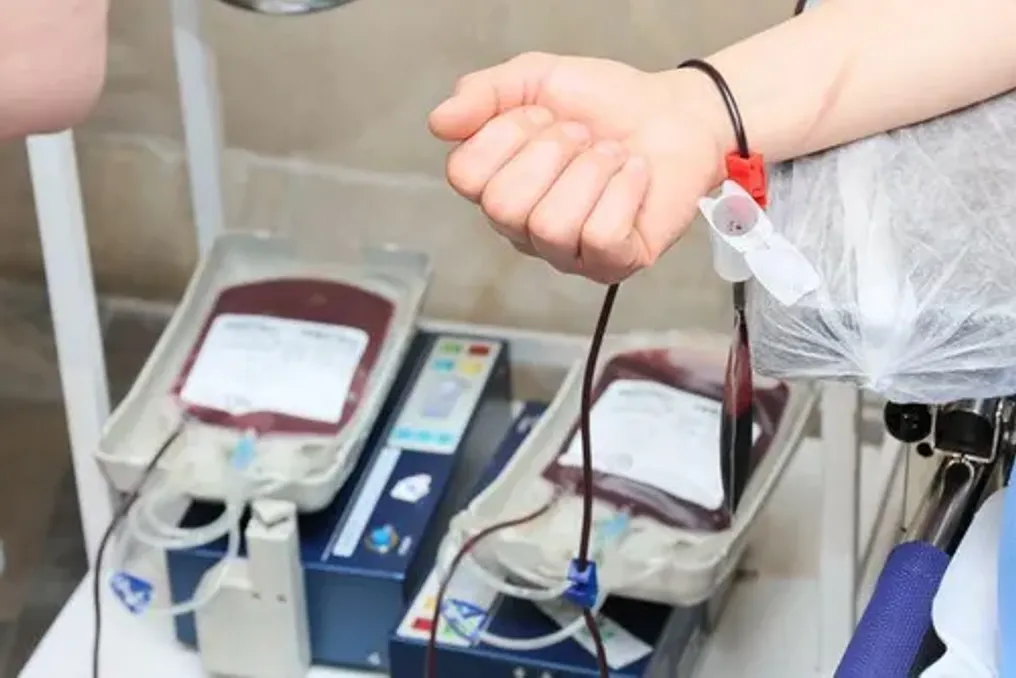
Blood transfusion involves introducing donated blood or specific blood components into a vein to replace lost blood or treat conditions affecting the blood's ability to function properly. The department's response came amid increased attention to issues arising when religious beliefs intersect with medical treatment, especially when healthcare workers try to save critically ill patients.