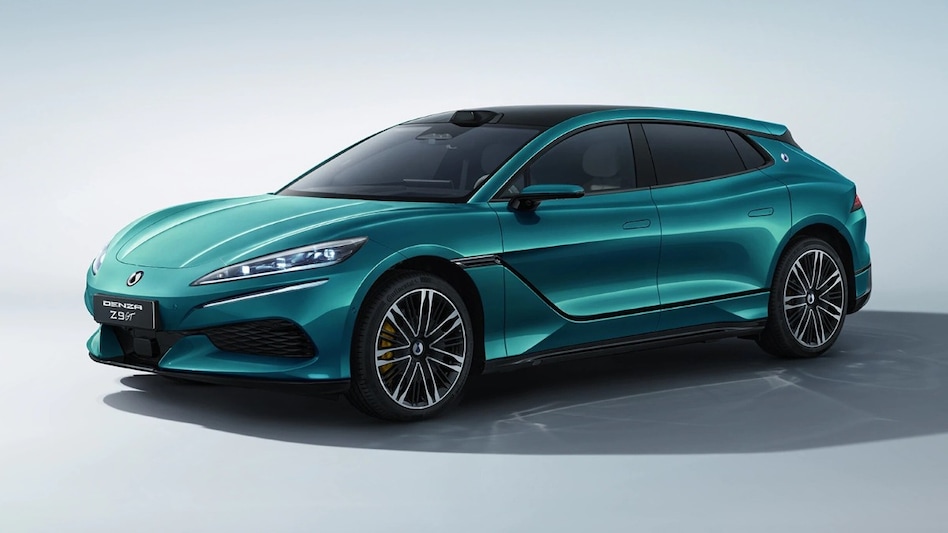
Chinese brand DENZA prepares to enter the Indian market with the launch of luxury vehicles
Read more
Aaj Tak
www.aajtak.in

Chinese brand DENZA prepares to enter the Indian market with the launch of luxury vehicles

The Indian automotive market will soon see a new brand. The appearance of this brand, which is a sub-brand of an existing company, has been confirmed. This concerns Denza, which will soon introduce its first vehicle in India.

Denza is a luxury brand of BYD. The company has confirmed its intention to enter the Indian market by releasing its first teaser. Although it is not yet determined which specific model the company will choose for its debut, two models from BYD Denza are actively being discussed: one MPV and another high-performance electric fastback.

Initially, the company may present the Denza D9, a luxury electric MPV, and the Denza Z9 GT. Both models will arrive as CBU (Completely Built Units) and will be sold in exclusive Denza showrooms. These vehicles will be more expensive than existing BYD models and will offer a more premium driving experience.

The Denza teaser did not showcase any specific model, and the company has not announced the date of the first launch. Regarding the Denza D9, it will be a premium seven-seater MPV that will compete with the MG M9, Mercedes-Benz V-Class, Toyota Vellfire, and Lexus LM.

The dimensions of the D9 are 5250 mm in length, 1960 mm in width, and 1920 mm in height, with a wheelbase of 3110 mm. The exterior of the car will feature a modern and elegant design, including a motion front grille, full-width LED headlights, power-operated doors, soft-closing doors, a large panoramic sunroof, and 18-inch alloy wheels.

Inside the D9, there is a central 15.9-inch touchscreen, a 10.25-inch digital instrument cluster, a passenger display, and an interactive rear entertainment screen. The car can be equipped with a battery capacity ranging from 103 to 115 kWh, providing a claimed range of up to 800 kilometers.

The second model, the Denza Z9 GT, is a five-seater vehicle measuring 5195 mm in length, 1990 mm in width, and 1490 mm in height, with a wheelbase of 3125 mm. The design of the Z9 GT will follow the style of Wolfgang Egger. This model will be equipped with a high-performance triple motor setup and a battery capacity of 100 to 122.5 kWh. It will deliver up to 850 kW of power and 1100 Nm of torque. The maximum speed of the Z9 GT will be 270 km/h, and the acceleration from 0 to 100 km/h will take between 2.7 and 3.4 seconds.
Similar stories

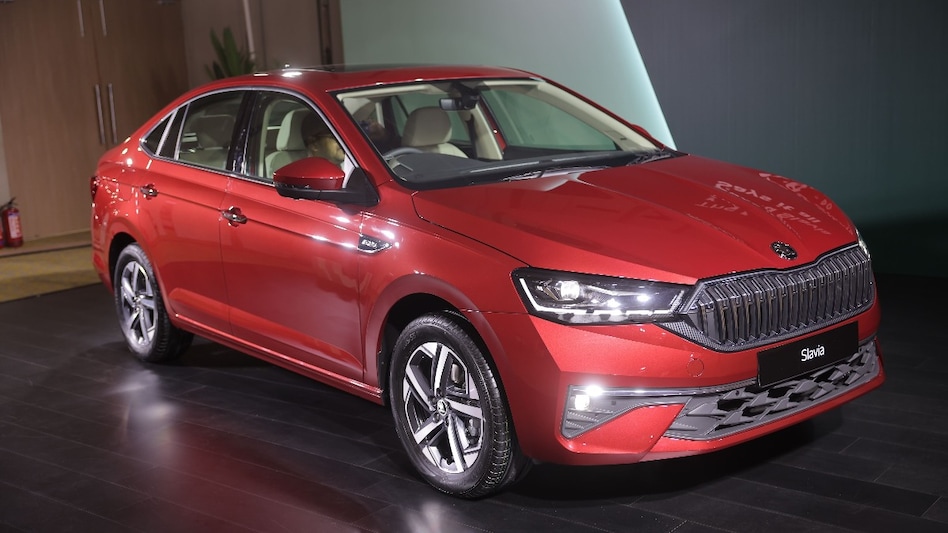
Skoda begins production of updated Slavia; launch expected in India on October 6, 2026
Read more
www.aajtak.in

Skoda begins production of updated Slavia; launch expected in India on October 6, 2026

Skoda Auto Volkswagen India has started mass production of the updated Slavia Facelift model. The production of this premium sedan takes place at the Chakkan plant located in Pune. The company plans to introduce this vehicle before the start of the festive season, and the launch date has already been announced.

Tata recently released the compact sedan Eris, and now Skoda is presenting its updated model. The Skoda Slavia Facelift is scheduled for release in the Indian market on October 6, 2026. The company has also opened pre-orders, allowing buyers to place a reservation for 15 thousand rupees.

Skoda has already unveiled the Slavia Facelift, which will feature a sharper design compared to the current model. With new headlights and taillights, the car looks more premium. Furthermore, the company has redesigned the bumpers and equipped the car with 16-inch aluminum alloy wheels.

The taillights will be equipped with sequential turn indicators. As part of the update, new paint color options will also be offered. The interior design of the car will undergo minimal changes, but the infotainment system will increase from 10 inches to 10.1 inches. The driver's dashboard will also be updated: an 8-inch display will be replaced by a 10.25-inch digital driver display.

In terms of features, the car includes a panoramic sunroof, a 360-degree camera, front passenger seats with heating and ventilation, rear seats with massage function, and support for wireless Apple CarPlay and Android Auto. Additionally, Skoda has improved the performance of the air conditioning system, which was a frequent consumer complaint.

The Slavia Facelift will be available with a 1.0-liter turbocharged petrol engine, which provides 115 hp and 178 Nm of torque. A 1.5-liter turbocharged petrol engine, producing 150 hp and 250 Nm of torque, is also available. For the 1.0-liter engine, a 6-speed manual transmission or an 8-speed automatic is available, while the 1.5-liter engine exclusively offers a 7-speed DCT. It should be noted that the starting price of the current Slavia is 9.99 lakh rupees, and the price up to the showroom reaches 18.29 lakh rupees, while the cost of the new Slavia may be slightly higher.

Suzuki plans to produce 40 thousand vehicles annually in India for the global market as part of its strategy until 2030
Read more
www.aajtak.in

Suzuki plans to produce 40 thousand vehicles annually in India for the global market as part of its strategy until 2030

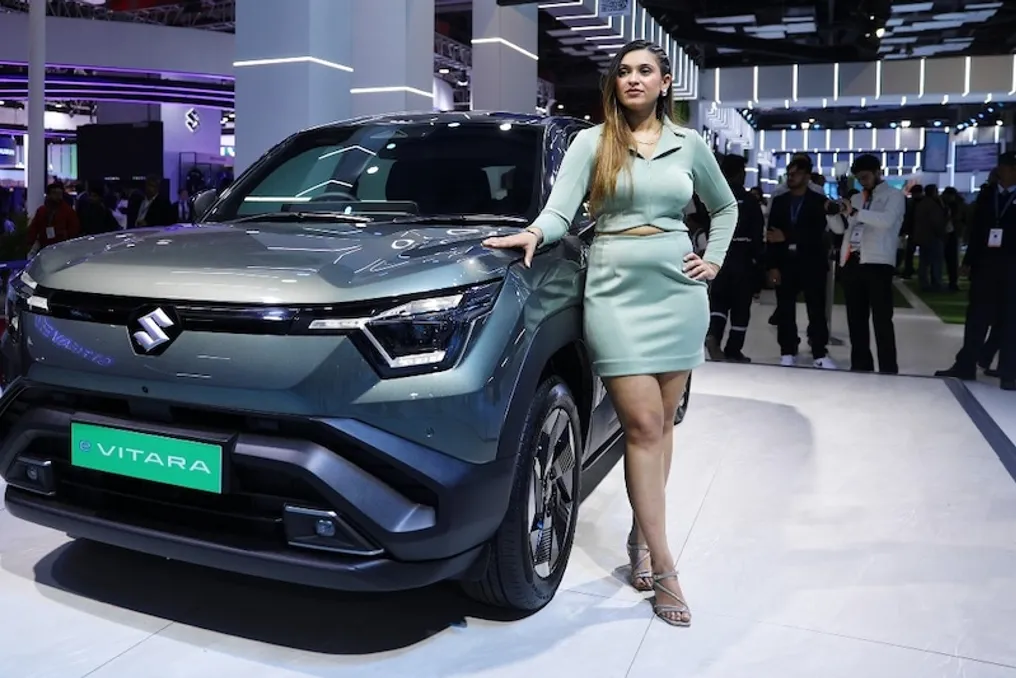
Suzuki has unveiled its development strategy for the next ten years, in which India plays a key role. According to the plan, research will be conducted in Japan, and technologies will be adapted to Indian needs before the cars are sent to markets worldwide.

Suzuki is focusing on developing hybrid, turbocharged gasoline, light vehicles, and connectivity technologies. This plan aims to transform the face of the Indian automotive sector.

In the context of a rapidly changing automotive market, simply increasing production is not enough; it is critically important to create highly efficient, low energy consumption, lightweight vehicles adapted to the specifics of various markets. Suzuki Motor Corporation has prepared for the future by making India a central element of this preparation.

The company's goal is to strengthen India not only as a major manufacturing base but also as a primary export hub for many global markets. As part of its global business strategy, Suzuki plans to utilize India alongside Japan as an important foundation. The company will continuously increase production capacity in India, aiming to produce about 40 million units of transport annually by 2030 and beyond, which will significantly enhance India's role in Suzuki's global production network.

Vehicles produced in India will take into account not only the needs of local consumers. The company will apply the results of research and development conducted in Japan to create products that meet the demands of Indian buyers. Furthermore, manufacturing operations in India will function as a major export center, supplying vehicles to various global regions.

The entire company strategy is based on the principle of 'minimizing energy and maximizing essential value.' Simply put, Suzuki aims to produce vehicles that meet customer needs while using minimal energy. To achieve this, the company will implement lightweight and technological solutions that comply with the requirements of different countries.

Suzuki is also paying attention to clean energy in India. Its third local biogas plant in India began operations in August 2026, which is part of its sustainable mobility strategy. The company plans to transform its production and engineering processes in the coming years. The goal is to reduce the development time for new models by 50% by 2030, as well as increase development efficiency by 30% and production efficiency by 50%.

Technologies such as modular design and digital engineering will be used to achieve these goals. This will allow for more effective application of the same components and engineering systems across different models, accelerating the launch of new models and improving cost and production timeline management.

Future Suzuki models will be equipped with numerous innovative technologies. As part of a multi-pronged strategy, the company is promoting a series of hybrid technologies, including a new hybrid system called Super In-Charge. Gasoline engines with direct injection and turbocharging will also appear in future models. Additionally, the company will work on the SDV Lite platform for connected vehicles and the S Light Vehicle Architecture, which will enable the creation of fuel-efficient vehicles.

The conclusions from Suzuki's plans indicate that in the coming years, India will become not just a large sales market for the company, but an important part of Suzuki's global plan in terms of production, exports, utilization of research, and clean energy. The successful implementation of the annual production target of 40 million units by 2030 will ensure even greater support from global business in India. New technologies, such as hybrid systems, turbo gasoline, light vehicle architecture, and connected cars, could radically change the company's product portfolio in the future.

Popular