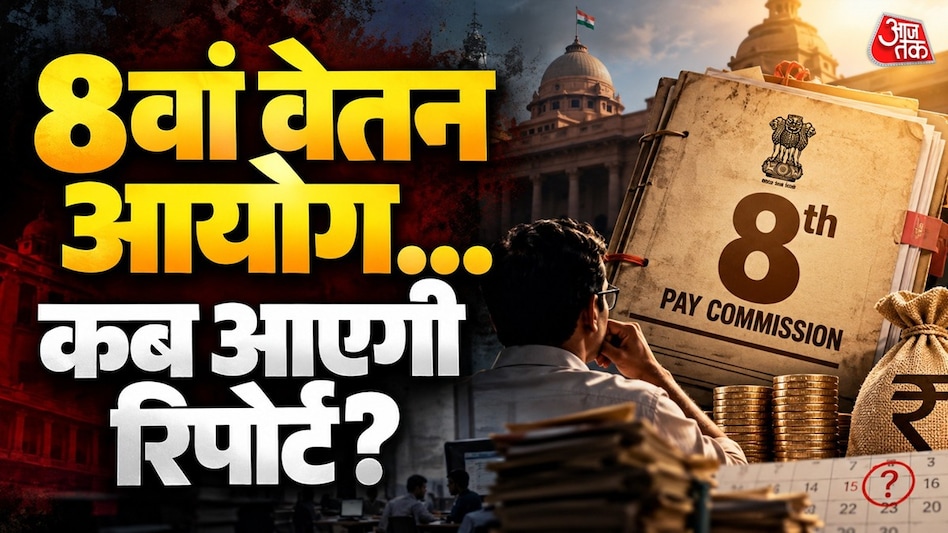
Central employees and pensioners are awaiting the next important meeting of the 8th Departmental Commission. The commission plans to hold meetings on October 7 and 8 in Bangalore, with another meeting scheduled for October 22 and 23 in Mumbai. Although the commission's work is ongoing, the main concern among workers is the timeline for the report's publication and the implementation of new tariff rates.
The 8th Departmental Council was given eighteen months to prepare the report. The government officially notified the Terms of Reference (ToR) and scope of the commission's activities on November 3, 2025, marking the start of the 18-month period. Currently, about eleven months have passed, and if the report is not ready within the stipulated time, the commission may request an extension from the government.
To date, the 8th Departmental Council has conducted consultations with employee and pensioner unions across different parts of the country. Events took place in locations such as Dehradun, Pune, Hyderabad, Srinagar, Ladakh, Lucknow, Bhubaneswar, Kolkata, Jaipur, Chennai, Puducherry, and Chandigarh. Meetings were held in Delhi on May 10 and August 7. The next scheduled sessions will be on October 7-8 in Bangalore and October 22-23 in Mumbai, where requirements and proposals from employees, pensioners, and other stakeholders are being discussed.
Various organizations have expressed differing views regarding the report's release date. Manjit Singh Patel, Chairman of the All India New Pension Scheme Employees Association, believes that if all necessary meetings conclude by November, the report could be submitted to the government in February or March.
On the other hand, S. Srikumar, General Secretary of the All India Defence Employees Federation, asserts that the commission has until May 2027, and the report might appear within the established 18 months. He also notes that after receiving the report, the government will require three to four months to implement the recommendations.
Conversely, SB Yadav, President of the Confederation of Central Government Employees and Workers, predicts that the report might be released in May 2027. He suggests that the review process by the ministerial group and its subsequent implementation could take another four to six months.
Kevy Kamesh, General Secretary of the Indian Railway Technical Supervisors Association, suggests that the results may emerge by the end of 2027, with new wage rates potentially taking effect from January 1, 2026. Avinash Rajput from Bharat Pensioners Samaj believes the entire process could extend until 2029 or 2030.
The Departmental Council itself does not set new salaries. First, the commission gathers proposals and negotiates with various parties to formulate its recommendations. Then, the report is sent to the central government level. The government may form a ministerial group to analyze the recommendations, making changes or adjustments. Subsequently, the government approves and publishes the recommendations. If the new rates are effective from an earlier date, employees and pensioners may receive amounts due for the past period, known as arrears.
Analysis of past departmental councils shows that report preparation times varied. The 7th Departmental Council was established in February 2014 and submitted its report in November 2015. The 6th Departmental Council was founded in October 2006 and provided its report in March 2008. Thus, the process of departmental council work often spans several years, making it impossible to definitively determine a deadline for the 8th Departmental Council's report.
Currently, the most critical point is that the release date for the 8th Departmental Council's report remains undecided. Trade unions are presenting various scenarios, ranging from February-March 2027 to May 2027. There are also opinions that implementation after the report's publication could take anywhere from three to a longer period. Employees are also discussing the possibility of introducing new rates from January 1, 2026. If the government applies them retroactively, this could pave the way for receiving arrears for the interim period. However, a final decision will only become clear after the government acts on the recommendations and official publication.