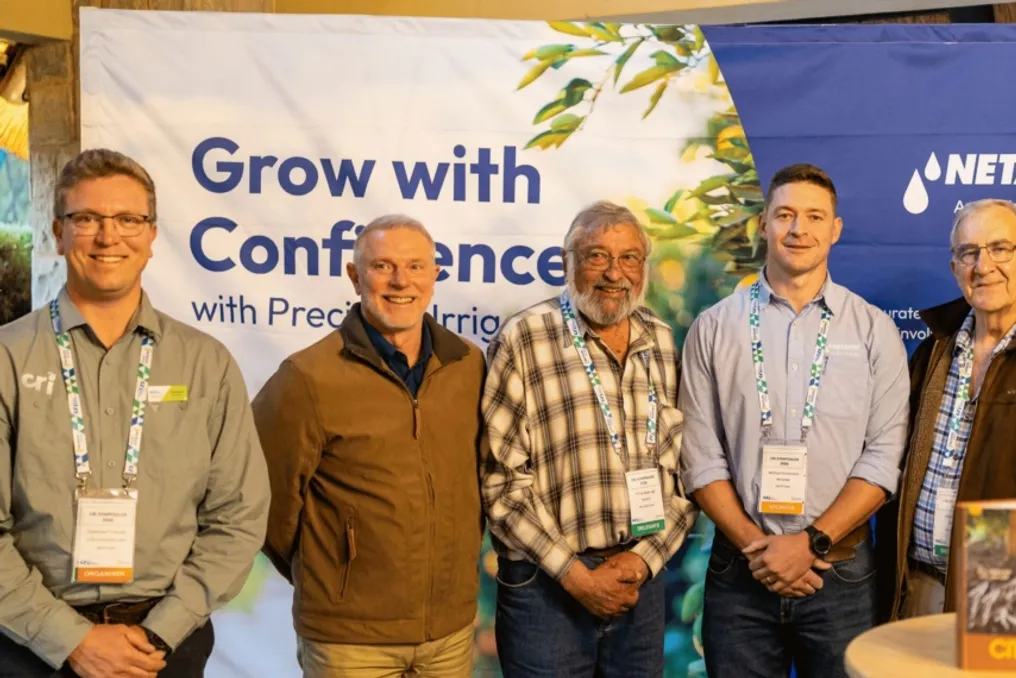
Citrus Research International (CRI) has released a new guide designed to help citrus producers make informed decisions regarding irrigation and improve water use efficiency amid growing pressure on agricultural water resources.
The publication, titled Citrus Irrigation, was presented on August 24, 2026, during the XIII CRI Symposium on Citrus Research, held at Champagne Sports Resort in the Drakensberg area of KwaZulu-Natal.
This guide was developed under the direction of CRI, with support from Netafim, and authored by Dr. Philip Mayburg and Dr. Johan van Zyl. It combines scientific research with practical field experience, offering farmers recommendations applicable across various production environments.
The need for this publication arose following irrigation training sessions conducted by the CRI extension team in collaboration with Netafim. These sessions highlighted the importance of assisting farmers in understanding and consistently applying irrigation principles on citrus plantations.
Coenraad Frankenel from CRI noted that the goal was to create a practical industry guide while maintaining scientific depth for academic use. He added that various terminology and knowledge gaps can make irrigation unnecessarily complex, so the task was to consolidate all information into a farmer-friendly format.
The authors drew upon both South African and international studies and visited citrus growing regions across the country. Citrus farmers shared their practical knowledge and participated in plantation research, including soil profile and root system analysis. Technical specialists also reviewed chapters and provided feedback during development.
This allowed for the creation of a publication that merges scientific explanations with practical advice on irrigation strategies, the consequences of under- and over-watering, and water quality aspects. The guide also addresses the use of treated wastewater, providing information relevant to farmers facing increasingly complex water management challenges.
Given water scarcity and the need to enhance its efficiency, the publication aims to help producers better understand the implications of employing different irrigation methods. Mayburg stated: 'We utilized international and South African literature, and we consulted farmers for practical information to make the content applicable in the field.' He also noted that developing recommendations for irrigation strategies was particularly challenging due to the inconsistency of published results.
The project also marks a significant milestone for the two authors, who began collaborating in August 1976. Completing the guide after 50 years enriches the resource with decades of shared experience intended for both industry and academic purposes.
A citrus farmer, Jaco Lindeke from Group 91 in Letsitele, attended the launch ceremony and expressed his view that the guide would significantly benefit the industry after reviewing several chapters. Lindeke highly praised the quality of the publication and the team's dedication, stating that 'irrigation is the foundation of our operations.'
Michael Esmeraldo from Netafim reported that the company's sponsorship reflects long-standing relationships with citrus farmers and CRI. Esmeraldo added: 'Supporting the guide was an easy decision. It is a sign of our gratitude to the citrus industry and a reflection of our relationship with CRI.' He expressed hope for similar projects in the future.
Copies of the publication were also presented at the event to Professor Hogan Hatinghu, CEO of CRI, and Dr. Bothshoko Nshabele, CEO of the South African Citrus Growers Association (CGA). The Citrus Irrigation guide is available through the CRI online resource center for R350.