Explanation of Changes in Indian Cricketers' Names During the 2026 Asian Games
Read more
Aaj Tak
www.aajtak.in

Explanation of Changes in Indian Cricketers' Names During the 2026 Asian Games

During the semi-final of the 2026 Asian Games between India and Sri Lanka, an event occurred that caused confusion among Indian cricket fans. Player names appeared on the match scoreboard that at first glance might have seemed like a translator's error, sparking discussions on social media.

India defeated Sri Lanka by a score of 124 runs in the semi-final, where India itself scored 170 points. Ishan Kishan delivered an impressive performance, scoring 80 runs off 46 balls, while Vaibhav Suryavanshi added 38 runs.

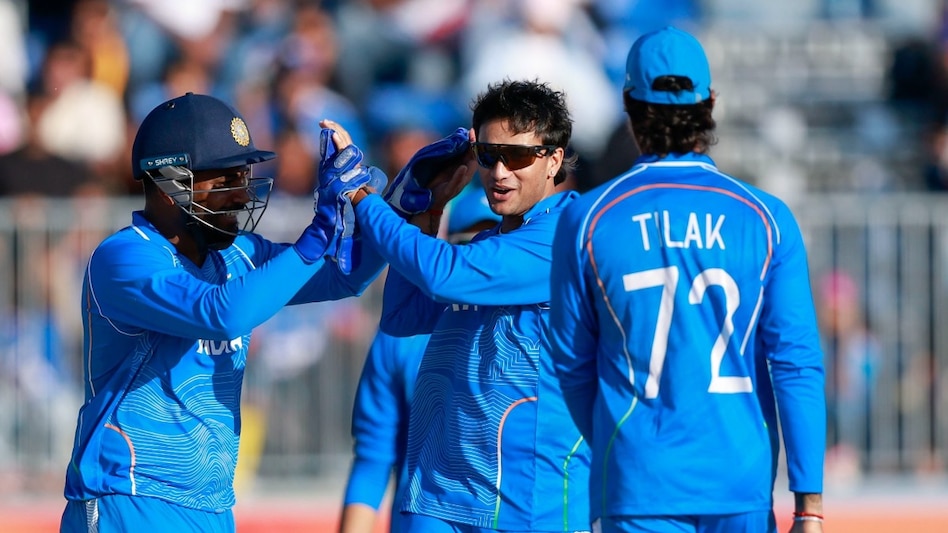
However, unusual names were displayed on the scoreboard during the game. Instead of Washington Sundar, 'W.S. Mani Sundar' was shown, and instead of Tilak Verma, 'T.T.V Namboori' was displayed. The scoreboard photo quickly went viral on social media, raising questions for the Sony Liv broadcaster. Nevertheless, it turned out that these names were not errors.

In the case of Washington Sundar, the entry 'W.S. Mani Sundar' reflects his name Washington Sundar, where 'W.S.' denotes his initials, and 'Mani Sundar' is his father's name.

Similarly, Tilak Verma's full name is Namboori Thakur Tilak Varma, which is why the designation T.T.V Namboori appeared on the scoreboard. Thus, the names displayed on the scoreboard corresponded to the players' official names.

Furthermore, the change in Sanju Samson's name attracted fans' attention. Instead of him, S. Vishwanadh was displayed on the scoreboard. The reason is that Vishwanadh is Sanju Samson's real middle name, and this part of the name was used on the scoreboard because Sanju was born in Tiruvannanthapuram.

The process of registering player names at major multi-sport events, such as the Asian Games, differs from standard cricket series. This is not a broadcasting error but part of standardized athlete registration. According to the procedures of the Olympic Council of Asia (OCA) and the International Olympic Committee (IOC), player information is usually entered based on their officially registered names, including those listed in passports and accreditation.

This data is stored in a centralized database used for the event and broadcasting. OCA rules stipulate that in bilateral cricket series, players are usually recognized by popular or commonly accepted names in the cricketing world. However, at multi-sport events like the Asian Games, a unified naming system is applied for athletes across different disciplines. This is why these 'other' names of Indian cricketers appeared on television graphics, digital scoreboards, and official reports. A similar situation was observed with the name of women's team captain Harmanpreet Kaur, who was displayed as Harmanpreet Kaur Buller, as well as with other athletes.
Similar stories

Kamran Akmal criticized Sam Ayub's celebration after the 2026 Asian Games match
Read more
www.aajtak.in

Kamran Akmal criticized Sam Ayub's celebration after the 2026 Asian Games match

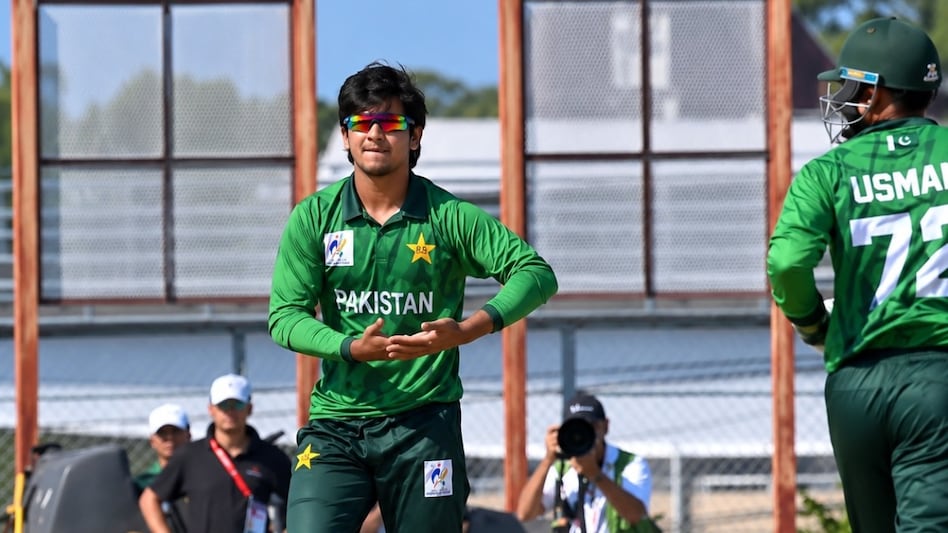
An incident that continues to be discussed occurred during the gold medal match of men's cricket at the 2026 Asian Games between India and Pakistan. Pakistani all-rounder Sam Ayub staged a controversial celebration after dismissing young Indian batsman Vaibha Suryawanshi.

Ayub imitated cradling a baby (celebration in cradle), which drew criticism from former Pakistani cricketer Kamran Akmal. Akmal voiced his opinion on this situation on the show 'Game Plan'. The program host also questioned such behavior in international cricket.

In response, Akmal stated that players should focus on their game rather than actions for social media. He emphasized that such things have been happening for a long time, and despite the team's poor results, players engage in attention-grabbing activities on social media. Akmal urged the management to consider this, noting that it concerns international cricket, and the player's age is irrelevant since he plays internationally. He added that Sam Ayub is not a child and should focus on his performance.

In this match, India defeated Pakistan by 19 runs, defending the championship title. At the beginning of the Indian innings, Vaibha Suryawanshi tried to put pressure on the Pakistani bowlers. He showed his intent by scoring two boundaries in Sad Masood's over. However, he was dismissed while attempting a reverse sweep against Sam Ayub in the third over. Vaibha scored 15 runs off 9 balls.

In the match, India batted first and scored 211/6 in 20 overs. Abhishek Sharma played aggressively, scoring 61 runs off 28 balls. Tilak Verma quietly scored 51 runs without getting out, and Shivam Dube contributed 27 runs. After Vaibha Suryawanshi's early dismissal, Sanju Samson came in at number three.

Pakistan's start while chasing was not the most successful, but Hasan Nawaz tried to change the game's momentum, showing explosive play with 96 runs off 51 balls and putting pressure on the Indian bowlers. Jasprit Bumrah and Shivam Dube performed excellently under pressure, restricting Pakistan to 192/6.

Difference in Sportsmanship Between India and Pakistan at Asian Games: No Handshakes in Cricket, Mutual Respect in Other Sports.
Read more
www.aajtak.in

Difference in Sportsmanship Between India and Pakistan at Asian Games: No Handshakes in Cricket, Mutual Respect in Other Sports.

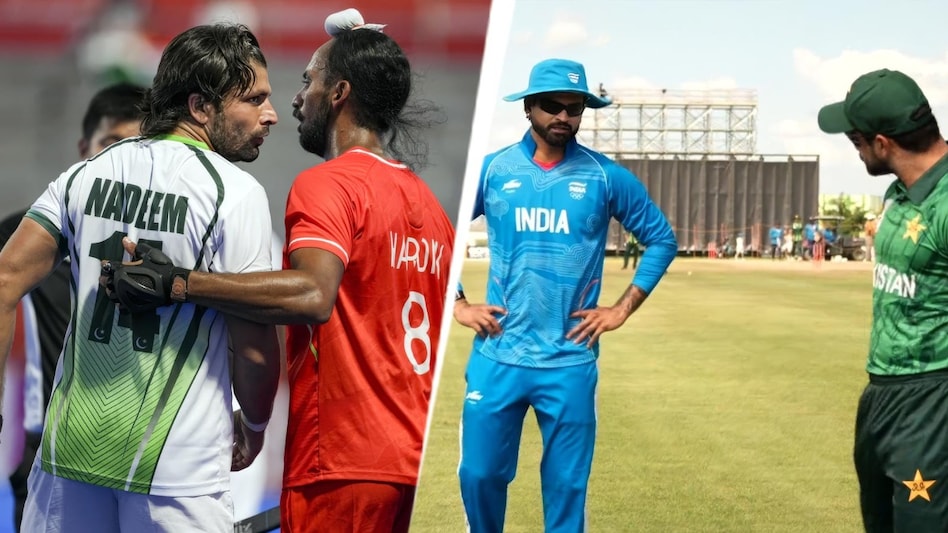
In matches between India and Pakistan in cricket, the exchange of handshakes is rare, and this pattern reappeared at the final of the men's Asian Games tournament in Nishin on Saturday, October 3. Although the teams competed for the gold medal, the captains of both teams did not shake hands either before the toss or after the game concluded. Many videos circulated on social media after the match, showing that the Indian team did not shake hands with the Pakistanis.

The Indian team defeated Pakistan in the gold match, winning by a margin of 19 points, securing their second consecutive gold medal in men's cricket at the Asian Games. India's captain, Shreyas Iyer, won the toss and chose to bat first. Before the official greeting procedure, Shreyas and Pakistan's captain Sahibzada Farhan exchanged greetings, but the traditional handshake did not take place.

However, the situation between India and Pakistan in other disciplines of the Asian Games was completely different. For instance, in squash, Abhay Singh from India and Muhammad Irfan from Pakistan met in the men's singles semi-final. Abhay won with scores of 11-3, 12-10, and 11-6, advancing to the final. Despite the intensity of the match, both athletes shook hands after the game.

In tennis, players from both countries observed sporting traditions, exchanging handshakes or greeting opponents, coaches, and officials with their hands. This sporting culture was maintained in the team competitions between India and Pakistan as well.

In hockey, despite a tense match where India beat Pakistan 4-3, respect among the athletes remained off the field. After the game, Indian and Pakistani players shook hands, and Pakistan's coach, Tahir Zaman, also shook hands with members of the Indian team.

The most touching scene occurred in volleyball, where Pakistan defeated India 3-0. Nevertheless, an atmosphere of warmth prevailed among the players of both teams after the match. Pakistani athletes showed support to the Indians: middle blocker Musavir Khan patted Amit Balwan Singh's hair, and another Pakistani player patted him on the back.

The reason for the difference in behavior lies in the fact that the tradition of no handshakes between the Indian and Pakistani cricket teams began after the confrontation at the Asia Cup 2025 and continues in subsequent matches. Furthermore, in September 2026, the women's cricket teams of both countries also did not observe the traditional greeting. Thus, within the same Asian Games, two different pictures of relations between India and Pakistan were demonstrated: in most sports, there was a spirit of rivalry accompanied by sporting respect, whereas in cricket, the practice of refusing handshakes persisted.

Indian athletes achieve success at Asian Games 2026, winning numerous medals
Read more
www.aajtak.in

Indian athletes achieve success at Asian Games 2026, winning numerous medals

The Asian Games reached their peak, and Sunday proved to be a mixed day for Indian athletes. The athletes demonstrated their dedication in disciplines such as running and field sports, hockey, and boxing, thereby bringing pride to the country. On Sunday, India won a total of 7 medals, bringing the overall tally to 37.

In running and field events, Indian athletes showed outstanding results, securing several awards. Sarvesh Kushare received a silver medal in the men's high jump, displaying brilliant performance. Parul Chaudhary won a bronze medal in the women's 3000 meters steeplechase, setting a personal record. In the intense decathlon competition, Tejashwin Shankar added a bronze to the country's collection.

In the women's final of the 200 meters, Harita Bhadra surprised everyone by winning a bronze medal. Ansi Sodjan secured a silver medal in the women's long jump after fierce competition.

Parul Chaudhary won a bronze medal in the women's 3000 meters steeplechase at the Asian Games 2026, setting an impressive national record time of 9:08.67.

The Indian women's hockey team dominated the field, achieving a convincing victory over Singapore with a score of 7:0, thus securing first place in Group B. In this match, Sunelita Toppo scored two excellent goals.

What happened in boxing? Indian boxers continue to show excellent results. Ankush, Parvin, and Nrendra won their bouts, advancing to the semi-finals and guaranteeing the country at least bronze medals.

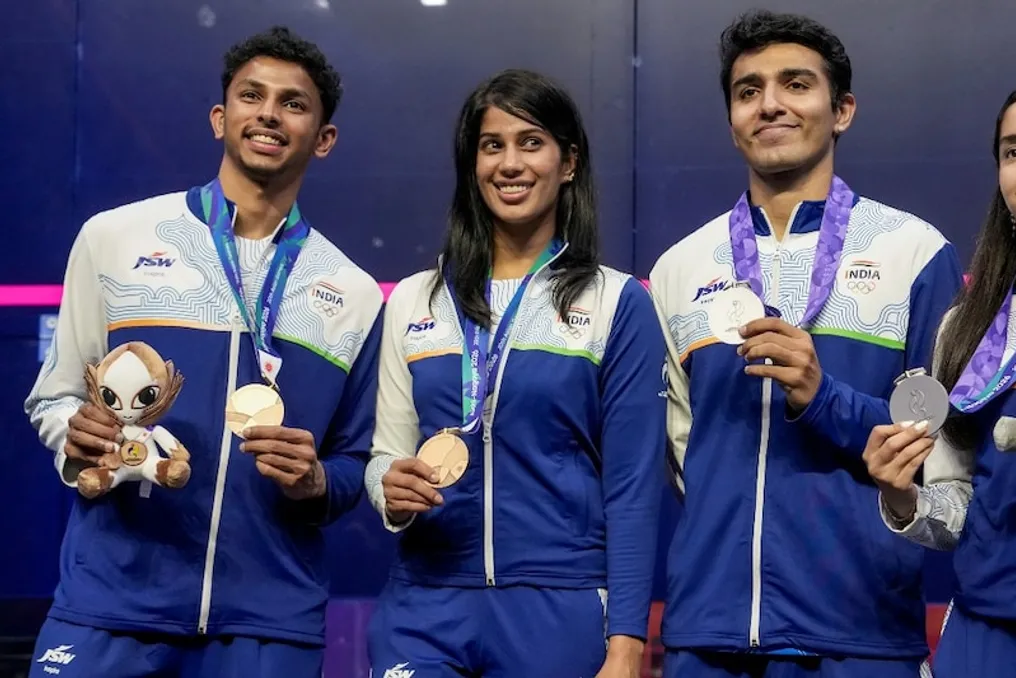
In squash, India had to fight a bit to win a silver medal. Abhay Singh and young talent Anahat Singh both finished in second place, losing to Malaysian athletes in their singles finals.

Indian archers demonstrated excellent form on Sunday, successfully qualifying for the semi-finals in five different disciplines—compound and recurve. The day was difficult for Indian athletes in badminton: all six players in singles and doubles, including P.V. Sindhu and Unnati Hooda, were eliminated from the tournament after losing in intense matches. Meanwhile, the Indian men's volleyball team confidently started its journey, defeating Vietnam with a score of 3:0.

Popular