Senac offers in-person courses in gastronomy, health, technology, and beauty in Rio das Ostras
Read more
Grupo Globo
g1.globo.com

Senac offers in-person courses in gastronomy, health, technology, and beauty in Rio das Ostras

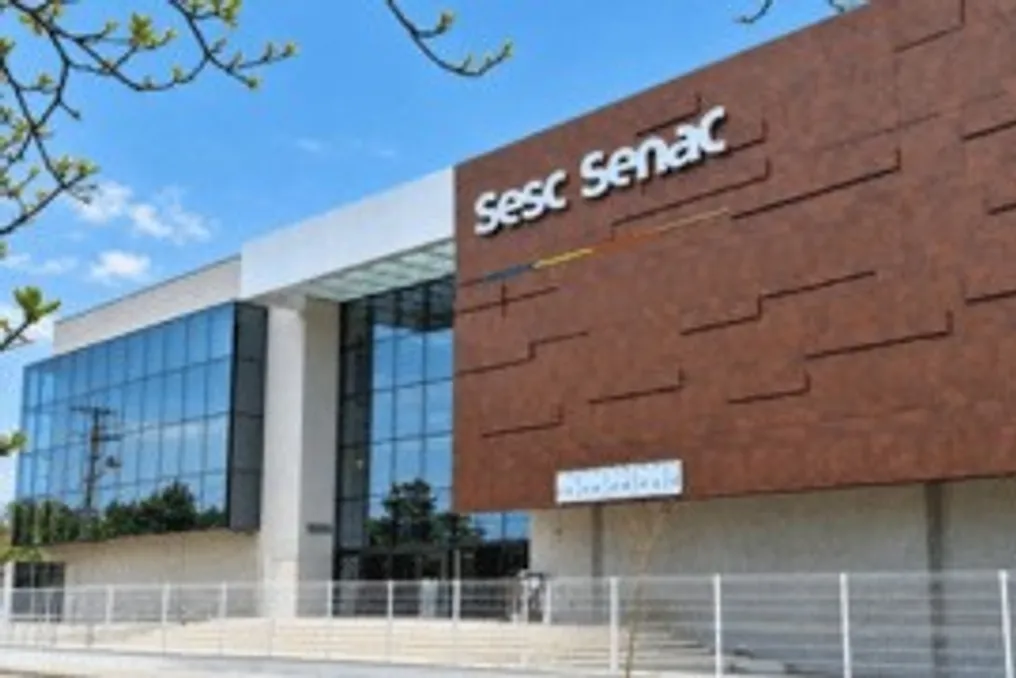
The Integrated Center Sesc Senac offers various professional qualification opportunities in different sectors, targeting both those seeking a new career and professionals wishing to enhance their knowledge for the job market. The unit located in Rio das Ostras provides in-person training in the areas of gastronomy, health, technology, and beauty, with classes scheduled to start between September and October 2026. These courses feature practical lessons and content focused on professional practice, and are supported by the Secretariat of Economic Development and Tourism.

The Integrated Center Sesc Senac is located at Rua João Batista Cordeiro, in Jardim Campomar (known as the street of the Third Age Renaissance). Details regarding enrollment, fees, and registration can be obtained through the provided link.

In the gastronomy area, there is the course titled 'Pizzas: Secrets and Recipes That Are Dough.' This training qualifies students in preparing fundamental pizzas, applying specific methods, and adhering to food safety protocols. The total workload is 52 hours, with classes scheduled for Tuesdays, from 6 PM to 10 PM, starting on October 13, 2026, and ending on January 26, 2027.

Another available option is the course 'Cakes and Jams To Win the Lottery.' It covers topics such as preparation techniques, food safety standards, freezing processes, price setting, sales planning, and product promotion. With a duration of 24 hours, classes will take place from Wednesday to Friday, from 8 AM to 12 PM, scheduled between November 13 and December 4, 2026.

For those interested in the health field, the Nursing Technician course provides comprehensive training of 1,600 hours. This program includes technical knowledge, laboratory activities, and supervised internship. Classes are in-person, held from Monday to Friday, from 6 PM to 10 PM, starting on October 19, 2026, and concluding on July 13, 2028.

The technology programming also includes the course 'Artificial Intelligence Without Mystery, Boosting Your Productivity.' This module teaches, in practice, the use of tools such as ChatGPT, Copilot, Gemini, Gamma, and Leonardo AI for creating videos, images, presentations, and texts. The training has 16 hours and takes place on Saturdays, from 9 AM to 1 PM, from October 24 to November 14, 2026.

Additionally, the Fundamental Computing course focuses on mastering the computer, the internet, and Microsoft Office Suite programs, taught in practical classes in the Information Technology laboratory. With a duration of 60 hours and one device per student, this course is scheduled for Saturdays, from 9 AM to 1 PM, from September 19, 2026, to January 23, 2027.

In the beauty segment, the 'Eyelash Extension' course prepares professionals for various techniques, such as fio a fio, Russian volume, hybrid, and extensions ranging from 2D to 6D. This training lasts 24 hours and will be held on Saturdays, from 9 AM to 1 PM, starting on September 26 and ending on October 31, 2026.

Finally, the 'Hairdresser Work Practices' course is intended for those aiming to start a professional career in cuts, coloring, styling, and hair treatments. The training totals 100 hours, with classes on Wednesdays, from 6 PM to 10 PM, scheduled from October 14, 2026, to April 28, 2027.

Similar stories

NCERT integrates entrepreneurship and startup lessons into ninth-grade textbooks
Read more
timesofindia.indiatimes.com

NCERT integrates entrepreneurship and startup lessons into ninth-grade textbooks

A new section dedicated to startup and entrepreneurship topics has been added to the NCERT textbooks for ninth-grade students.

The story of Lijjat Papad company, founded in 1959 by seven women with an initial capital of 80 rupees and a terrace in Mumbai, is provided as an example. This story will be used to teach ninth-grade students how even the most modest idea can turn into a large enterprise.

Manash Pratim Gohain, a journalist with over twenty years of experience at The Times of India, is known for his extensive body of work covering educational policy, politics, and governance. He has received recognition for his in-depth coverage of the National Education Policy (NEP) 2020, accreditation reforms, and skill development initiatives.

Furthermore, he has covered student politics, urban politics, and social movements. His political journalism, which combines a reflective approach with news reporting, lends depth to his texts by linking politics to social impact. With his 2500 articles and related publications, he has become an authoritative voice in the national discourse, especially regarding the connection between educational reforms and broader social changes.

The Path from Personal Goals to Entrepreneurial Influence: The Story of Dr. Mohale
Read more
iol.co.za

The Path from Personal Goals to Entrepreneurial Influence: The Story of Dr. Mohale

Dr. Mohale, who initially studied plant pathology and microbiology, transitioned into the field of education, completing her studies with a doctorate in natural science education. Her journey demonstrates how a personal desire to help her children with their learning transformed into scientific research, educational innovations, and an emerging business capable of benefiting young learners across Africa.

Dr. Mohale did not initially plan to become an entrepreneur. Her path began at home when her two young sons, Vavhudi and Rivahudi, experienced speech and language delays in early childhood. Wanting to understand the mechanisms of their learning and communication, she began studying how children perceive the world through play, images, and daily experiences. These personal questions ultimately shifted the direction of her academic career.

After moving into education, Dr. Mohale became a senior lecturer and researcher at the North-West University (NWU), where she focuses on finding new ways to make science, technology, engineering, and mathematics more accessible to young children.

Her experience inspired the creation of Renewable Rangers—an educational game that introduces children to STEM, renewable energy, sustainable development, and problem-solving through play. What started as an academic development is now moving toward commercialization.

Bringing innovation out of the university setting into the market required Dr. Mohale to venture into unfamiliar territory. While her academic career prepared her for conducting research, publishing results, and teaching, entrepreneurship introduced her to areas such as intellectual property, manufacturing, pricing, markets, and sustainable business models.

This new direction led to the creation of WARINOVA (Pty) Ltd, an innovative firm with the mission 'Innovations for a Sustainable Future in Africa.' Plans are also being considered to create a digital version of Renewable Rangers Africa, which could disseminate the educational concept to a larger number of children across the continent.

Dr. Mohale's experience shows how university research can go beyond scientific publications to become a practical solution. With the right support, such a solution can also evolve into a sustainable enterprise.

NWU supports this process through its entrepreneurship and innovation ecosystem. Initiatives such as Entrepreneurship@NWU and the bhive Enterprise Development Centre help researchers, students, and innovators find opportunities to create viable projects based on their ideas.

Dr. Mohale's entrepreneurial journey received an additional boost at the Standard Bank Leading Women Conference in Johannesburg in 2026. There, Shifra Chisha, CEO of the Graça Machel Trust, invited her to join the next cohort of the trust's Women Creating Wealth program.

This invitation prompted Dr. Mohale to seriously consider the commercial potential of her work. She is also exploring further education to strengthen her entrepreneurial knowledge and skills.

Entrepreneurship has not replaced her identity as a scholar, researcher, and educator; instead, it has expanded the ways she applies her knowledge and increased the reach of her work. Dr. Mohale's journey demonstrates a clear purpose—understanding and supporting the process of children's learning. This goal led to research, inspired educational innovation, and is now helping to shape a business with ambitions extending beyond the university.

The potential impact includes exposing more children to STEM from an early age, providing teachers with access to new learning tools, and encouraging youth to view sustainability and innovation as part of everyday life. Dr. Mohale's story reflects NWU's role in connecting personal motivation, academic knowledge, and entrepreneurial support, showing that significant innovations can begin with a simple question and grow into a solution serving a much wider community.

Differences in Academic Year Schedules: Why Some UAE Schools Have an October Break While CBSE Schools Do Not
Read more
www.khaleejtimes.com

Differences in Academic Year Schedules: Why Some UAE Schools Have an October Break While CBSE Schools Do Not

For some families in the United Arab Emirates, October signifies a well-deserved five-day school holiday, while for others it is a time for exams, mastering new topics, and returning to the full pace of the academic year. This raises the question of why students in some international program schools receive an interim break, whereas many schools with Indian and Asian curricula, including CBSE schools, do not.

The main reason lies in how different curricula structure their academic years, the number of instructional days required by schools, and the calendars approved by educational authorities. Schools following the unified UAE academic calendar hold an interim break for the first semester from October 12 to 16, 2026, with students returning on October 19. However, schools using other curricula or operating under different regulatory agreements may have different schedules.

In schools with international programs, the October break is usually integrated into the rhythm of the academic year, providing students and teachers a pause after several weeks of continuous learning. Sarah O'Regan, Director and CEO of GEMS Wellington Academy in Silicon Oasis, reported that the school aligned its schedule with the directives of the UAE Ministry of Education. She noted: 'Our mid-semester break is from October 12–16. The UAE Ministry of Education asked schools to align their academic calendars, as some schools initially planned the break for October 12, and others for October 19. Therefore, we agreed on the start date of October 12.'

According to O'Regan, this break is important not only as a chance to rest but also because students face academic, social, and digital pressure, making recovery time critical. She emphasized that for modern children, rest is not just stepping away from studies, but a necessity to cope with cognitive demands, social complexity, performance pressure, and the constant stream of digital stimulation. She added that such a pause can contribute to learning rather than hinder it, as rest is part of the knowledge consolidation process.

Thomas Kinnersley, Director of Nord Anglia International School Abu Dhabi, views the October break similarly as an integral part of the academic cycle, not an interruption. He believes that a timely mid-semester break is a vital component of a successful academic year, not a break from it. In his words, education demands a lot from children who concentrate daily, solve problems, manage relationships, and respond to challenges. The benefits are felt by teachers too: teaching is an intellectually and emotionally demanding process, and staff well-being directly impacts the experience children receive at school. The break allows teachers to step away from the semester pace, spend time with family, and return with the energy and mental clarity needed for the best work with students.

The difference becomes apparent when considering the structure of the academic year. Approximately a quarter of students in private UAE schools study in schools with the Indian curriculum, including CBSE, ICSE, and Kerala state board schools. Their academic year has a completely different rhythm, running from April to March to align with the cycle of public examinations in India. In many CBSE schools, October coincides with the first-semester examination period or immediately follows it. Instead of taking a pause for a dedicated holiday break, schools continue studying the next part of the curriculum.

Abhilasha Singh, Director of Shining Star International School in Abu Dhabi, confirmed this situation at her CBSE school. She stated: 'CBSE schools do not have a mid-semester break. In October, we have our first-semester exams, and after that, we immediately move on to the program for the coming months.' She also pointed out that the required number of working days limits flexibility for an additional break. Singh noted that there is a difference between the UAE school calendar and the number of working days observed by schools in India, and that the 'content-heavy nature of the curriculum' further narrows the possibilities for introducing extra breaks. She added: 'We would certainly like to have a mid-semester break, but our program is very content-dense. We already lose almost 20–30 days compared to over 207 working days in the Indian academic calendar (referencing India). Thus, our next break will be during National Day holidays, with a few days of Diwali holidays falling in between.'

Schools with Pakistani and Bangladeshi curricula are similarly exempt from a unified calendar, as their academic years are synchronized with the respective educational boards. The key takeaway is that there is no single template for October holidays across all private schools in the UAE. International schools may incorporate a mid-semester break into the approved academic calendar, whereas CBSE and other Asian schools may organize October around exams and continued instruction, with longer breaks at other times of the academic year.

Nawfal Ahmed, Founder and Managing Director of Woodlem Education, reiterated that CBSE schools generally adhere to the working day requirements set by the relevant educational authority. He explained: 'CBSE schools generally do not have a mid-semester break in October, even if it marks the end of the semester. The number of working days is prescribed by the relevant government educational authority and can vary across emirates, and our school fully complies with these requirements.' For schools without an October break, wellness initiatives can be integrated into routine school life. Ahmed concluded: 'However, well-being is not just a semester-bound program; it is an intrinsic and valuable part of our school culture, which is consistently embedded in our approach to supporting teachers and students.'

Popular