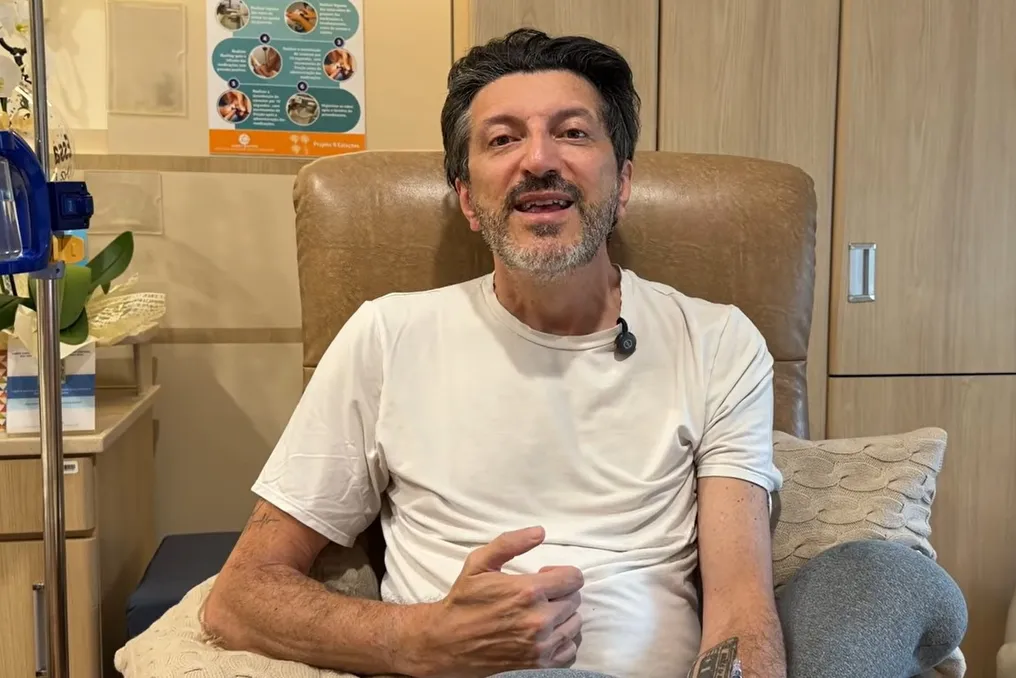
The influencer Lito Sousa died this Thursday, the 1st, due to complications from Creutzfeldt-Jakob disease. Approximately two weeks before his death, he received a substance that had never been tested in humans: ALN-6457.
This compound, developed by the American pharmaceutical company Regeneron in collaboration with Alnylam Pharmaceuticals, represents an attempt to combat Creutzfeldt-Jakob disease, for which there is currently no treatment capable of stopping its progression. Lito's wife, Mila Seidl, disclosed in a video on September 14th that he had been hospitalized in the ICU due to complications from the disease when he received the compound the previous weekend, and that there were no signs of adverse reactions, an inherent risk in testing novel molecules in humans.
The medical team was awaiting results from tests conducted six weeks after administration to check for any changes in his clinical condition. Since the compound has not yet completed clinical trial phases, few detailed pieces of information about it are publicly available, and g1 compiled existing clues to clarify what is known about the substance.
What is compassionate use
Lito's access to ALN-6457 occurred through a regulatory procedure called compassionate use. This mechanism allows patients facing serious, debilitating, or life-threatening illnesses to receive medications, biological products, or devices that are still in experimental phase and lack sanitary registration, provided there is no other effective therapeutic option.
The granting of this permission for Lito's case was done by the National Health Surveillance Agency (Anvisa). The prefix 'ALN' in the compound's name refers to Alnylam, a company that, in partnership with Regeneron, focuses on drugs for the central nervous system. Publicly accessible documents from Alnylam show that prion diseases, a group that includes Creutzfeldt-Jakob and others caused by the same protein, were targets of the collaboration from the beginning, alongside Alzheimer's and Parkinson's.
A brake on the protein factory
Lito's disease originates from a protein known as a prion. In its natural configuration, this protein is present in the brain without causing problems. However, in Creutzfeldt-Jakob, a variant with abnormal folding acts as a template: by interacting with healthy proteins, it forces them to adopt the same shape, allowing the damage to spread through the brain tissue.
The treatment aims to intervene before this stage. It uses a small interfering RNA (siRNA) molecule, which activates a natural cellular process, causing the cells to cease producing a specific protein. Inside the cell, this molecule is processed by a protein complex that acts as a search system, identifying copies of messenger RNA containing the instruction for the prion protein and destroying them before the protein is synthesized. With fewer copies of the recipe, the cell produces a reduced amount of prion.
The underlying logic is that with less healthy protein available, there is less material susceptible to deformation. It is important to note that this approach does not reverse established damage nor correct proteins that have already folded incorrectly, but theoretically, it may slow the progression of the disease by decreasing the generation of new vulnerable proteins.
The challenge of reaching and surviving in the brain
Delivering the molecule to the correct location is the most challenging step. The brain is protected by the blood-brain barrier, which acts as a natural filter and prevents most intravenously or orally administered drugs from entering.
Daniel Dahis, a doctor in Biomedical Engineering and specialist in clinical research, explains that the difficulty of these types of medications goes beyond just reaching the organ. After penetrating the cell, the molecule can be directed to acidic compartments used by the cell for digestion, where, if it is not resistant, it will be destroyed before performing its function.
To overcome these impediments, Alnylam's platform uses chemical modifications that maintain the integrity of the siRNA by associating it with a lipid chain called C16. This chain acts as a fatty anchor attached to the molecule, facilitating its passage across the cell membrane, a barrier that would block molecules with siRNA characteristics without this aid.
What the documents show
Currently, there are no clinical studies on ALN-6457, meaning its effects in humans are unknown. However, g1 managed to locate Alnylam's patent application regarding a C16-conjugated siRNA targeted at the prion protein, whose description corresponds to the substance authorized by Anvisa, as well as presentation materials of the same technology applied to Alzheimer's.
Patents generally cover an entire set of chemical variants developed over years, and it is likely that ALN-6457 belongs to this group. One document presents a test conducted in mice, where, at the lowest dose evaluated, a decrease of approximately 15% in the messenger RNA responsible for producing the prion protein was observed. According to Dahis, this data represents a positive biological signal but does not allow predicting whether a patient would notice any difference.
The experiment did not confirm whether the reduction in normal protein led to a decrease in the formation of the deformed version, nor did it demonstrate survival gain in animals, much less in humans. The specialist concludes that the body of evidence suggests the strategy warrants investigation, especially considering a disease with no treatment capable of interrupting its progression, provided safety uncertainties are considered and an individual risk-benefit assessment is performed.
Safety: initial, still short tests
Presentations made by Alnylam to investors in 2021 detailed tests conducted in rats and primates using the same C16 conjugation technology applied to the central nervous system. Clinical, neurological, and vital organ tests such as the brain, spinal cord, liver, and kidney showed no alterations attributable to the substance.
However, these tests were preliminary and short-term. The most complete safety protocol, required by regulatory bodies before starting human studies, was finalized by the company only for another program focused on Alzheimer's, and not for the candidate intended for the prion protein. The path to obtaining a definitive answer depends on clinical trials, a phase that ALN-6457 has not yet reached. Only with complete safety data and a comparative analysis among various patients will it be possible to determine if reducing the prion protein modifies the course of a disease that, until today, lacks an interruptive treatment.