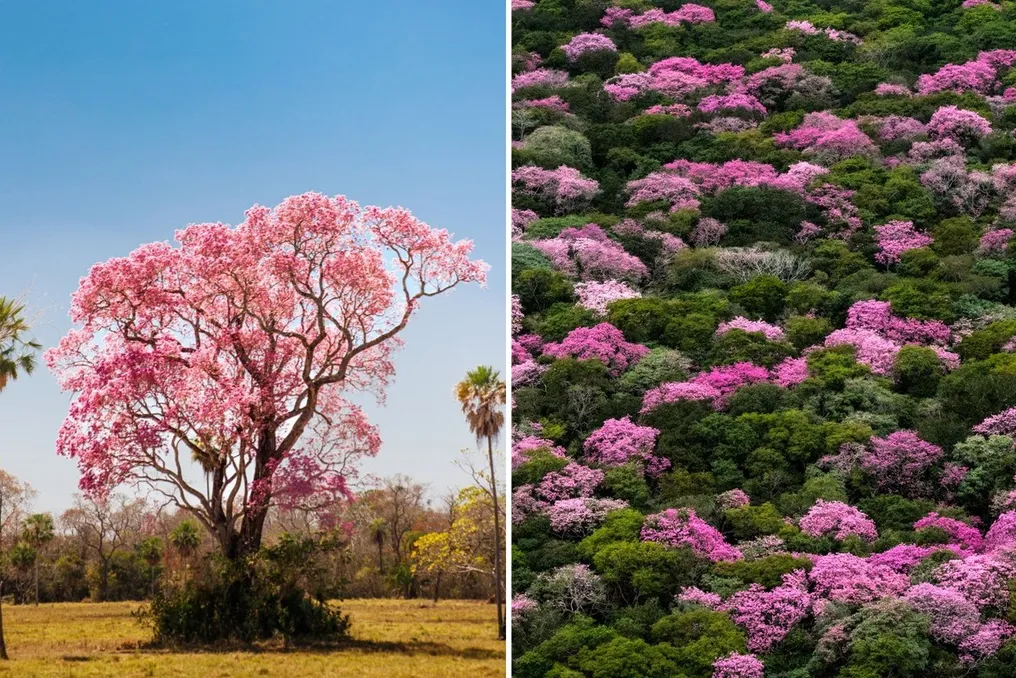
El Niño influence causes late flowering of pink ipês in the Pantanal in 2026
Read more
Grupo Globo
g1.globo.com

El Niño influence causes late flowering of pink ipês in the Pantanal in 2026

In 2026, the flowering cycle of pink ipês showed an unusual variation in the Pantanal, blooming later than usual. Generally, these trees start to flower in June and maintain their vibrant color until early spring.

In the locality of Miranda, Mato Grosso do Sul, specifically at Fazenda Caiman, pink ipês were only recorded at the end of September. This alteration in the flowering pattern is directly linked to the influence of the El Niño phenomenon and the changes observed in the area's temperature and precipitation patterns.

Rainfall and temperature alter flowering period

Biologist José Milton Longo, an ipê specialist, attributes the delay in the flowering of pink ipês to the specific rainfall and temperature conditions recorded in the region. He explained that since the trees are regulated by humidity and temperature, they react to these factors, reflecting the changes in rainfall regimes caused by El Niño, even if the cycle seems timeless.

According to the specialist, the increase in rainfall associated with El Niño has the potential to modify the occurrence of extreme weather events and impact the general climate, consequently affecting the reproductive cycles of various ipê species.

Furthermore, the traditional sequence of flowering was also disrupted this year. Normally, purple and pink ipês begin the cycle in June, followed by yellow, and finally white. However, there was a change in this order; the yellow bloomed again after a cold front, while the white ones presented a burst of color early on, expected to close the cycle of colors.

Flowering occurs during the dry season

The flowering process of ipês is part of the natural cycle of the trees and typically happens during the dry period. When rainfall decreases, the trees enter a phase of leaf loss and direct their energy towards producing flowers, which serve to attract pollinators, such as insects and birds.

Each specimen remains in bloom for approximately five to seven days. Since this interval varies according to the species and climatic conditions, the flowering can extend from June to October. During the dry season, it is common to observe ipês with flowers in purple, pink, yellow, and white in both urban areas and along the region's roads, transforming the landscape with each new bloom.

There are about one hundred varieties of ipê, classified as one of the most cultivated ornamental trees in Brazil. These species emerged after the extinction of the dinosaurs, marking the appearance of the first flowering plants. Ipês are large trees, capable of reaching up to thirty meters in height, and in Mato Grosso do Sul, the tree holds the status of a state symbol.

Similar stories

Spring begins in Brazil this Tuesday, with expectations of increased rainfall and temperatures amid El Niño
Read more
olhardigital.com.br

Spring begins in Brazil this Tuesday, with expectations of increased rainfall and temperatures amid El Niño

Spring officially begins in Brazil this Tuesday, the 22nd, at 9:05 PM, according to Brasília time. This new season is expected to be characterized by a progressive increase in both temperatures and precipitation across much of the national territory. According to the National Institute of Meteorology (INMET), this period will last until December 21st at 6:50 PM.

The season acts as a transition phase between dry and rainy periods, especially in the central area of Brazil. During this time, humidity from the Amazon gains more strength, aiding the advance of rains in the Midwest, Southeast, and parts of the south-central region of the North.

However, the trend is different in the north of the Northeast, where lower rainfall is predicted. INMET specifically highlights northern Piauí and northwestern Ceará, areas where climatological totals fall below 100 millimeters.

The arrival of spring may also trigger the first events of the South Atlantic Convergence Zone (ZCAS), a system linked to rains that affect the Southeast, Midwest, Acre, and Rondônia.

In the South Region, INMET signals the possibility of Mesoscale Convective Complex (MCC) episodes. Such systems are frequently associated with certain climatic conditions.

The gradual increase in rainfall in various parts of the country coincides with the start of planting the most important summer crops. With the end of winter, temperatures begin to exceed the usual levels of the previous season. Climatology released by INMET indicates that averages may exceed 28°C in the North and Northeast regions, as well as in isolated areas of the interior of the country.

The continuous warming has the potential to intensify heatwaves and raise thermal discomfort. The institute also warns of an increase in evapotranspiration, which impacts soil moisture, in addition to creating conditions favorable for the accelerated formation of strong storms due to the contrast between hot air and the passage of cold fronts.

Spring 2026 occurs in the context of El Niño formation, a phenomenon that INMET has been monitoring throughout the year. In June, the institute had reported that the phenomenon's conditions were established in the Equatorial Pacific, with projections of strengthening in the following months. Later, in September, INMET reiterated the forecast of a potentially very intense El Niño for the quarter between September, October, and November, reinforcing the importance of monitoring climatic conditions during the season.

Popular