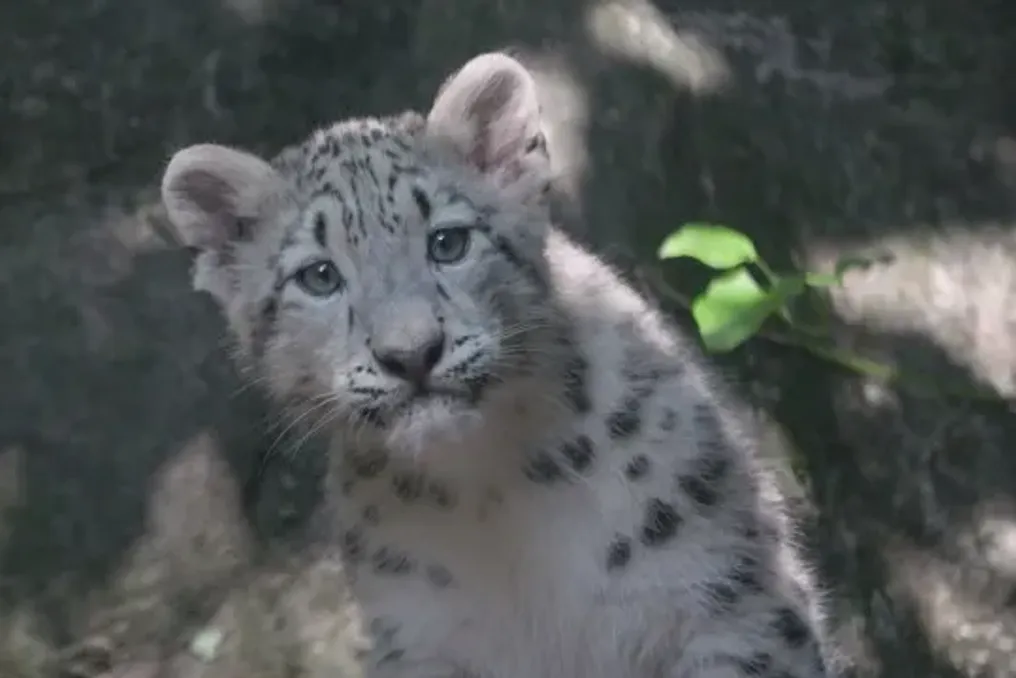
The Bronx Zoo, located in the American state of New York, announced the introduction of a new female snow leopard cub last Wednesday.
According to a statement issued by the institution, this new offspring is descended from Dari and Moutig and was born on May 31st. The note informed that the animal is in good condition after undergoing medical examinations and receiving routine vaccinations, and can now be observed exploring the area called the 'Himalayan Plateau' within the zoo.
With this new birth, the total number of snow leopards kept at the Bronx Zoo has reached eight specimens. The institution emphasized that snow leopards are considered one of the most discreet large felines on the planet because they are rarely seen in their natural habitat.
These animals have fur marked in shades of white and gray, which gives them excellent camouflage in their mountainous and rocky habitat. Furthermore, they possess large, padded paws that function as natural snowshoes, and long, fluffy tails, essential for maintaining warmth and balance when moving on inclined terrain.
Their natural distribution area comprises the high-altitude mountains of the Himalayas and the Tibetan Plateau, located in Asia, where they are perfectly adapted to survive in arid and cold climates. According to the International Union for Conservation of Nature, the snow leopard is classified as vulnerable, with a population estimate of five to seven thousand individuals across all of Asia.
The main threats to the survival of these felines in nature include retaliatory hunting practiced by cattle ranchers, habitat degradation, prey decline, in addition to illegal poaching and illicit trade. As predators, these large felines primarily depend on prey such as the blue sheep, argali, and Siberian ibex.
The Bronx Zoo pioneered the exhibition of snow leopards in the United States in 1903, and since then, more than 80 births have been recorded. Additionally, the institution collaborates with the Snow Leopard Species Survival Program of the Association of Zoos and Aquariums, a cooperative breeding scheme created to strengthen the genetic health of the species.