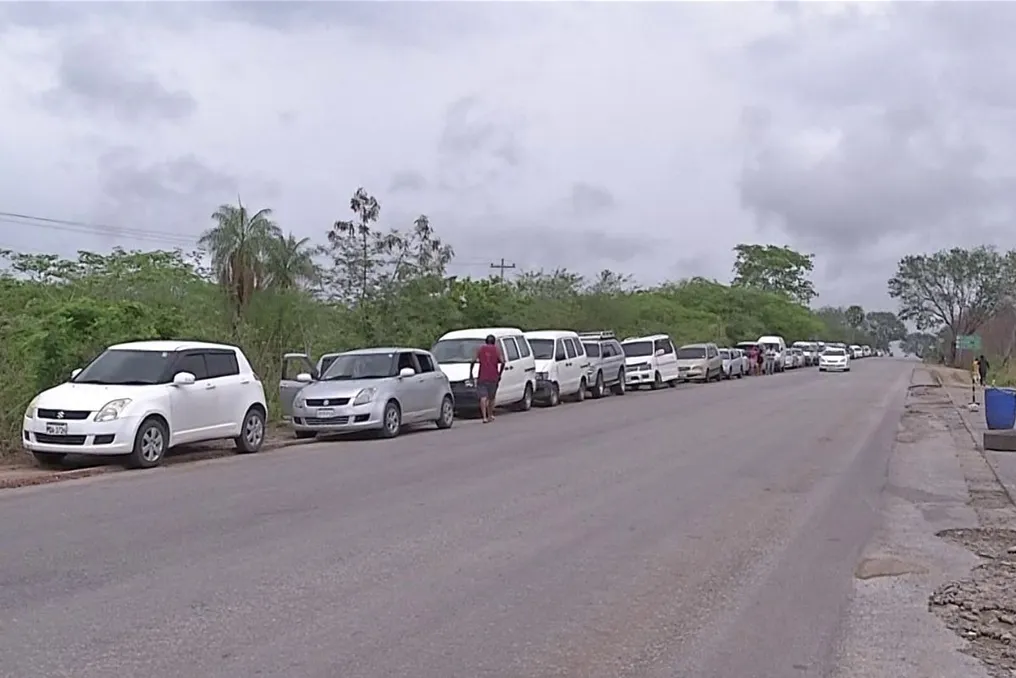
The fuel shortage affecting Bolivia over the last four days has caused changes in the border routine and boosted local commerce in Corumbá, Mato Grosso do Sul. Residents of the neighboring country, particularly from Puerto Quijarro, are crossing the Brazilian border in search of gasoline and diesel to keep their vehicles running.
Corumbá stations felt the impact immediately, registering a continuous increase in traffic of vehicles with foreign license plates throughout the week, which drove up sales in the region. Alessandro Moraes, administrative manager, observed that there was a significant growth in sales, estimating an increase of about 40% compared to previous periods without the crisis in Bolivia.
Despite the increased demand, the city's station infrastructure has managed to meet the demand, which ranges from cars and vans to large fleets of Bolivian trucks. Moraes emphasized that the service capacity is maintained thanks to good structure, an adequate number of employees and attendants, thus avoiding supply problems.
Long queues and impacts on daily life
On the Bolivian side of the border, the situation is described as critical. Drivers report facing extensive queues alongside the highways, with vehicles remaining stopped on the shoulder for several days waiting for fuel supply.
In this scenario, tanker trucks with a maximum capacity of 25 thousand liters are gradually starting to arrive, in an attempt to reestablish supply in the region. Due to the standstill, some residents are adopting temporary solutions. Rosa Silez, a merchant, reported being stuck in line for two days and having to go to Corumbá to buy fuel in a jerrycan.
The supply crisis intensified in recent days due to the interruption of diesel and gasoline transport by tanker trucks. According to the Bolivian state company YPFB, the absence of this transport affected the distribution of fuels to stations and generated queues in Santa Cruz and other areas of the country. On September 30, the company had announced an agreement with transport representatives aimed at the gradual resumption of the service.