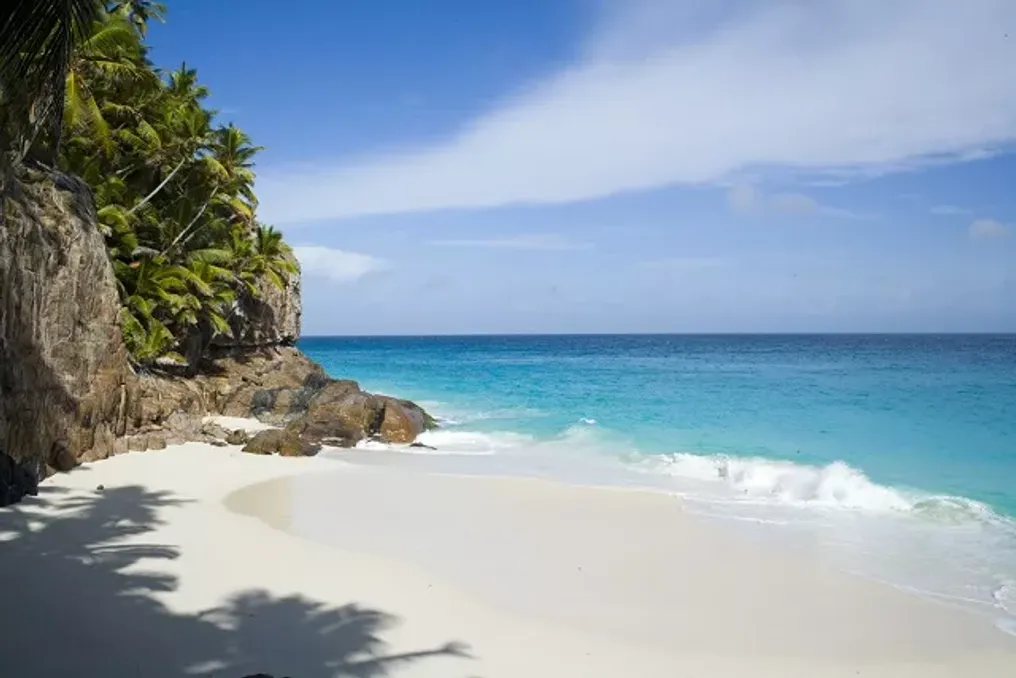
Many islands possess natural beauty that speaks volumes on its own. However, some islands hold a unique history that prompts deeper inquiry even before arrival. One such location is Fregate Island.
Located 55 kilometers east of Mahé in the Seychelles, this private island has spent decades restoring its natural habitat alongside developing luxurious accommodations. On the island, visitors can observe giant tortoises moving through the forest, rare bird species returning to restored habitats, and sea turtles continuing to lay eggs on the beaches.
Following a period of reconstruction, Fregate is preparing to welcome guests back. The island's official website lists its status as 'coming soon,' but a precise reopening date has not been announced, although international travel reports suggest a possible return in late 2026.
The interest in Fregate's return lies not only in what is being restored but also in what has been protected, rehabilitated, and saved from complete disappearance. Fregate covers approximately 200 hectares, with only about 10% developed. A significant portion of the island remains designated for conservation purposes, and it is recognized as an Important Bird Area.
The story of the Seychelles finch population best illustrates this transformation. By the late 1970s, it was believed that only about 40 such birds remained. Fregate became one of their last refuges, and decades of habitat restoration and predator control helped change this tragic narrative. A serious crisis arose in 1995 due to the introduction of Norwegian rats. After the initial eradication attempt was canceled, a second operation in 2000 successfully eliminated the rodents. Today, over 197 finches are registered on Fregate, and birds from this island have contributed to the formation of populations in other parts of the Seychelles.
This impressive improvement, however, may be less significant than what is happening on the ground. A bird once on the brink of extinction is now simply part of the sounds of the forest.
More than 3,000 Aldabra giant tortoises reside on Fregate, of which about 150 were initially brought from Aldabra. Some of these are equipped with GPS trackers so the conservation team can monitor their movements across the island. For a guest, this might mean simply observing a slow-moving tortoise through the vegetation, but it is rewarding to realize that the animal passing by is part of a much larger story of nature conservation.
During the turtle season from 2025 to 2026, Fregate recorded 513 turtle tracks and 229 nests, primarily from Hawksbill turtles, as well as green turtle nests. Some of these were relocated due to threats, including crab predation and seasonal erosion. In late 2025, a survey was also conducted for nearby Little Fregate, where seabird counts discovered nesting sites on the uninhabited island.
Fregate's conservation efforts extend to the underwater environment. Since 2018, the island has been involved in coral restoration, collaborating with Coralive and conducting experiments with mineral accretion deposition technology. The 'Coral Wheel' system moves growing coral structures to areas needing restoration while new structures take their place.
In 2024, monitoring revealed coral bleaching covering about 20% of the reef. Subsequent observations showed signs of recovery, including the growth of new corals on structures created as part of the restoration.
The reconstruction is expected to result in 17 villas and estates, along with updated infrastructure and new amenities for guests. Previous plans also included partial use of solar energy, with nature conservation work intended to continue throughout the construction.
However, Fregate's main appeal has never been its interiors; it is the island itself. Luxurious islands are not hard to find. But an island that has spent decades restoring what was nearly lost is something entirely different. When Fregate reopens, it will offer more than just seclusion and immaculate villas. It will provide an opportunity to stay where wildlife was not created for the pleasure of guests; it was here first.