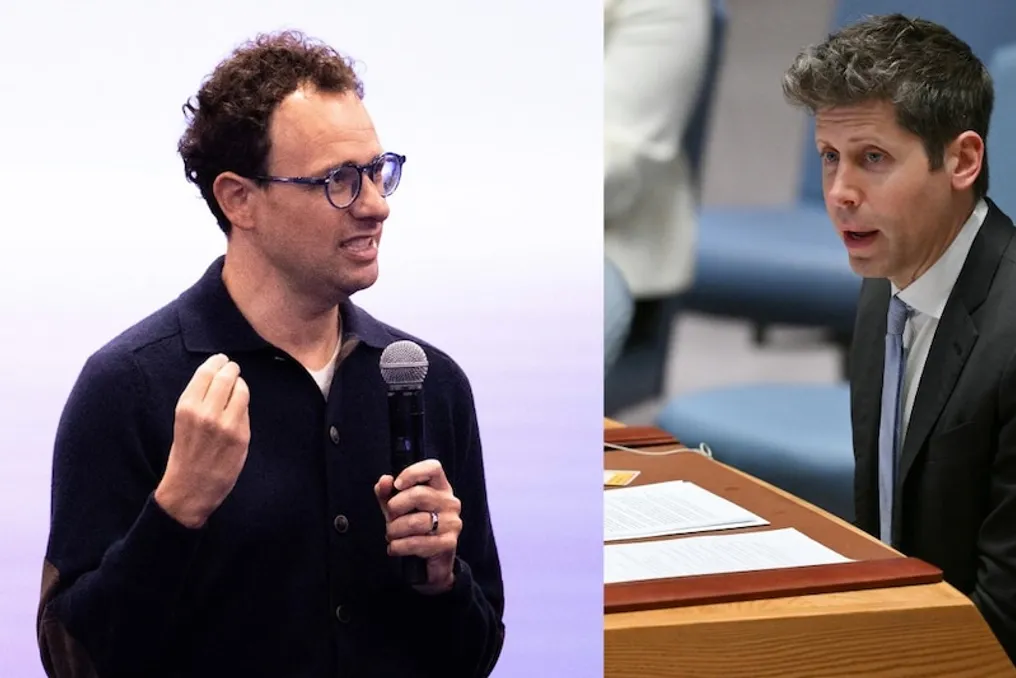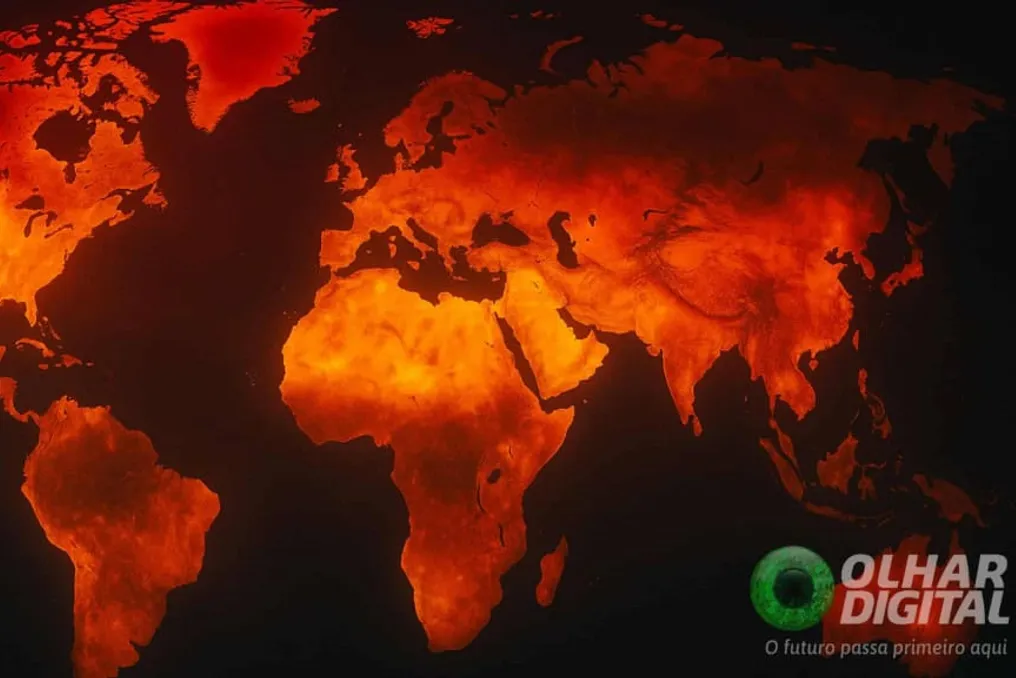
While artificial intelligence (AI) captures much of the public's attention, a considered more serious threat, climate change, has been relegated to the background. This observation was made by Paulo Artaxo, a professor at the USP Institute of Physics and coordinator of Sustainable Amazon, in an interview given to Olhar Digital.
During the 81st UN General Assembly, the United States President, Donald Trump, addressed both topics. Regarding AI, the Republican advocated that the official term should be changed to 'superintelligence.' However, his approach to climate change was marked by skepticism and criticism of international organizations.
Trump mocked climate warnings and celebrated his government's action to prevent the implementation of the first global tax on greenhouse gas emissions, while also defending oil exploration agreements. The United States is presented as a notable example in this context, as it leads the AI sector and ranks among the largest emitters of greenhouse gases, only behind China.
Subsequently, Chinese President Xi Jinping paid a state visit to Trump after his speech at the UN. Although AI was a topic of conversation between the leaders, climate change was omitted from this discussion.
This dynamic between the US and China corroborates the analysis of Leah Stokes, an environmental policy professor at the University of California, detailed in an essay published days earlier. Stokes argued that AI was 'consuming our attention,' but emphasized that climate change constitutes a more tangible danger.
The expert stated that, unlike AI, the existential threat of climate change 'is not hypothetical. It is killing people now.' She also suggested there is a convenience in forgetting the urgency of solving this problem.
While the existential risk linked to AI advancement remains speculative and controversial, climate change is a scientifically well-established topic. The link between burning fossil fuels and the increase in average global temperature is unquestionable, and there are several viable solutions to mitigate pollutant emissions, such as electric vehicles.
However, these advances are only a starting point, not a complete resolution, given that the consequences of global warming are manifesting with increasing frequency worldwide. In Brazil, for example, extreme weather waves are observed, including intense heat, extreme cold, and heavy rains.
The slow, gradual, and comprehensive worsening of climate change is a serious challenge. Seth Baum, executive director of the Global Catastrophic Risk Institute, commented to the New York Times that 'we normalize and get used to things that happen gradually' and that 'ordinary people do not want this to be the subject they are always thinking about.'
On the other hand, Toby Ord, a researcher at the University of Oxford and author of The Precipice: Existential Risk and the Future of Humanity, told the newspaper that, in terms of risks that could lead to the end of humanity, he considers AI to be a greater danger.
Paulo Artaxo reiterated the need for urgent regulation on both issues. Besides discussing the issue of data centers, he highlighted the importance of establishing 'an adequate governance system that can deal with the risk humanity is running due to these two things.'
The text concludes by pointing out that although an apocalypse caused by AI may be more media-attractive, a more real problem is progressively suffocating the planet.