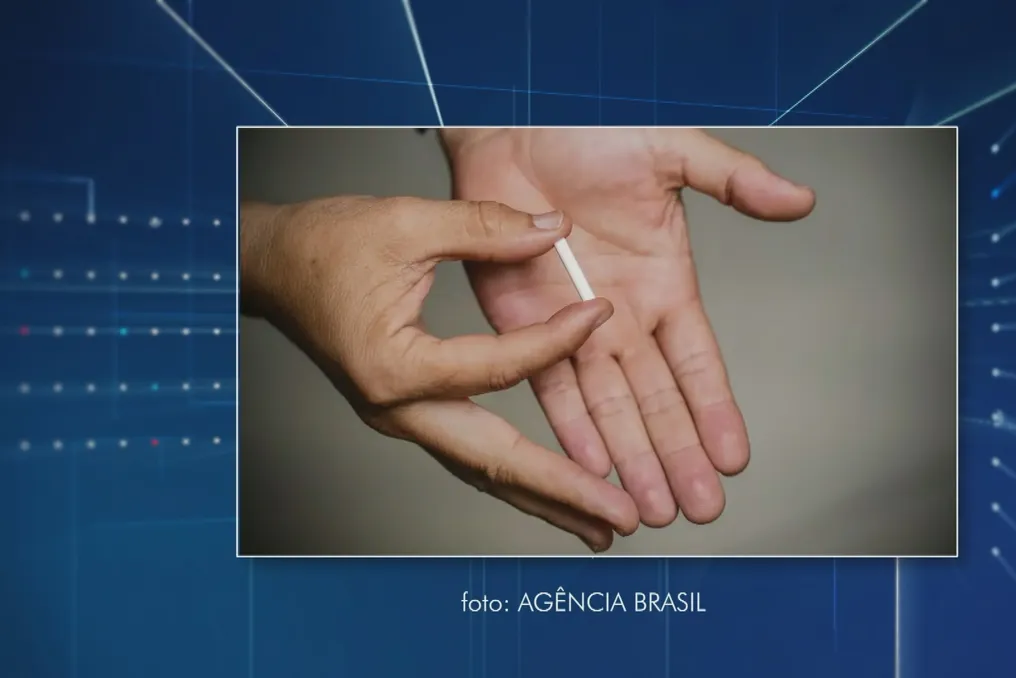
Twelve medical and scientific entities, both national and international, have formally requested the National Health Surveillance Agency (Anvisa) to decree a complete ban on manipulated hormonal implants in Brazilian territory, popularly known as 'beauty chips.'
This plea was presented in the Rio de Janeiro Charter, distributed this Thursday, the 1st, during the 20th World Congress of Menopause, held in the state capital.
Among the signatory organizations are the Brazilian Society of Endocrinology and Metabolism (SBEM), the Brazilian Federation of Gynecology and Obstetrics Associations (Febrasgo), and the International Menopause Society (IMS). Other entities supporting the charter include the Brazilian Society of Diabetes (SBD), the Brazilian Association for Studies in Medicine and Sexual Health (ABEMSS), the Brazilian Association for the Study of Obesity and Metabolic Syndrome (Abeso), the Brazilian Society of Urology (SBU), the Brazilian Society of Climacteric (Sobrac), as well as the Brazilian societies of Mastology (SBM), Human Reproduction (SBRH), Cardiology (SBC), and Hepatology (SBH).
The entities warn that these implants, often promoted as a solution for menopause symptoms, changes in libido, weight loss, and muscle gain, have not undergone quality clinical studies to validate the promised benefits or ensure the safety of their use.
The charter also points to the expansion of a business model involving large-scale manufacturing, stock accumulation, training of doctors for prescription, and active promotion on social media.
A previous investigation by g1, conducted in May, detailed the operation of this market despite sanitary restrictions, identifying professionals who prescribe the implants, offer training on their use, and maintain commercial ties with compounding pharmacies. Documents obtained by the outlet showed that implants acquired for approximately R$ 200 could be resold to patients for amounts ranging between R$ 4,000 and R$ 12,000.
Currently, the entities demand that the ban be supplemented by stricter oversight, a strengthening of the adverse event notification system, and accountability for those involved in the commercial chain.
What is prohibited and what might change?
The debate on the topic has persisted since October 2024, when Anvisa had determined the suspension of the manipulation, commercialization, advertising, and use of all manipulated hormonal implants. However, after several administrative appeals submitted by clinics, pharmacies, and doctors, the agency reversed its decision the following month, replacing the total ban with more restrictive guidelines.
Currently, the commercialization and use of manipulated hormonal implants containing anabolic steroids or androgenic hormones for aesthetic purposes, aiming for muscle mass gain or improved athletic performance, remain prohibited. However, manipulation is still permitted under specific circumstances for other therapeutic purposes.
The g1 investigation in May exposed how this permission created a loophole allowing implants with anabolic effects to continue being offered as treatment for menopause, endometriosis, and polycystic ovary syndrome, even without solid proof for such indications in this application format.
The medical societies argue that the exceptional authorization for individualized manipulation should not be used to sustain a market of products lacking the studies required for registered medications. They emphasize that 'individualized prescription does not mean experimentation without evidence and safety.'
The new charter demands that Anvisa prohibit the manipulation, stocking, sale, distribution, advertising, and use of manipulated hormonal implants, regardless of the intended purpose.
Why are implants concerning to doctors?
One of the main concerns lies in the method of administration itself. Once inserted under the skin, these implants have the capacity to release hormones for several months. Unlike treatments administered in pills or gels, which allow for dosage adjustments or discontinuation of use, implants cannot always be completely removed.
If the patient develops an adverse reaction or is exposed to excessive hormone levels, it may not be possible to stop the treatment immediately. The entities also point to the lack of research confirming the pharmaceutical quality, stability, sterility, and hormonal release rate of these items.
Additionally, doubts persist regarding long-term safety, covering cardiovascular, hepatic, thrombosis, stroke (CVA) risks, and potential impacts on mammary glands and the endometrium.
Gestrinone, a synthetic steroid found in certain implants, can cause acne, excessive hair growth, hair loss, voice changes, and clitoral enlargement. Some of these modifications may persist even after stopping treatment.
Risks are already being observed in clinics. In conversation with g1, endocrinologist Clayton Macedo, a graduate of the Federal University of São Paulo (Unifesp), reported treating patients with serious complications resulting from the use of these products. He stated: 'Many of these patients arrive hospitalized and do not know exactly what was implanted. And, unlike other treatments, you cannot simply stop—the hormone continues to be released in the body. In some cases, removal is not even possible.'
The medical societies clarify that the request does not imply opposition to hormonal therapy itself, as it has proven efficacy and safety through scientific evidence when applied correctly and monitored. There are registered and studied medications available in formats such as gels, patches, tablets, and vaginal formulations, which allow for dose modulation and treatment interruption as needed.
Regarding testosterone, the only recommended use for women, according to international consensus, is the treatment of hypoactive sexual desire disorder in post-menopause, provided there is a careful clinical evaluation and doses that keep hormone levels within the female physiological range. There is no data justifying its use for weight loss, energy increase, or longevity.
The scope of the entities' request also excludes contraceptive implants duly registered with Anvisa, such as etonogestrel, used for pregnancy prevention. The focus is specifically on prohibiting manipulated hormonal formulations in implant form that have not undergone the same safety and efficacy evaluation process required for registered drugs.