
Oil Minister Naraj Mittal states that restricting fuel sales is prohibited
Read more
Business Standard
business-standard.com

Oil Minister Naraj Mittal states that restricting fuel sales is prohibited

Petroleum Secretary Naraj Mittal announced that the central government will oblige private fuel retailers across the country to cease imposing restrictions on the sale of diesel and gasoline at retail outlets.

Private Indian oil refining companies, such as Reliance Industries and Nayara Energy, have implemented restrictions on fuel sales in their retail networks to minimize losses from selling fuel below market prices. According to a report, at Jio-bp outlets, the daily purchase limit for diesel per customer was restricted to 50 liters, while at Nayara stores, limits ranged from 70 to 200 liters.

Mittal emphasized: 'No one is allowed to set a sales limit. They are doing it, and we will take action. We will tell them that this is unacceptable. Instructions were previously issued; the same applies today. The government's position has not changed.'

Amid the ongoing crisis in the Middle East, oil marketing companies are incurring losses from the sale of gasoline, diesel, and liquefied petroleum gas (cooking gas). Commenting on the escalating tensions in the region, Union Minister of Energy Hardeep Singh Puri noted that India's 'period of unease' has not yet ended. However, Puri added that Indian consumers are protected from sharp increases in energy prices.

Mittal also pointed out that the Middle East crisis highlighted the need to increase the share of natural gas in India's energy balance, as the country should not depend on a single type of fuel. He noted: 'We need to learn lessons from the recent crisis. India largely avoided damage from this crisis. We did not see price hikes, nor did we see shortages. We have not seen complaints from households about lack of energy.'

As part of efforts to increase the share of natural gas to 15 percent of India's total energy balance, the government plans to tenfold increase compressed biogas (CBG) production. Under the GOBARdhan scheme (Galvanizing Organic Bio-Agro Resources Dhan), which provides financial support for CBG production, the government will provide support of up to 2 crore rupees per ton per day of installed capacity.

Furthermore, under the guidance of the Petroleum and Natural Gas Regulatory Board, the government has launched the National PNG 3.0 campaign with the aim of connecting 5 million new domestic piped gas (D-PNG) connections to promote wider use of natural gas. An online portal, MyPNG, has also been launched to provide PNG-related information and simplify communication between consumers and city gas distribution companies.
Similar stories

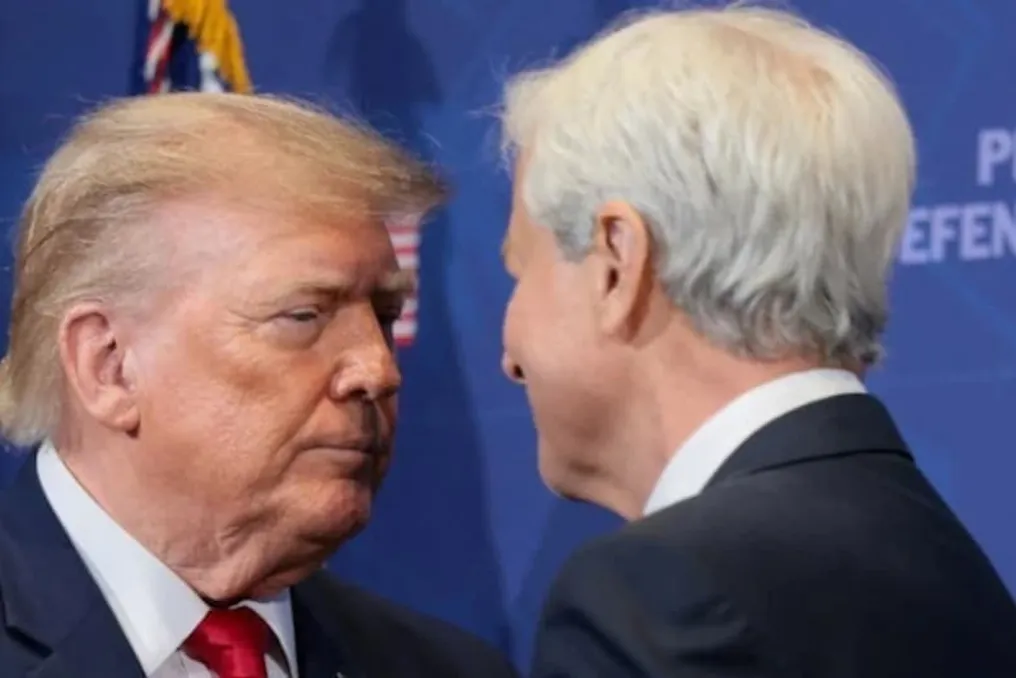
JP Morgan CEO warns the US about the consequences of sanctions against Russia regarding the Russian oil market
Read more
www.aajtak.in

JP Morgan CEO warns the US about the consequences of sanctions against Russia regarding the Russian oil market

After U.S. President Donald Trump signed a law that allows for tariffs of up to 100% on major countries purchasing oil and gas from Russia, JP Morgan CEO Jamie Dimon called on the U.S. administration to exercise caution regarding India. This law potentially affects both India and China.

During a JP Morgan investor conference in Mumbai, speaking to CNBC-TV18, Dimon emphasized the need to understand exactly how Indian refineries use Russian crude oil. He noted that before making such decisions, it is crucial to assess the impact of these measures on the global oil market and on the Indian market itself.

Jamie Dimon also questioned the method of imposing tariffs on Russian oil. In his view, introducing any duties on oil is not a correct step. He believes that under pressure on Russia, the U.S. must consider whether this harms the oil market of India and the world.

Dimon added that if India stops purchasing Russian oil, it will have to seek alternative sources. However, he warned that not all crude oil is the same; different refineries are designed to process specific types of raw materials. Therefore, it is not guaranteed that raw material from another country will suit every Indian refinery.

India is one of the world's largest crude oil importers, and a significant portion of its supplies comes from Russian oil. According to Dimon, any disruptions in Russian supplies will not be limited to India but could affect the international oil market, putting upward pressure on prices.

He advised the U.S. to continue taking steps to support Ukraine while also considering the broader consequences of actions taken against Russia's energy business. Dimon also highlighted the need for dialogue between the U.S. and India on this issue.

India defends its purchase of Russian oil, linking it to ensuring its own energy security. The Indian ambassador to the U.S., Vineet Mohan Kwatra, stated that India's energy policy is based on the principle of 'people first.' He clarified that decisions are made considering the availability of oil, its price, market conditions, and commercial viability.

Since India imports over 85% of its crude oil, changes in global price and supply markets can directly affect the Indian economy.

According to Reuters tanker data, in August, India imported about 21 million barrels per day of Russian crude oil, which was 16.5% less than in July. In August, the share of Russian oil in India's total crude oil imports was about 47%. India's total oil import volume in August reached approximately 44.4 million barrels per day, an 8.8% decrease compared to July. Thus, the issue of potential American tariffs on Russian oil has become an important aspect of economic relations between India and the U.S.

Dimon called on both countries to resume negotiations to finalize pending trade agreements, emphasizing that stability and trust in rules are critical for doing business.

Popular