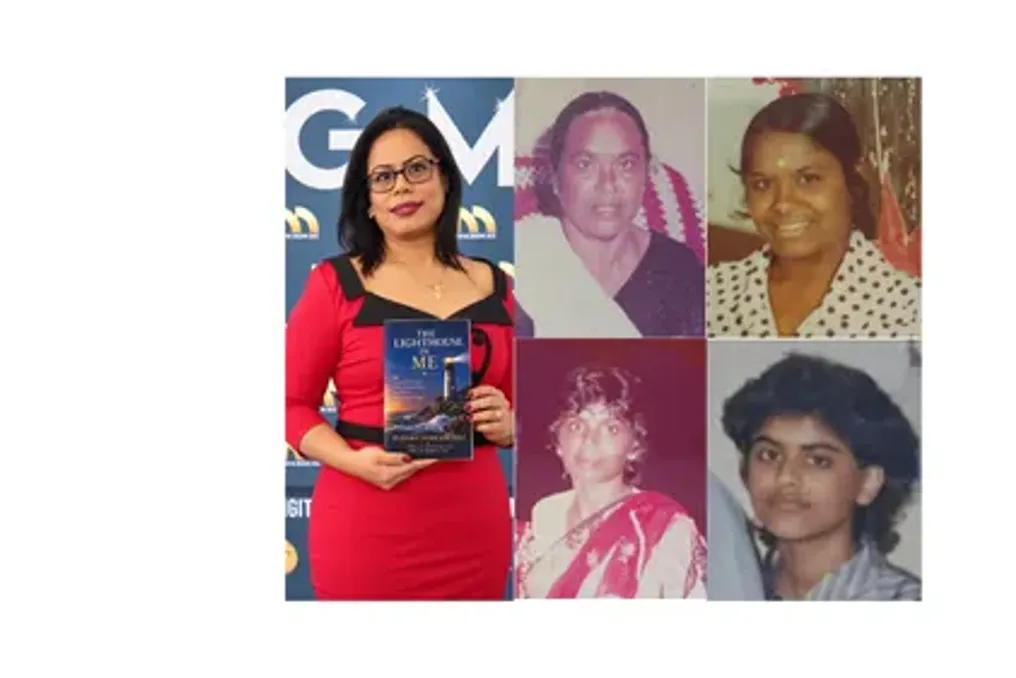
Four decades after four members of the Chatsworth family died from poisoning, Reshma Subramoney shares her story. In 1986, when Reshma was eight years old, four women from three generations of her family passed away in Chatsworth after consuming a concentrated vitamin preparation mixed with peanut butter.
Forty years later, she published a book dedicated to themes of grief, survival, and healing. This tragedy took the lives of her grandmother Yugani Raghubar (65 years old), mother Shamavati Singh (39 years old), aunt Kosilli Raghubar, and sister Ashni Raghubar (15 years old).
Death occurred after they consumed the substance Doxifral, a highly concentrated Vitamin D, mixed with peanut butter. A family helper, known only as Cynthia, also died from the poisoning. Subramoney, who is now 48 years old, recounted that her father, Anup Singh, believed the toxic substance was cooking oil. Her mother used it for cooking in their family home in Woodhurst, Chatsworth.
Reports in the contemporary POST newspaper indicated that a batch of Doxifral, imported from the Netherlands for a veterinary clinic in Kempton Park, had been stolen from a Dutch cargo ship in the port of Durban. Subramoney recalls: 'My father had a snack shop near the port, and sailors often visited this shop. A sailor he knew sold him one of the bottles of oil.'
She continued: 'We became ill after my mother used this 'oil' for cooking. It looked and smelled like cooking oil, so no one could understand that it was poisoning us. When my grandmother, aunt, and other relatives came to care for us while we were sick, they also swallowed the oil after using it for cooking.'
Eleven family members were brought to RK Khan Hospital, most of whom were in intensive care units (ICU) due to the poisoning. Doctors and forensic experts handling the case determined that Doxifral contained about two million units of Vitamin D per milligram, whereas the normal dose the body can process is 100 units. The family ate food cooked with this oil for about three weeks. Then the condition began to deteriorate: vomiting, abdominal spasms, weight loss, and weakness. Most of them could not walk and remained bedridden.
Doctors were perplexed upon admission to the hospital. They were isolated, and tests were conducted. Eventually, food samples from the home were taken for analysis, and it was discovered that the oil was the cause of the poisoning.
Subramoney's book, titled 'The Lighthouse in Me', narrates the devastation she faced after being taken from her mother's arms as a frightened child to RK Khan Hospital. She remembers her last moments with her mother: 'I remember my last moments with my mother as if it were yesterday. We were both very sick, and I didn't want her to leave me. I sat on her lap while the nurses took her to the hospital. They needed to take her to the intensive care unit, and me to the pediatric intensive care unit. I held onto her and didn't want us separated.'
Her mother kept telling her: 'Sona, don't worry. I will come visit you every day. I will be by your side.' After this, the nurses had to pull her away while she cried and screamed. She was placed in a crib in the pediatric intensive care unit so she couldn't escape and find her mother. She never saw her again. Her mother soon fell into a coma and never recovered. She fought for her life until she died.
Subramoney reported that she was discharged from the hospital on the thirteenth day of prayer after the death of her sister Ashni. She was shocked and confused to learn of the deaths of her mother, grandmother, and sister when she returned home. Her aunt Kosilli died a week later.
She also shared that her father was hospitalized for three months, and when he was discharged, he lost his business, and the family lost their home because the business collapsed, and he could not pay the mortgage. Subramoney recalls sleeping in the trunk of their blue pickup truck in Laguna Beach parking lot with her father and surviving sister, because they had nowhere to go. After the tragedy, her father changed towards her and her sister Rekha, who was 13 years old and survived the poisoning. A year later, her father left her and her sister with an uncle, saying he was going to buy bread. They never saw him again. He abandoned us,' she recalls.
The book tells of Subramoney's resilience in the face of the pain of losing loved ones and the difficult path that awaited her after the tragedy. Overcoming one trial after another, Subramoney's story concludes with hope and inspiration, as she shares how she turned her pain into strength by building a business, overcoming suicidal thoughts, and becoming a mental health advocate.