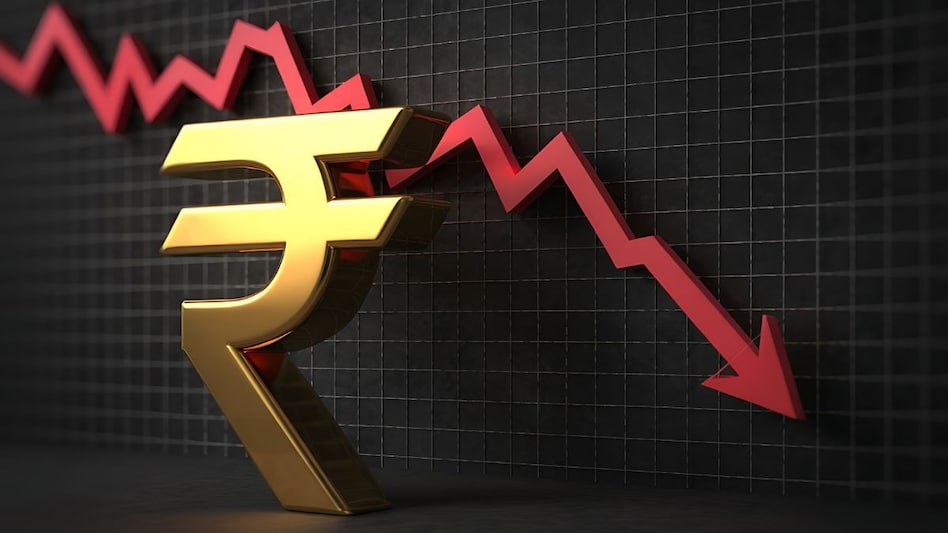
Amid global tensions and rising import bills, the rupee continues to show a decline in its exchange rate. Currently, the rupee has fallen to the 96 level, and there is a possibility of further decline.
Anindya Banerjee, Head of Currency, Commodity, and Interest Rate Research at Kotak Securities, predicts that the rupee could soon drop to 97. He also warns that if this level is breached, the rate could reach 99, after which the overall market decline may intensify, and inflation may also rise.
According to Banerjee, the rupee is under pressure from several sides. Foreign investor selling has increased, and the cost of imports has risen. Furthermore, high US Treasury bond yields are affecting the rupee. He noted that while India's economic situation remains stable, the global environment is creating difficulties for the rupee.
Another reason for the sharp decline in the rupee is the fall in foreign investor portfolios. In the current month alone, foreign investors sold about $6.1 billion worth of Indian stocks. Banerjee reported that approximately 90% of the foreign capital received over the last two months has already been withdrawn. Although funds through FCNR(B) have supported the rupee, they have not had an immediate positive effect because most of these funds were directed to the foreign exchange reserves of the Reserve Bank of India (RBI) rather than the open market. It is currently assumed that if pressure on the rupee increases, the RBI may intervene in the market.
Experts also state that if the overall condition of the rupee remains weak, it could soon reach the 97 level, and breaching it would lead to an even greater fall.
The expert pointed out that crude oil is also pressuring the rupee, which has caused a significant increase in the import bill. The pressure on the rupee has intensified not only due to Brent futures prices but also due to the cost of spot commodities, freight, and processed products. Prices for diesel and aviation fuel also remain high.
According to Banerjee, the Reserve Bank of India potentially could raise the repo rate, which could put additional pressure on the rupee. He emphasized that the RBI's decision to raise the rate will be based not on global sentiment or decisions by the US Federal Reserve, but rather on inflation pressure.