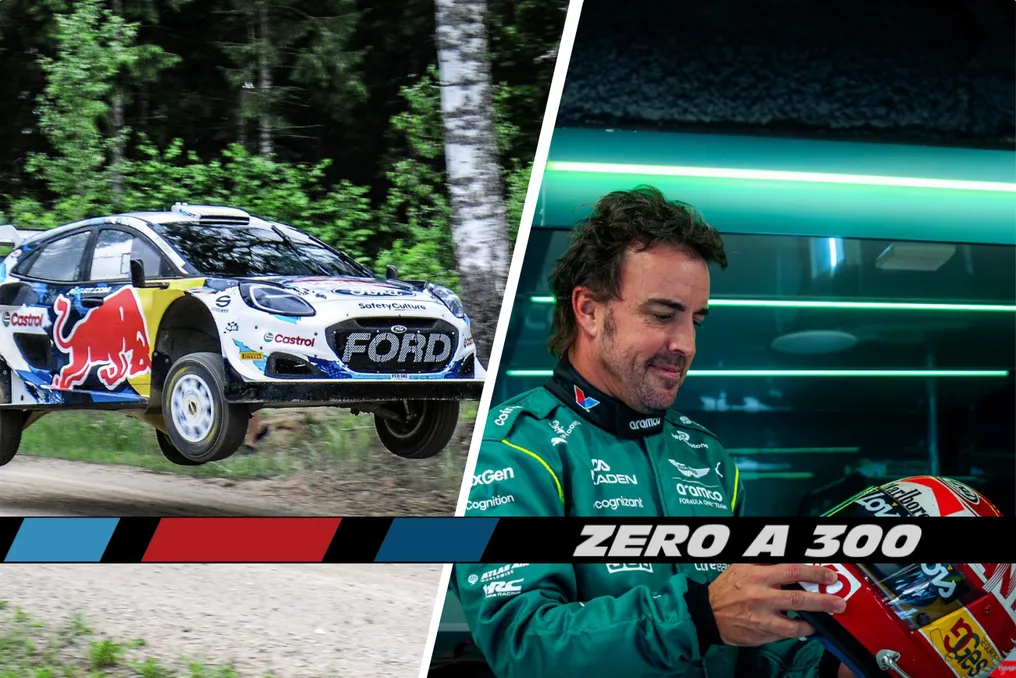
Ford returns to WRC in 2028; Fernando Alonso confirms Formula 1 permanence in 2027
Read more
FlatOut
flatout.com.br

Ford returns to WRC in 2028; Fernando Alonso confirms Formula 1 permanence in 2027

Ford announced its return to the World Rally Championship (WRC) with a factory team, making an appearance in 2028. This return is in partnership with the M-Sport team, under the Ford Racing banner. Next year, M-Sport will compete in the WRC using an updated version of the Ford Fiesta Rally2.

This will be Ford's first return with a formal factory team in the WRC since 2012. Although the brand had participated in the competition before, the previous vehicles were entered by private teams, without the official technical, financial, or administrative support of the manufacturer. The collaboration with M-Sport has a history, as the team was responsible for the official Ford program in the WRC between 1997 and 2012, winning titles in 2006 and 2007 with the Ford Focus. Ford's participation in the World Rally spans five decades, with its first title in 1979 with the Escort RS1800, driven by names such as Hannu Mikkola, Björn Waldegård, and Ari Vatanen.

Mark Rushbrook, Global Director of Ford Racing, expressed satisfaction with this new chapter, stating: “As we celebrate the 125th anniversary of Ford Racing, our 50-year legacy in the WRC stands out as one of our greatest prides due to its direct link to the fun and exciting cars that came from it. We can't wait to compete in rallies again in 2028 and beyond.”

In other news, Fernando Alonso secured his continuation in Formula 1 in 2027 with Aston Martin, alongside Lance Stroll. The Spanish driver, who started his career in 2001, will be 46 years old next season. Alonso mentioned that although he considered the 2026 Spanish GP as a possible farewell, he decided to stay, believing in his speed, determination, and the Aston Martin project.

Regarding the Brazilian automotive market, Volvo has decided to abandon the exclusive focus on electric vehicles and will bring the XC40 SUV in a hybrid version to Brazil. This change aims to meet the existing demand for internal combustion and hybrid technologies. The mild hybrid (MHEV) version is expected to arrive in the first half of 2027, as confirmed by the brand's president, Marcelo Kronemberger. This model uses a 48V system coupled with a 2.0 turbo gasoline engine, helping to comply with local emission standards and positioning itself as an entry-level option below the plug-in XC60 and XC90 models.

The Volvo line also received visual and technological updates, including redesigned grille, bumpers, and hood, sleek headlights, and a new 11.2-inch multimedia center with Google Gemini AI assistant. The safety package was enhanced with new sensors and cameras, offering features such as 3D 360° view and door opening alerts for cyclists.

Ford also showcased two new versions of the Ranger, the Tremor and the PHEV flex, which will be manufactured in Argentina in 2027. The Tremor will be an intermediate between the standard and Raptor versions, equipped with all-terrain tires, rugged trim, and a 2.3 EcoBoost turbo flex engine of approximately 300 hp. The Ranger PHEV, marking Ford's return to flex fuel in Brazil since 2021, will use the 2.3 EcoBoost with an electric motor integrated into the ten-speed automatic transmission. The international PHEV version generates 281 hp and has an 11.8 kWh battery, allowing it to travel about 43 km without using the combustion engine.

Volvo hybrid XC40 will return to being sold in Brazil (Repetition of the topic, maintaining context)

Volvo changed its strategy, recognizing the persistence of demand for combustion engines and hybrid technology, instead of accelerating the total transition to electric vehicles.

Ford, taking advantage of its 65 years at its factory in General Pacheco, Argentina, showed the Ranger Tremor and the Ranger PHEV flex, both scheduled for 2027. The Tremor incorporates the 2.3 EcoBoost turbo flex engine of about 300 hp, serving as a middle ground between the traditional Rangers and the off-road focused Raptor. The Ranger PHEV, meanwhile, combines the 2.3 EcoBoost engine with an electric motor, capable of traveling about 43 km solely on the 11.8 kWh battery.

Jaecoo 5 arrives for R$ 154,990 with 224 hp

The Jaecoo 5 is already available in Brazil in two configurations: Comfort, for R$ 154,990, and Prestige, for R$ 179,990, prices valid for the first batch of 3,600 units. Subsequently, prices will rise to R$ 159,990 and R$ 184,990, respectively. Its hybrid system combines a 1.5 turbo gasoline engine and an electric motor, operating with a 1.83 kWh battery, resulting in 224 hp and 30.1 kgfm. The vehicle reaches 100 km/h in 7.9 seconds, with a certified consumption of 15.5 km/l in the city and 13.7 km/l on the highway, offering a combined range close to 800 km. As a full hybrid, it does not require plugging in, being recharged by the engine and braking regeneration. The Comfort version already includes 18-inch wheels, dual-zone air conditioning, and a 9-inch multimedia system with wireless connectivity; the Prestige elevates the level with a 13.2-inch screen, panoramic roof, electric and ventilated front seats, Sony sound, and an ADAS package with 17 functions.

Finally, Toyota announced an investment of US$ 1.34 billion (equivalent to R$ 6.95 billion) in its Zárate unit, Argentina, for the arrival of the new Hilux. This is the largest investment by the automaker in the history of the Argentine industry, driven by local tax incentives. The launch schedule foresees the 204 hp 2.8 turbodiesel engine in the neighbor country in 2026, followed by the 48V mild hybrid (MHEV) variant in the first half of 2027. The Hilux BEV, fully electric, will initially be intended for fleets and mining companies, maintaining the body-on-frame structure and off-road capability, with 196 hp and a 59.2 kWh battery.
Similar stories

Automotive News: Combustion BMW 3 Series, Fiat Argo X, Electric Range Rover Sport, and Porsche Multimedia
Read more
flatout.com.br

Automotive News: Combustion BMW 3 Series, Fiat Argo X, Electric Range Rover Sport, and Porsche Multimedia

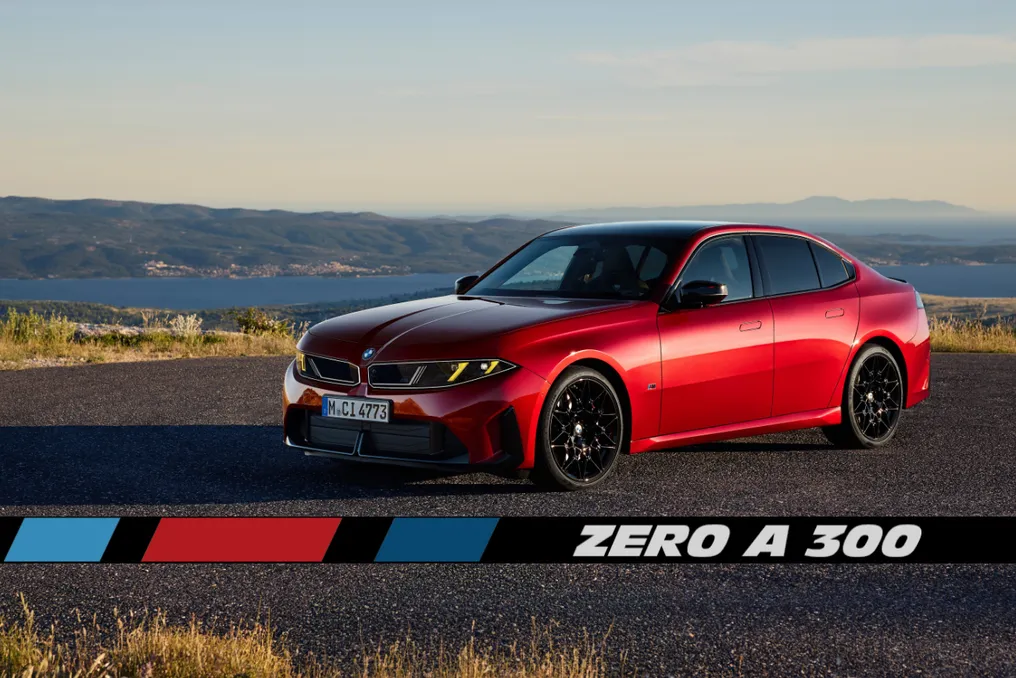
The automotive market has received several new developments, including the launch of the new combustion engine BMW 3 Series, initial glimpses of the Fiat Argo X, the electric version of the Range Rover Sport, and a multimedia update for classic Porsche models.

New Combustion BMW 3 Series

After just over six months since the electric variant, BMW introduced the new combustion engine 3 Series, identified by the code G50. Although both are named 3 Series and share strong visual similarities, they utilize distinct platforms. The visual identity follows the Neue Klasse style adopted by the manufacturer, with standardized headlights and taillights.

The combustion 3 Series features a more elongated hood, indicating its basis on the CLAR II platform, an evolution of the previous generation's architecture. BMW highlighted improvements such as widened front and rear tracks and a revised steering system, making it more precise and communicative. In contrast, the electric i3 model is built on the NAx architecture, the same one used in the iX3 SUV.

The vehicle's design occupies a peculiar position; although new BMWs rarely receive unanimous acclaim at launch, the trend suggests that enthusiasts will become accustomed to them over time. However, the new 3 Series carries the weight of the Neue Klasse name, referencing the iconic 1960s BMW 2002 without direct visual references, which might displease purists.

On the other hand, the G50 aligns with the brand's modern trend, presenting cleaner lines and more balanced proportions, eliminating excessive creases and folds and the prominent grille that was the target of criticism. While it cannot be classified as ugly, current criticism points to an excessively generic character.

Dynamics remain a strength of BMW. In the 3 Series G50, the highlight is the new M350 xDrive, which tops the combustion line in the absence of a new M3. This engine uses a classic 3.0-liter turbocharged inline six, complemented by a 48-volt mild-hybrid system integrated into the eight-speed automatic transmission. Power reaches 443 hp, allowing the sedan to accelerate from 0 to 100 km/h in 4.1 seconds.

A notable feature for enthusiasts is the system called 'Drift Moment.' BMW adapted a functionality typical of pure M models, allowing the xDrive system to disconnect the front axle, directing 100% of the power to the rear wheels for lateral maneuvers in corners.

For daily use, the 320 version maintains the 2.0-liter four-cylinder turbo engine, also with mild-hybrid assistance, generating 208 hp and coupled to the eight-speed transmission. The brand also confirmed the existence of an entry-level 318 version with 154 hp for Europe and anticipates plug-in hybrid versions for next year.

To accommodate these powertrains, the chassis tuning was specifically developed for the gasoline platform, incorporating a dedicated front suspension geometry, a recalibrated multi-link rear setup, and stiffer bushings compared to the electric model.

Internally, the differences between the electric and gasoline versions are minimized, and the cabin embraces the minimalism of the Neue Klasse language. The interior is dominated by an imposing 17.9-inch curved central display, focused on the driver, along with a new panoramic head-up display. The operating system is BMW OS X, based on Android, promising continuous updates and signaling BMW's commitment to reducing physical buttons on the dashboard.

In terms of dimensions, the G50 underwent a typical generational transition elongation to reinforce its road presence. The sedan now measures 4.76 meters long (5.2 cm longer than the previous one), is 1.85 m wide, and increased the wheelbase by almost 1 cm, reaching 2.88 meters.

Production was also segregated: while the electric i3 will be manufactured at the historic Munich headquarters, the entire combustion line of the new 3 Series will come from the Dingolfing assembly lines.

Considering the positive and negative aspects, BMW managed to find an intelligent way to preserve the mechanical essence that established the 3 Series, without neglecting what many consider the future of the industry. It remains to await the launch of the new M3.

Fiat Begins Revealing the Argo X

So far, everything known about the Fiat Argo X, which may be the brand's most relevant launch in the coming months, came from journalistic investigations and unofficial photos. However, the Italian-Minas manufacturer has finally released the first teasers with details of the vehicle.

The details are limited, consisting only of the emblem with a square typography and a close-up image of what appears to be the headlight. An initial surprise is that Fiat apparently will maintain the pixelated headlight of the European Grande Panda, the model that will serve as the basis for the Argo X. This is not a common aesthetic solution and certainly won't please everyone, but it is undeniable that Fiat will preserve the tradition of incorporating playful and creative design elements, as happened with the New Uno last decade (although this also did not have universal acceptance).

It is crucial to note that the Argo X should present significant structural changes compared to the model sold in the international market, given that its apparent function is to gradually replace the current Argo in the brand's entry-level lineup. This reflects Fiat's pattern of adapting its 'national versions,' simplifying engines and suspension systems for the Brazilian market, aiming for greater price competitiveness.

It is certain that two different mechanical units will be used, depending on the version. The most basic configurations should employ the well-known 1.0 naturally aspirated Firefly three-cylinder, six-valve engine, which delivers 75 hp and 10.7 kgfm, coupled with a five-speed manual transmission. More expensive versions may adopt the T200 Hybrid powertrain, equipped with a mild-hybrid system, producing 116 hp and 20.4 kgfm, always with a CVT gearbox simulating seven speeds. This engine is the same one used in the newly launched Jeep Avenger.

The Argo X is expected to arrive at dealerships soon, with projections pointing to the last quarter of 2026, although optimists bet on October.

Someone Decided to Make the Prelude

GWM transforms Tank 300 into a more robust SUV; Hyundai reduces power of HB20 and Creta for lower IPI
Read more
flatout.com.br

GWM transforms Tank 300 into a more robust SUV; Hyundai reduces power of HB20 and Creta for lower IPI

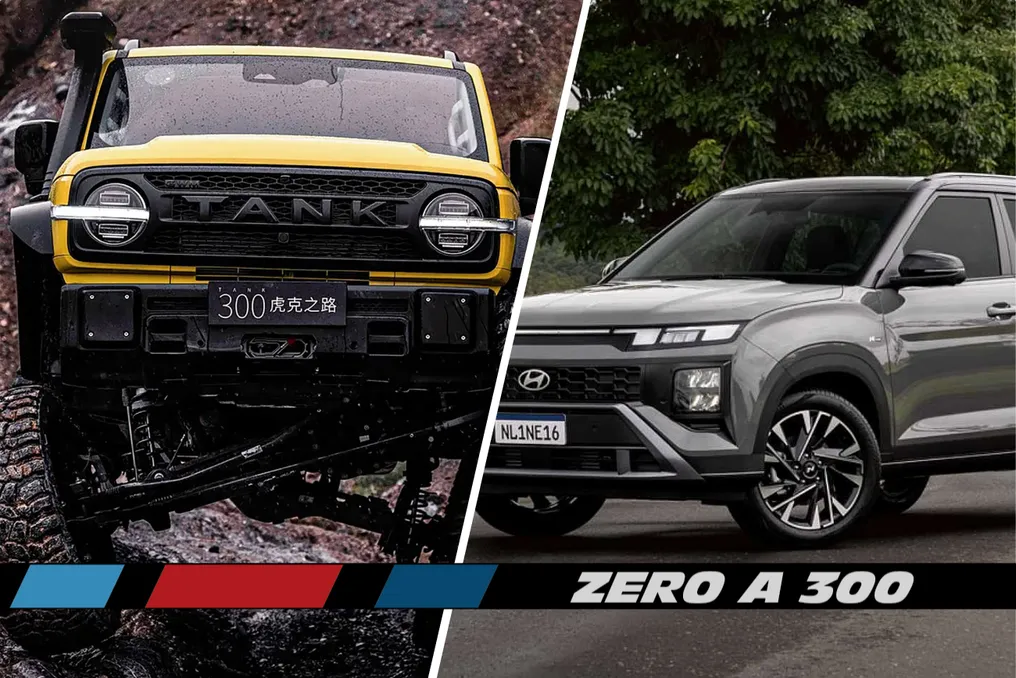
GWM has developed a version of the Tank 300 focused on heavy-duty off-road capabilities and rock crawling, replacing the independent front suspension with a solid axle. This new model, named Tank 300 Hooke Trail, is based on the Tank 300L with an extended wheelbase but incorporates a rigid front axle equipped with 80mm tubes, reinforced arms, a Panhard bar, and more durable steering. Thus, the vehicle now uses a solid axle both in the front and rear, following the standard of the Jeep Wrangler.

GWM claims that this new suspension has increased the rigidity of the assembly by 38%. Furthermore, electronic disconnect of the stabilizer bar has been added, allowing for over 500mm of wheel articulation, along with electro-hydraulic steering and specific modes for various terrains. In terms of performance, the vehicle features a 41-degree approach angle, a 34-degree departure angle, 245mm ground clearance, and 850mm wading depth. Standardly, the suspension supports 35-inch tires, although GWM indicates that tires up to 40 inches can be used with modifications.

Currently, the Hooke Trail is offered with a 2.0-liter turbo engine producing 231 hp and 40.8 kgfm, paired with a nine-speed automatic transmission and a part-time 4x4 system with low range and locks. However, Chinese documents accessed by European press suggest that a future version may feature a 3.0-liter turbo V6 engine.

In another piece of news, Hyundai opted to reduce the power of the 1.0 TGDI engine in the 2027 models of the HB20 and Creta. The power drops to 115 hp, for both gasoline and ethanol, compared to the 120 hp previously achieved with ethanol. The torque remains unchanged at 17.5 kgfm. This change was motivated by fiscal issues, as the new Green IPI now considers engine power in the calculation of the rate, and Hyundai adjusted the turbo to fit within the 85 kW range.

Other updates include the registration of the Slate Truck electric pickup in Brazil with INPI. This pickup, conceived by the startup Slate Auto, founded by Jeff Bezos, features a minimalist and rectilinear design. With a length of 4.43 meters and a total load capacity of 635 kg, it offers a range of 240 km with its 52.7 kWh batteries, potentially reaching 385 km with an optional 84.3 kWh kit. Its differential lies in its modularity, allowing the conversion from a single cab to a van or a five-seater SUV.

Additionally, Volvo acknowledged exaggerating the removal of physical buttons and plans to reintroduce tactile controls in future releases. Thomas Ingenlath, responsible for Volvo's design, stated that screens should only be used where they are most efficient, arguing that basic operational functions should not depend on digital menu navigation, citing Leica cameras as an ergonomic reference.

In the hypercar scene, McLaren tested its MCL HY in Portimão, Portugal, with Lando Norris behind the wheel. The prototype uses a 2.9-liter biturbo V6 with a hybrid system and demonstrated the ability to exit the pit lane using only the electric motor. Norris completed 38 laps on the circuit, raising speculation about its preparation for the 2027 Endurance Championship.

Popular