The question of what justifies the preservation of a building transcends mere antiquity. While age is often cited as a criterion, structures from the 1950s or 1970s can possess historical significance comparable to medieval cathedrals, demanding an analysis that considers political context, cultural value, and architectural innovation, especially within the scope of modernist architecture in the Global South.
It is in this debate that ArchDaily and the World Monuments Fund (WMF) join forces. WMF contributes its vast practical experience in global conservation, while ArchDaily offers its editorial capacity to contextualize this work and present it to a global audience. The collaboration's purpose is twofold: to protect sites and narrate their stories, shifting the perception of modernist heritage beyond the strict field of preservation.
To launch this cooperation, discussions were held with Javier Ors Ausín, WMF's Thematic Programs Lead, and Christele Harrouk, Editor-in-Chief of ArchDaily.
Significance of the partnership for both organizations
Javier Ors Ausín highlighted that the partnership is a mutual complement. WMF operates directly on sites, executing safeguarding, conservation, and documentation projects, working with governments, communities, local NGOs, and specialists. Having ArchDaily as a partner allows WMF not only to physically preserve the sites but also to explain their global relevance and the importance of the work being done.
Christele Harrouk agreed with the vision of complementarity, stating that WMF focuses on physical conservation and communities, while ArchDaily dedicates itself to narrative, giving these stories access to the world. She emphasized that documenting and talking about something is already a form of conservation. For ArchDaily, the partnership reinforces its active role in architectural culture, helping to define what heritage is and how it is understood.
Javier Ors Ausín added that by conducting editorial and communication work, the communication itself becomes part of the conservation process, generating visibility and support for field projects, overcoming the limitation of just 'before and after' photos.
Motivation for the collaboration
Christele Harrouk explained that ArchDaily, with its 18 years of existence, always contextualizes and connects information, going beyond mere documentation. The emergence of WMF coincided with an opportune moment, as ArchDaily's trajectory was already directed toward this theme. WMF brought practical knowledge and active projects, while ArchDaily contributed its editorial team, global audience, and archive.
Javier Ors Ausín observed that upon joining WMF nearly ten years ago, he perceived the isolation of the preservation field. The partnership with ArchDaily serves to reconnect specialized heritage debates with the broader architectural discourse, given that ArchDaily actively participates in the global conversation about architecture.
Christele Harrouk added that the union of the two entities aims not only at the physical survival of relevant architecture but also at the preservation of surrounding knowledge, which is the core of the partnership.
Focus on modernist architecture and the Global South
The partnership emphasizes modernist architecture, with a particular focus on the Global South. Javier Ors Ausín justified that his initial interest was to tell a broader story about 20th-century architecture, as traditional narratives tend to be restricted to the United States and Europe.
He detailed that modernism manifested in diverse ways in South America, Sub-Saharan Africa, South Asia, and the Middle East, adapting to different conditions. As an example, he mentioned the conservation management plan developed for the Sardar Vallabhbhai Patel Stadium in India, a Brutalist work by Charles Correa and Mahendra Raj, whose urgency increased due to the demolition of Indian modernist landmarks. He also cited work in Ouagadougou, Burkina Faso, on a modernist example that uses earth and natural ventilation.
Christele Harrouk reinforced that the concept of 'global' for ArchDaily implies understanding architecture in its total context—climate, culture, politics, economy, and history—and not just publishing projects from various countries. She argued that by selecting and contextualizing works, ArchDaily helps readjust the historical narrative of architecture.
Advocacy for the importance of modernist heritage
Javier Ors Ausín pointed out that the central challenge is that, unlike cathedrals or castles, buildings from the 1950s to the 1970s constantly need to prove their heritage, historical, and innovative value. The adopted approach is based on education and interpretation, showing communities and governments that the value of these spaces lies in their political and historical context, and in the innovation they represent.
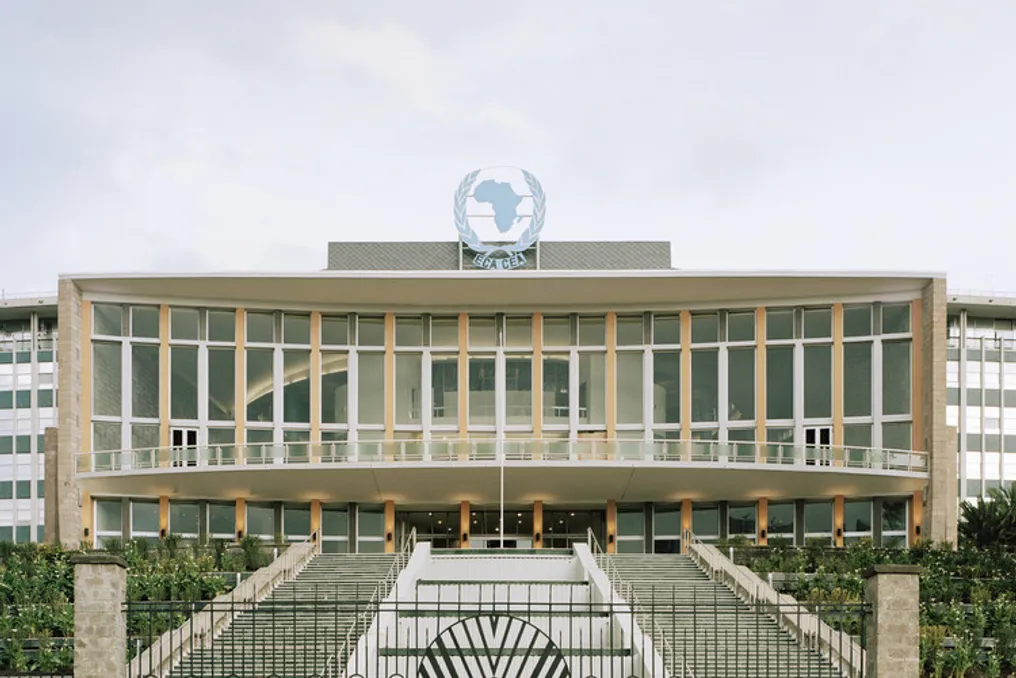
As an illustration, he cited the United Nations Africa Hall in Addis Ababa, which will be recognized by WMF in 2026. Its relevance stems from representing decolonization and the consolidation of African institutions, in addition to its notable innovation in the use of reinforced concrete, having been built in Ethiopia, the only African country without a colony.
Regarding the coexistence between conservation and urban growth, Christele Harrouk argued that cities are living organisms and heritage has always been part of their evolution. WMF assists by redefining what is valuable, considering its place in the urban fabric and the stories told, and emphasized that local communities must participate in defining the future of these spaces.