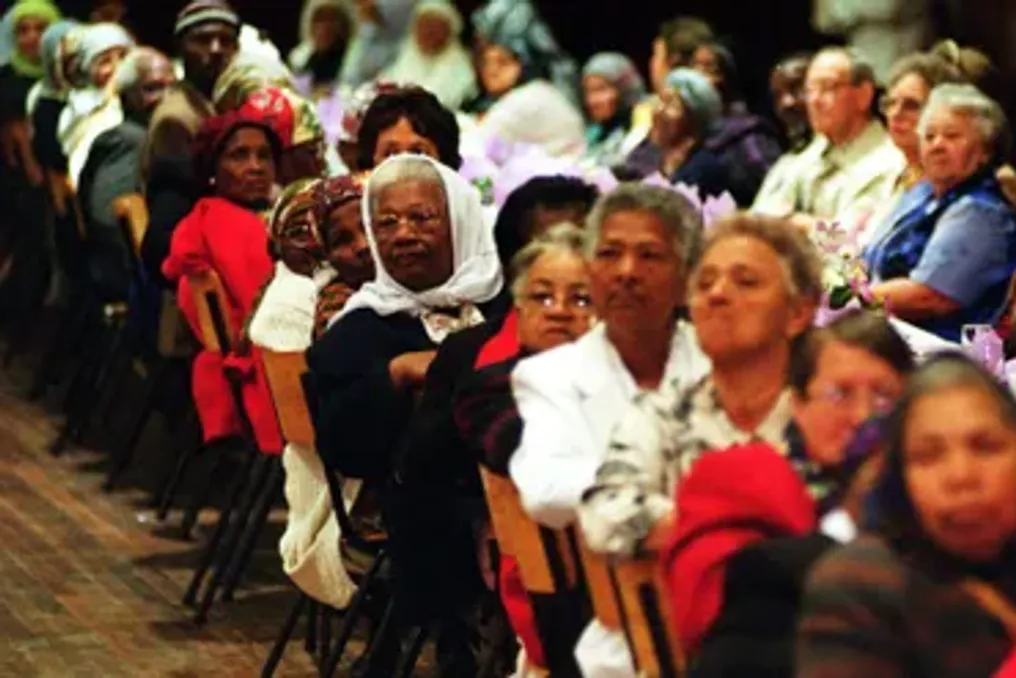
In South Africa, grandmothers and elders often serve as the backbone of society, raising generations with the support of old-age pensions. However, despite official recognition and annual speeches, a significant number of elderly citizens face economic vulnerability, physical insecurity, and systemic neglect.
Support for the older generation should not be limited to monthly payments; a comprehensive system is needed to ensure proper care, guaranteeing physical safety, accessible healthcare, public spaces, and social integration. As the country's demographic landscape changes, moving from mere acknowledgment to active structural support becomes an urgent requirement for all humanity.
The Reality of Aging in South Africa
In many South African households, the elderly act as primary providers and caregivers. Against the backdrop of high youth unemployment and structural poverty, families heavily rely on the monthly SASSA grant for survival. While this grant is helpful, it must cover numerous needs such as food, electricity, clothing, and medicine.
Obtaining state assistance involves monthly physical and emotional strain due to long queues, administrative delays, and digital barriers. Furthermore, the elderly are exposed to serious safety risks: financial exploitation by informal lenders, scams, and rising gender-based violence against older women deprive many of a safe and peaceful living environment.
Sarah Khuzwayo, a 65-year-old resident of Phumalani Village, shared her experience: 'We depend on this grant just to get by, but everything has become too expensive. When my husband fell ill, I had no choice but to take a loan from a loan shark—paying back 1300 rand for 1000 rand—just to pay for a doctor's visit.' This case illustrates the financial pressure experienced by the elderly in South Africa. The high cost of necessities like food, energy, and healthcare forces many into debt with predatory lenders to cover emergency expenses.
Since monthly social grants support entire families, minor expenses can seriously threaten a family's financial stability. Martha Petersen, a 72-year-old resident of Pelican Park, recounted that her day begins at 4 am waiting at the grant distribution point—and this is not only for her needs but also to provide three grandchildren with food for the month. 'My knees swell terribly before I can rest. But I cannot stop; without me standing, our family will simply go hungry.'
Her daily experience highlights how elderly grandmothers often bear the entire burden of family survival under severe physical strain. Tata Themba Dlamini, a 67-year-old resident of Phumalani Village, explained that young men in the settlement know the grant payment dates and gather near distribution points and on the streets. He noted that elderly women are constantly forced to look over their shoulders when walking home from the shop, emphasizing that safety on their streets is as important to them as financial support.
Agnes Mills, 65, from Pelican Park, expressed her view: 'When people see an elderly person, they often consider us a burden or beggars. They ignore the fact that we built these homes, raised these families, and paid taxes for many decades. We are not asking for pity or annual speeches on International Day of Older Persons—we want respect, accessible seating in public places, and a seat at the table when community decisions are made.'
To create an inclusive and age-friendly South Africa, several steps must be taken: ensuring decent service points (SASSA needs priority lanes, shelters, and equipped toilets); financial protection (strict control over predatory micro-lending and illegal grant withholding); delivery of chronic medication (expanding pick-up and home delivery points); improving healthcare (specialists in elder care, dementia, and mobility); and strengthening the Older Persons Act through localized care and the creation of safe housing.
The character of a nation is defined by how it treats those who built it. Beyond pension grants, true elder care requires safe streets, effective healthcare, accessible transport, and active participation in community life. By replacing neglect with practical support, South Africa can ensure that old age is celebrated, not endured.