ICC makes significant amendments to cricket rules; new rules effective from October 1, 2026
Read more
Aaj Tak
www.aajtak.in

ICC makes significant amendments to cricket rules; new rules effective from October 1, 2026

The International Cricket Council (ICC) has made comprehensive changes to the laws of cricket, covering several rules from overthrows to run outs. These new playing conditions will be implemented in international cricket starting October 1, 2026 (Thursday), although old rules will remain effective in ongoing series.

A major change in the rules concerns time wasting by batsmen. If a batsman is not ready to play the next ball within the stipulated time limit, they will receive a warning for the first offense, and a final warning for the second. For the third offense and subsequent ones, the bowling team will be awarded 5 penalty runs, and repeated incidents may lead to action under the code of conduct.

The use of the pink ball in day tests will also be trialed, provided both sides agree. The main objective is to reduce the possibility of matches being disrupted due to poor light. This decision must be made before the start of the test match; changing from red ball to pink ball or vice versa after the match begins will not be possible.

Rules related to the size and weight of the ball have been tightened in women's and junior cricket. Three distinct sizes and weights are now specified for men's, women's, and junior cricket. Additionally, the definition of an overthrow has been clarified: if a fielder throws the ball towards the stumps with the intention of stopping the run or effecting a run out, it will be considered an overthrow, whereas a misfield made only while attempting to stop the ball or pass it to another fielder will not be considered an overthrow.

Umpires will now have greater authority in determining when the ball comes to rest, which does not require the ball to be in the hands of the bowler or wicketkeeper. This provision could prove crucial in close contests, such as on the last ball of a match. In cases of run out and stumping, the fielder must have complete control of the ball; merely touching the ball with the hand and the stumps falling at that moment will not be considered sufficient.

The aim of all these changes is to increase the pace of the game, prevent time wastage, standardize ball dimensions, and remove ambiguity in fielding regulations. These revised ICC playing conditions will apply to international series commencing after October 1, 2026.

Similar stories

Interchangeable surfaces are being implemented in South Africa for cricket grounds ahead of the 2027 World Cup
Read more
iol.co.za

Interchangeable surfaces are being implemented in South Africa for cricket grounds ahead of the 2027 World Cup

In anticipation of the ICC Men's Cricket World Cup in 2027, which will be held in South Africa, Zimbabwe, and Namibia, a significant transformation is taking place at cricket grounds across the country. South African Cricket has spent the last two years developing interchangeable surfaces for major sporting venues nationwide.

However, this innovation has sparked lively debate among lawn care specialists, coaches, and players regarding the preservation of the traditional advantages of a home ground. Nevertheless, cricket pitches across the country have long required modernization, as deteriorating surface quality caused some grounds to behave differently than before.

For instance, the Wanderers stadiums in Johannesburg and Kingsmead in Durban have gradually changed character: they have transformed from pitches known for pace and bounce into ideal conditions for spinners. The Wanderers Stadium, which is likely to host the 2027 World Cup final, has already used a strip grown in a stainless steel tray next to the playing area before installing it on the pitch.

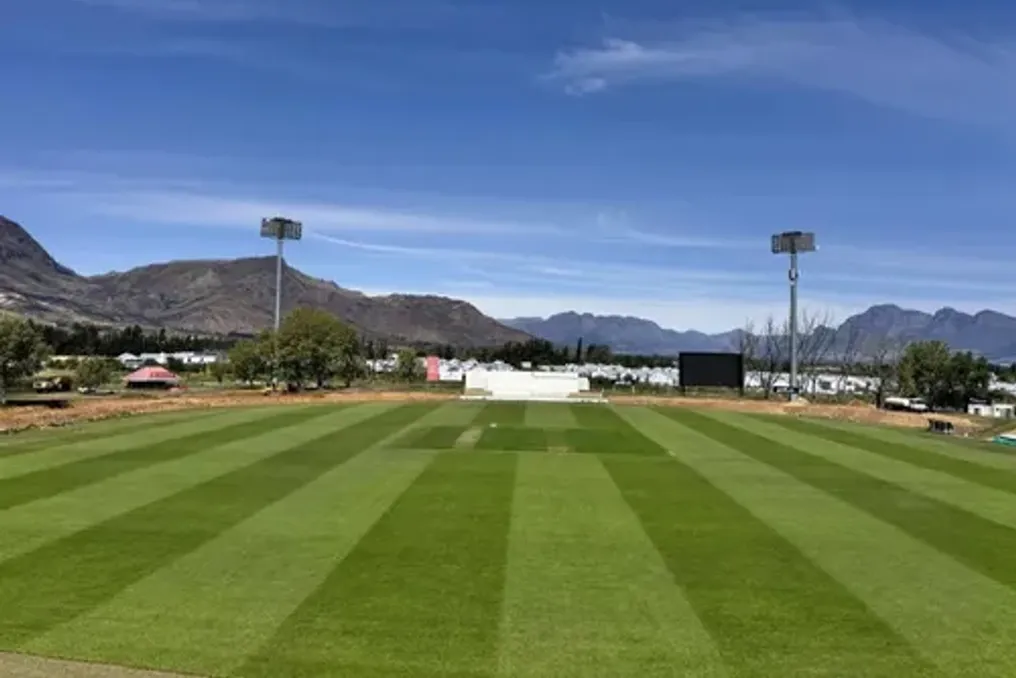
According to player reports, the ball 'flew slightly low' from the Golf Course side, while Lions bowling coach Allan Donald stated that 'he played very well.' At Boland Park in Paarl, lead lawn care specialist Rupert Bailey is overseeing the integration of the new interchangeable surface at this venue. Although routine maintenance and field construction have been ongoing in recent years, the introduction of the interchangeable surface marks a new chapter for the field in Winelands.

Rupert Bailey noted: 'Over the past couple of years, I have probably built four new fields at the venue, but this year we have added a new interchangeable or exchangeable surface.' He added that it is planned to test it later this year, possibly in November or December, to assess its playability over one or two days, after which a decision will be made on its use in matches.

While this infrastructure development is directly linked to preparations for the World Cup, Bailey emphasizes that the long-term benefits extend far beyond this tournament. 'It is for the World Cup, but also for the time after the World Cup, to create greater potential, host more matches, and ensure that your other grounds, especially the main ones, get a little more rest. That is the main aspect,' he explained.

The technical specifications of the interchangeable trays are standardized across the country; however, the microclimate of South Africa means that the characteristics of each ground will inevitably influence the course of the game. Weather conditions can still play a role.

In Paarl, combating extreme heat and humidity remains an ongoing challenge. Last winter, there was little rainfall in Winelands, and strong winds blew since early September. Bailey noted: 'All the interchangeable surfaces in the country are absolutely identical—the same amount of local bull, the same depth.' He added that he cannot say how it will play on another ground, but temperature and humidity management plays a huge role. He also stressed that 'the heat in Paarl is very high, dry heat. It probably won't play exactly the same as the grounds in Highveld.'

Bailey expects the new tray to provide a contrast to the traditional characteristics of Boland Park, which were historically slow and low, although the North West Dragons team scored over 600 runs in their domestic four-day match against Boland. He believes the new tray will likely have a better, sharper bounce, which is better for batsmen, provided the bounce remains consistent throughout the match.

Maintaining these surfaces under a tight schedule and harsh summer weather, especially with El Niño forecasts bringing intense heat, presents a delicate balance. Bailey added: 'If you play many matches, your wickets experience much more load and stress, and recovery and maintenance periods become much shorter.' He concluded that fields require time for maintenance and recovery, which is sometimes lacking, and interchangeable surfaces can help with overuse.

Potential Loss of Identity

Although curators welcome the added flexibility, the nationwide implementation of interchangeable surfaces has met resistance within the national team structure, where concerns persist about losing unique local conditions. Shukri Conrad, head coach of the Proteas Test team, expressed serious doubts about the possible loss of traditional home conditions ahead of the World Cup.

Conrad stated: 'The only experience I have is observing from afar when this was applied at the T20 World Cup in America, and we all know how that played.' He added that 'on a personal level, and this is not an opinion of South African Cricket or anyone, I must disclaim, I would be disappointed if this was used in the World Cup because it nullifies any home advantage, if one exists.' He emphasized: 'We know our conditions in South Africa are unique at every ground. And I would like to think that this advantage will be preserved.'

Proteas spinner Tabraiz Shamsi supported Conrad's sentiments, noting that the distinctive features of South African grounds have historically served as a tactical advantage. Shamsi stated: 'In my unofficial opinion, our stadiums are specific to cricket, and in every city there are different grounds with different characteristics; they all play differently.' He continued: 'Knowing the conditions is a huge advantage, and the Proteas will lose that in the World Cup if we play on interchangeable surfaces.'

During trials scheduled for the 2026/27 summer season, lawn care specialists across the country will closely monitor the performance of the interchangeable surfaces, balancing the practical demands of the modern schedule with the tactical preservation of South Africa's renowned ground diversity. All that is known is that an interesting cricket summer lies ahead for everyone.
Akash Deep spoke about his journey from giving up ball games to becoming a fast bowler
Read more
www.aajtak.in

Akash Deep spoke about his journey from giving up ball games to becoming a fast bowler

The fast bowler for the Indian national team, Akash Deep, shared his little-known story during the 'Play, Jump, Become a Gentleman' session at the Panchayat AajTak venue in Patna. He recounted that in his village in Bihar during childhood, there was no money to buy equipment for ball games, so he gave up playing ball games and started practicing bowling.

Deep also told about the tragic loss of his father and elder brother over several months, which forced him to leave home. He noted that in his native village, playing cricket was considered something akin to a crime because at that time, none of the players from Bihar could secure a future through sports. His father was a teacher, and since the family belonged to the middle class, all parents wished for their children's futures to be secured through education. Furthermore, there was no cricket field in the village.

At the age of 20-21, his father and elder brother passed away. This period hardened his character and gave him the determination to go to Delhi, where his sister and uncle, who served in the army, lived. There, he first saw the game of cricket with a leather ball, as they only played with a soft ball in the village. Due to the high cost of ball game equipment, he chose bowling because a bowler did not need to buy his own equipment.

After this, he went to Calcutta, trained diligently, and was able to transition from club cricket to professional cricket the following year. In 2023, he was selected for the team. The news of his inclusion in the Test squad reached him via a message from Rahul Dravid, which he initially missed because the number was not saved. His debut took place in Ranchi, where his mother and family were present. He named Sachin Tendulkar his idol and highly praised the policy of the Bihar government regarding sports, noting that the sports budget increased from thirty to six hundred and fifty million. He himself also manages a sports academy.

Triple Series in ODI: The Rise and Fall of a Golden Era
Read more
www.aajtak.in

Triple Series in ODI: The Rise and Fall of a Golden Era

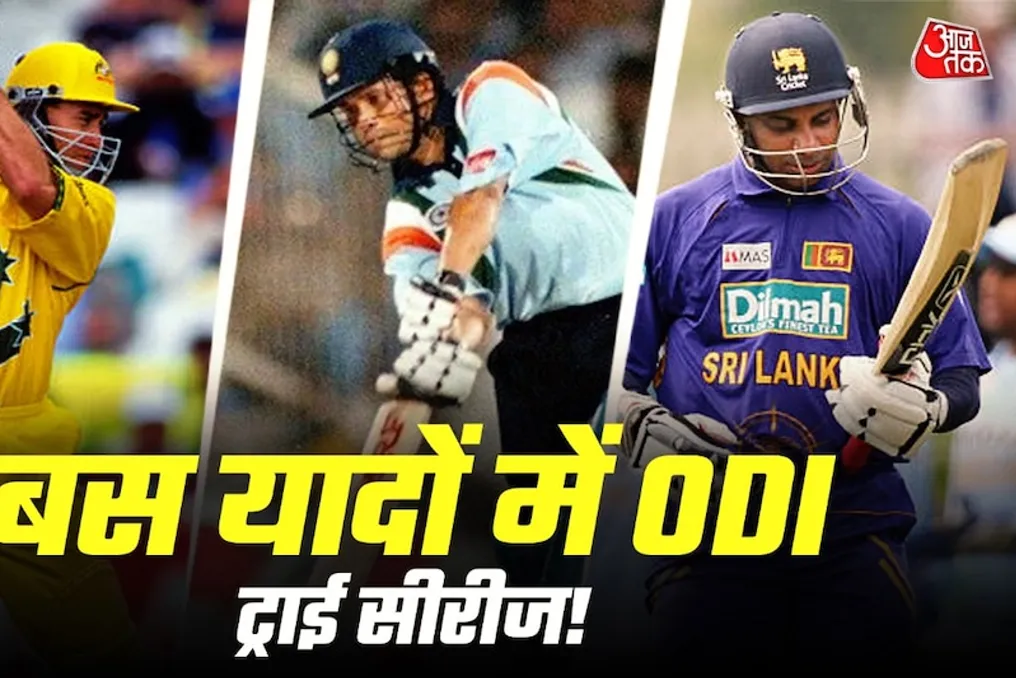
At one time, the ODI (One Day International) itself was synonymous with a major event. Although the World Cup is held every four years, between these tournaments, there were other significant competitions for fans, among which triple series held a special place. These tournaments involved a competition between three teams with a league stage, a leaderboard, a fight for the final, and constantly changing dynamics in every match.

The popularity of these series was so great that the excitement was not limited to the action on the field. Spectators watched which teams would reach the final, how many wins each team would need, and under what conditions the pace of the game would be decisive.

In modern realities, where Test cricket has gained the goal of a Test World Cup, and T20 cricket has captured a huge market thanks to franchise leagues, ODI is trying to find its place between them. At such a time, memories of old triple series are particularly interesting, as 50-over cricket did not need external stimuli then.

Kerry Packer is often mentioned in the history of triple series. A dispute arose between media magnate Packer and Cricket Australia regarding television rights. Following this, Packer launched World Series Cricket. To make this league successful, Packer needed the best cricketers in the world. At that time, the West Indies were the strongest team, and Packer's team attracted many of their star players.

After this, triple series were held between Australia, the West Indies, and World XI. Matches concluded in a single day. Bright uniforms and white balls were used, and the television coverage was much more modern than before. The quality of the cricket was also outstanding. The West Indies participated in four of the first six Australian seasons and were champions every time. Even after Packer and the Australian board reached an agreement, this format continued to be held within Australia's domestic cricket calendar.

When this model, popular in Australia, reached South Asia, its influence grew. In 1983, the then Chairman of the Indian Cricket Control Board (BCCI), N.K.P. Salve, began working on organizing the World Cup in India. He was joined by Nur Khan from Pakistan and Gamini Dissanayake from Sri Lanka. During this process, the Asian Cricket Council (ACC) was founded on September 19, 1983. Then, in 1984, India, Pakistan, and Sri Lanka held the first Asian Cup in Sharjah. This event marked the beginning of multinational cricket in Asia. Gradually, Sharjah transformed into not only a venue for the Asian Cup but also a major center for ODI cricket.

In the 1990s, the influence of English cricket began to spread to the Indian subcontinent, and Sharjah became the focal point of these changes. Major players from India, Pakistan, and other countries regularly played here. Celebrities attended the matches, and the popularity of the games on television steadily increased. Long before the era of franchise cricket, Sharjah turned cricket into a large-scale spectacle. By the end of 1992, 29 ODI tournaments involving three or four countries had been held. Of these, 15 took place in Australia, and nine in Sharjah. Thus, the history of triple series in ODI is mainly linked to two locations: Australia and Sharjah.

In the 1990s, international cricket from South Africa returned, and Sri Lanka also quickly became one of the strong global teams. In 1996, Sri Lanka became the World Champion. The number of strong ODI teams in international cricket increased. This directly benefited the triple series. From 1996 to 2008, full member teams held three-nation ODI tournaments in Singapore, Morocco, Netherlands, Malaysia, Ireland, Scotland, and Canada. The four-year interval between World Cups and the limited popularity of the World Cup also made these tournaments important. It was the main way to watch ODI cricket between strong teams throughout the year.

These tournaments saw not only trophies won but also events that influenced rules, tactics, and thinking in cricket. In 1979, in Sydney, the England team had to save three runs on the last ball. Captain Mike Brearley positioned almost all his fielders near the boundary. A year later, New Zealand needed to score seven runs off one ball. Greg Chappell from Australia asked his brother Trevor to throw the ball underhand. This incident caused a big controversy in cricket. In 1982-83, Lance Cairns hit six sixes at the MCG (Melbourne Cricket Ground) using a specially prepared bat. In the 1980s, Javed Miandad took advantage of the conditions at the WACA Ground in Perth and scored an unbeaten 59 against the West Indies, including 45 singles and no fours or sixes. In 1986, Gus Logie from the West Indies was named 'Player of the Match' for his fielding performance in Sharjah. This in itself was an exceptional event.

Popular