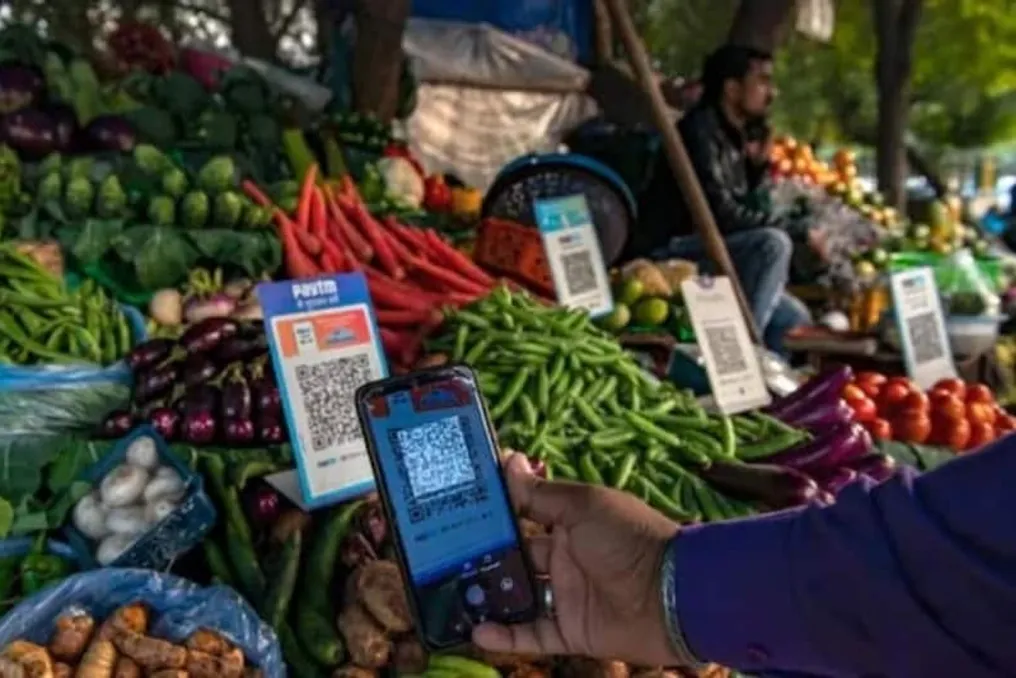
Traders divided over 'No UPI Day' campaign; CTI is ready, while CAIT refuses to participate
Read more
Aaj Tak
www.aajtak.in

Traders divided over 'No UPI Day' campaign; CTI is ready, while CAIT refuses to participate

Traders have split into two camps regarding the 'No UPI Day' campaign. This campaign was initiated as a protest against the introduction of Merchant Discount Rate (MDR) for UPI payments exceeding 2000 rupees. Consequently, some sellers may request cash instead of accepting UPI payments on Ganesh Chaturthi, which falls on October 2nd.

The 'Chamber of Trade and Industry' (CTI) has called on traders to cover their QR codes, scanners, and sound boxes and accept only cash on Ganesh Chaturthi. However, the Confederation of All India Traders (CAIT) has distanced itself from this initiative.

The Confederation of All India Traders (CAIT), led by BJP MP Parin Khandelwal, stated that it would not observe 'No UPI Day' on October 2nd and had made no calls for traders to participate. CAIT emphasized that the organization had not made any decisions, proposals, or official statements regarding this matter.

While CAIT maintains its distance, the Chamber of Trade and Industry (CTI) has announced the observance of 'No UPI Day' on October 2nd in protest against the introduction of MDR for UPI payments. CTI asserts that traders have not revoked their decision, and that this campaign will be conducted by members across the country, including Delhi. More than one hundred large trade organizations will participate in this event.

CTI hopes that 'No UPI Day' will be observed in over 2000 locations nationwide. The organization has appealed to all sellers and traders in Delhi and across the country to cover their UPI terminals with black cloth and conduct transactions exclusively in cash.

The Chamber of Trade and Industry has demanded that Finance Minister Nirmala Sitharaman repeal the MDR applied to UPI transactions exceeding 2000 rupees. CTI argues that this will burden 60 million sellers and traders. Furthermore, the organization warned that the introduction of a charge for UPI payments over 2000 rupees starting October 15th could lead to a 50% decrease in UPI usage, potentially increasing the circulation of physical currency in the country.

It should be noted that the MDR for UPI payments is set at 0.4% for amounts over 2000 rupees, but the system is not uniform for all payments. It also includes a fixed-rate category applicable to all UPI payments, including transactions at petrol pumps, where a fixed MDR of 5 rupees is set. Additionally, traders with payments up to 100,000 rupees are provided with a concession as they fall under the zero MDR category.

Similar stories

Pitru Paksha Dates for 2026: Information on Shraddha Rituals
Read more
www.aajtak.in

Pitru Paksha Dates for 2026: Information on Shraddha Rituals

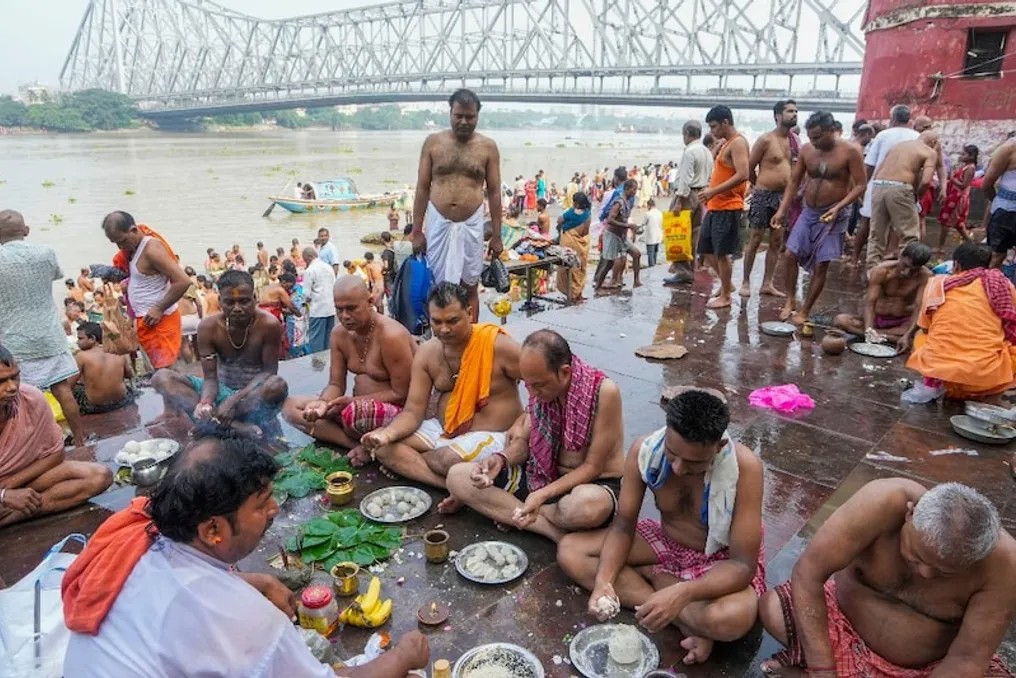
In Hinduism, Pitru Paksha is considered a special period for honoring ancestors and expressing reverence towards them. During this time, various rites such as Shraddha, Tarpan, and Pindadaan are performed for deceased family members. There is a belief that remembering ancestors and performing religious acts for their spiritual peace holds particular significance during these days.

Pitru Paksha 2026

In 2026, Pitru Paksha will begin on September 27th and conclude on October 10th, which is Sarvapitri Amavasya. Additionally, a Pournima Shraddha will be performed on September 26th.

When does Pitru Paksha start?

Pitru Paksha in 2026 starts on September 27th. During this period, ancestor remembrance is conducted according to different dates. Traditionally, Shraddha is performed on the day of a person's death. However, it should be noted that differences may exist across various regions and families based on Panchanga calculations.

The last day of Pitru Paksha will be October 10th, when Sarvapitri Amavasya is observed. This day is also important for ancestors whose dates of death are unknown.

Main Dates of Pitru Paksha in 2026

The main dates include: Pournima Shraddha — September 26th; Pratipada Shraddha — September 27th; Dwitiya Shraddha — September 28th; Tritiya Shraddha — September 29th; Chaturthi Shraddha — September 30th; Panchami Shraddha — October 1st; Shashthi Shraddha — October 2nd; Saptami Shraddha — October 3rd; Ashtami Shraddha — October 3rd; Navami Shraddha — October 4th; Dashami Shraddha — October 5th; Ekadashi Shraddha — October 6th; Dwadashi Shraddha — October 7th; Trayodashi Shraddha — October 8th; Chaturdashi Shraddha — October 9th; and Sarvapitri Amavasya — October 10th.

It is important to remember that Shraddha dates depend on lunar calendars and local Panchanga calculations, so when determining the time for a specific ritual, one should refer to the local Panchanga or family traditions.

What is Shraddha?

Shraddha is related to expressing respect and reverence for ancestors. During Pitru Paksha, family members perform Shraddha rituals according to the date of death of their deceased relatives. These rites involve worship, offering food, and charity, and their performance may vary depending on family and regional traditions.

How is Tarpan performed?

Tarpan also holds great significance during Pitru Paksha. In this ritual, water is offered to the ancestors. According to many traditions, water in a copper vessel, black seeds, milk, and Ganga water are used for Tarpan. Kusha is also considered a sacred plant. Traditionally, when performing Tarpan, one should face south, as the southern direction is associated with the Pitras in Hindu beliefs.

What is the significance of Pindadaan?

Pindadaan is an important part of pitra rituals. During this, pindas are offered to the ancestors. The method of making and offering pindas can vary depending on different religious traditions and family customs. Some families also perform Pindadaan at pilgrimage sites during Pitru Paksha, following methods indicated by local traditions and the priest.

What is included in the food during Shraddha?

Many families have a tradition of preparing sattvic food on Shraddha days. The composition of the dishes may differ depending on the region and family customs. According to several traditions, a portion of the food during Shraddha is given to animals such as cows, dogs, and crows, which is considered part of the religious practice.

What is avoided during Pitru Paksha?

Pitru Paksha is generally viewed as a time for ancestor remembrance and performing religious rites. Therefore, many families try to avoid holding large and auspicious events during this period. Traditionally, auspicious events such as weddings, as well as starting new businesses or important endeavors, are refrained from during these days. It is also recommended to refrain from moving into a new house or purchasing expensive or luxurious items, as well as holding large festivals or celebrations. Nevertheless, adherence to these rules is not universal for all families, as religious traditions can change depending on the region, community, and family customs.

Furthermore, there is a tradition during Pitru Paksha of donating and helping the needy. Many people donate food, clothing, footwear, til, and other necessary items during this period. Charity is seen as a way to express reverence for ancestors and help those in need.

It is important to remember that the methods of performing Shraddha and Tarpan are not uniform everywhere. The correct determination of the date and method of Shraddha should be based on the traditions of one's family and the local Panchanga.

Business Associations Plan UPI Boycott Day on October 2 in Protest Against New MDR Fee
Read more
business-standard.com

Business Associations Plan UPI Boycott Day on October 2 in Protest Against New MDR Fee

Some business associations have decided to hold a day of boycott of UPI (Unified Payments Interface) on October 2. This step is aimed at protesting the decision by the National Payments Corporation of India (NPCI) to introduce a Merchant Discount Rate (MDR) of 0.4 percent on payments to sellers via UPI exceeding ₹2000, starting from October 15.

Organizations confirming participation in the action include the Maharashtra Chamber of Commerce and Industry, the Food Federation of Consumer Distributors of India, the All India Union of Edible Oil Traders, the Federation of Jewelers and Gold Holders of India, the Association of Mobile Retailers of India, and the Federation of Retail Traders Welfare Associations. They plan to participate on October 2.

Ravindra Mangave, President of MCCIA, stated at a press conference in Mumbai that MCCIA has about 500 affiliated associations. He reported that they discussed the issue with all trade associations in India and unanimously decided to support the UPI boycott day not only in Maharashtra but also in other states. He added that representatives of organizations such as the Federation of Retail Traders Welfare Associations, the Food Federation of Consumer Distributors of India, the Association of Mobile Retailers of India, the Federation of Jewelers and Precious Metals of India, and the All India Union of Edible Oil Traders will join MCCIA and about 500 Maharashtra associations for this day. These associations intend to meet with the Prime Minister and voice their demands, while at the central level, present them to the Finance Minister.

MDR is a commission that a seller pays for accepting digital payments. UPI transactions between individuals are not subject to a fee. However, UPI transactions from an individual to a seller exceeding ₹2000 will be subject to a 0.4 percent fee starting October 15, capped at ₹300.

Payments to small sellers classified as P2PM will remain free from MDR. Such sellers include small traders receiving up to ₹1 lakh per month through UPI, which is particularly beneficial for businesses in rural and semi-urban areas. In August, UPI processed 15.51 billion person-to-merchant transactions totaling ₹8.95 trillion, with payments over ₹2000 accounting for about 67 percent of this amount.

Last week, senior officials from the Ministry of Petroleum and Natural Gas met with the All India Petroleum Traders Association to discuss the dealers' demand for exemption from MDR on UPI transactions. Tuhin Kanta Pandey, Chairman of the Securities and Exchange Board of India (SEBI), stated that the regulator would consider brokers' concerns regarding the new MDR for large fund transfers via UPI. The MDR rate for capital market transactions is set at 0.02 percent, with a limit of ₹300 for payments to mutual funds, brokers, dealers, and investment advisors.

Dayarishil Patil, national president of AICPDF, noted: 'Why should only traders bear the additional cost of digital payments? Retailers and distributors operate on very low margins and already contribute significantly to the growth of digital commerce. Introducing MDR on UPI transactions will only add another expense item to their business. Digital payments should reduce friction, not penalize the trader.'

Shankar Thakkar, national president of the All India Union of Edible Oil Traders, stated strong opposition among traders across the country to the government's proposed order introducing a 0.4 percent MDR charge on UPI transactions exceeding ₹2000 from October 15.

Various trade organizations across the country have decided to protest on Gandhi Day, October 2, following the example of Mahatma Gandhi: they plan to cover UPI scanners, QR codes, sound boxes, and other related devices with black cloth as a sign of protest. Thakkar warned that if the government does not take appropriate action on this matter, a strategy for further actions will be determined in the coming days, and protests will intensify.

He explained that the constantly growing use of UPI payments has made the entire retail payment chain more transparent. A customer makes a UPI payment to a seller, the seller makes a digital payment to the wholesaler when purchasing goods, and the wholesaler, in turn, makes an online payment to the manufacturer or supplier. This has reduced the circulation of cash and created an account of every transaction. Thakkar questioned: 'Is the cost of increasing system transparency being borne by small retailers? Introducing MDR for traders operating on low margins will effectively mean not promoting Digital India, but economically punishing honest businesses for conducting registered and transparent transactions.'

Popular