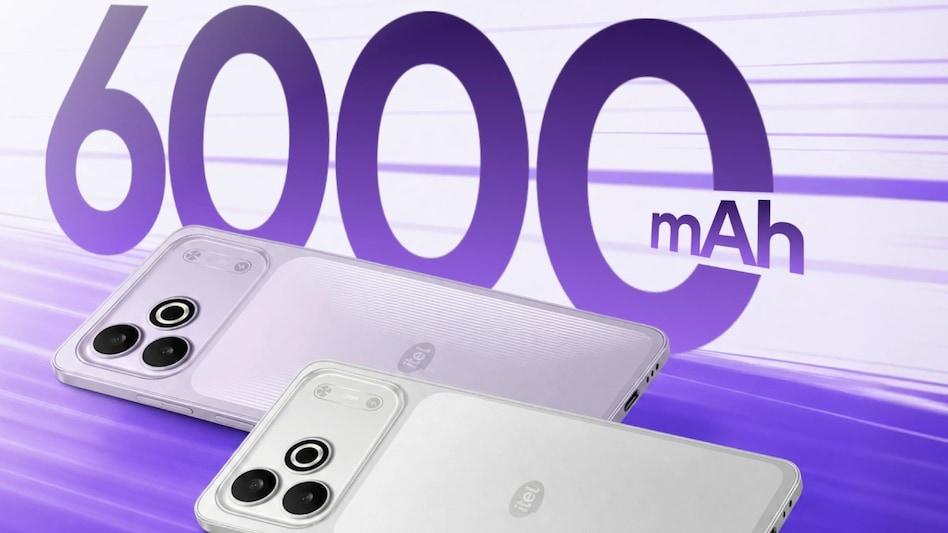
itel releases A300C smartphone with 6000 mAh battery, 90 Hz screen, and Android 16 Go for under 9000 rupees
Read more
Aaj Tak
www.aajtak.in

itel releases A300C smartphone with 6000 mAh battery, 90 Hz screen, and Android 16 Go for under 9000 rupees

The company itel has introduced the new itel A300C smartphone variant with 3 GB of RAM, available for the price of 8,699 rupees. The main advantage of this model is its 6000 mAh battery, which the company positions as the most affordable 6000 mAh smartphone in India. The device's design resembles the iPhone 18 Pro.

Despite the low cost, the phone is equipped not only with a large battery but also with a 90 Hz refresh rate display, 18W fast charging support, the Android 16 Go Edition operating system, and MIL-STD-810H durability certification. Thus, the device is aimed at users who value reliability, long battery life, and everyday use, rather than high-end camera or gaming capabilities.

The new itel A300C variant is priced at 8,699 rupees and includes 3 GB of RAM with virtual memory expansion. The phone runs on Android 16 Go Edition and is equipped with an eight-core Unisoc T7100 processor. The company claims that this combination is ideal for performing daily tasks such as using WhatsApp, YouTube, UPI payments, social media, and educational applications.

It is important to note that Android Go Edition is a lightweight version of Android specifically designed for devices with limited RAM, allowing the system to run more smoothly compared to the standard Android version.

The most significant aspect of this smartphone is its 6000 mAh battery, which supports 18W fast charging. A USB Type-C port is provided for charging.

The itel A300C is equipped with a 6.56-inch display with HD+ resolution and a 90 Hz refresh rate. This provides a smoother feel when scrolling and using standard applications compared to 60 Hz screens. However, it should be noted that the screen resolution is HD+, not Full HD+, so users should not expect the same clarity as more expensive models, despite the 90 Hz smoothness.

itel aimed to make the A300C not just a large-battery phone; the company states that the model complies with the MIL-STD-810H durability tests, meaning the phone has been tested for resistance to drops and vibrations under certain conditions. Nevertheless, MIL-STD-810H does not guarantee waterproofing or complete protection against any adverse conditions.

Furthermore, itel offers users a free screen replacement for the first 100 days, providing additional protection against accidental screen damage during the initial period of use.

In terms of photography, this phone is not positioned as a camera phone. It is equipped with an 8 MP main camera and a 5 MP front camera. According to the company's statement, these cameras are intended for everyday shots and video calls. This means that if stunning photos and videos for Instagram or YouTube are a priority, this device will not suit, but it will handle sending photos via WhatsApp, video calls, and general pictures.

It is important to know that the itel A300C is a 4G smartphone and supports 4G LTE connectivity but lacks 5G support. This should be considered when purchasing, as a user buying this phone for 8-9 thousand rupees in 2026 will be able to use it for several years.

The company itel emphasizes that the A300C is designed with everyday application needs in mind, citing examples such as WhatsApp, YouTube, UPI, and QR payments, as well as social networks and educational programs. The phone is also equipped with a side fingerprint sensor, face recognition, and Type-C OTG and IR remote ports, allowing control of compatible electronic devices.
Similar stories

Cost of 5G Smartphones Has Doubled: Is It the Influence of Artificial Intelligence or Company Pricing Policy?
Read more
www.aajtak.in

Cost of 5G Smartphones Has Doubled: Is It the Influence of Artificial Intelligence or Company Pricing Policy?

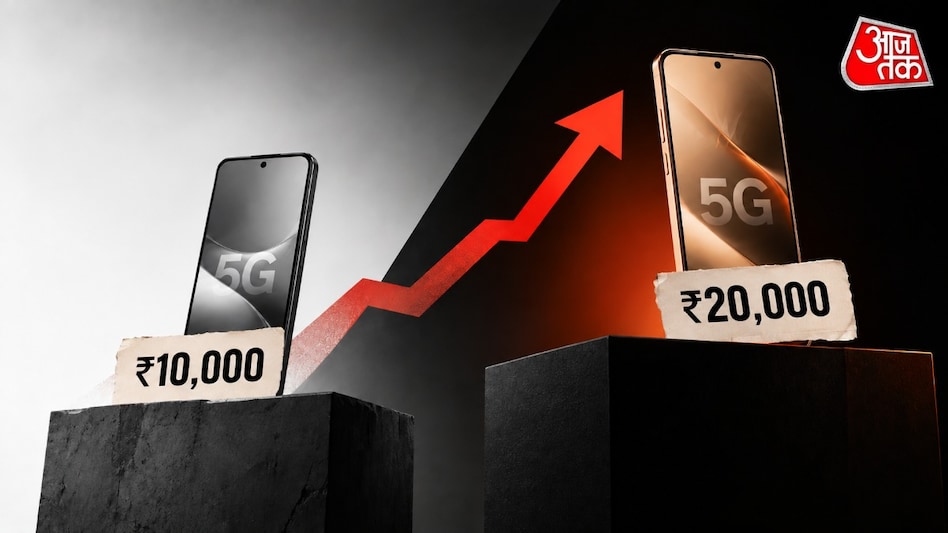
Previously, consumers could choose from many good options among smartphones priced around 10,000 rupees. In this price range, one could find a 5G phone with a good battery, an acceptable camera, and sufficient performance for daily tasks. However, this budget now seems insufficient. Finding a new 5G smartphone for 10,000 rupees has become difficult, and to get a good combination of screen, camera, battery, RAM, and storage, the budget often reaches 15–20 thousand rupees.

The Vivo T series serves as an example. The Vivo T4 Lite 5G was released in 2025 with a starting price of 9,999 rupees, whereas the Vivo T5 Lite 5G, released in 2026, has a starting price of 19,999 rupees. Although these two phones are not identical, this market shift is evident: new models in the same segment are appearing at higher prices than before.

This trend is not limited to Vivo. Many smartphones from Samsung, Realme, Poco, Xiaomi, Nothing, and other brands have also become more expensive recently. In some cases, the prices of older models have increased, and new models have appeared on the market at higher prices compared to the past.

Questions arise: why are smartphones becoming so expensive? Has the cost of goods truly increased for companies? Is the price related to artificial intelligence? And the most important question—are companies inflating prices by using the rise in AI and memory costs as an excuse?

To understand this situation, it is necessary to examine the factor exerting the greatest pressure on smartphone costs today—memory and storage. Smartphones use types of memory such as DRAM and NAND. Recently, there has been a sharp increase in the prices of these components. According to Counterpoint Research, the rise in memory prices in 2026 has noticeably affected smartphone production costs, especially in low-cost models where memory now accounts for a very large share of the total hardware cost.

Counterpoint reports that the Bill of Materials (BOM) for models with similar configurations in budget smartphones has increased by approximately 70%, and the main reason for this is the surge in memory prices. The increase in costs has also occurred in the mid-range segment. This means that it has become more expensive for companies to provide the same level of hardware at the previous price.

But why has the price of memory risen sharply? This is where artificial intelligence comes in. The use of AI is rapidly growing worldwide. Large technology companies are building massive data centers to train and run AI models. The servers used in these centers require much more and faster memory compared to regular computers. Demand for high-speed memory and other server memory has particularly increased. The AI and data center market has become critical for memory manufacturers. When demand for memory in this sector grew, pressure arose across the entire memory supply chain, leading to price increases.

This affects smartphones in the following way: the number of AI data centers has increased, demand for memory for these centers has grown, memory prices have risen, smartphone production costs have increased, and companies have incorporated part of these expenses into the final phone price. Thus, it cannot be argued that companies are simply using AI as an excuse to raise prices; the rise in memory costs has a real impact on company expenditures.

However, there is another important question: must the entire burden of rising memory costs be passed on to the consumer? Is the company using AI as a cover to inflate prices?

The final price of a smartphone is determined not only by the cost of its components. In addition to the processor, display, camera, battery, and memory, it includes software, research, marketing, logistics, retail markup, and company profit. Consequently, if the production costs of a phone rise, the company has several options: reduce its margin, cut other expenses, make changes to the hardware, or raise the price.

Therefore, the rise in memory prices cannot be considered the sole reason for any increase in smartphone price. The decision on how much to raise the price of a specific model depends on the company's own business strategy. That is, although the rise in AI and memory prices is a real reason, every price increase cannot be explained solely by the name 'AI', and market data shows that companies are addressing this issue not only by raising prices.

The market below 15,000 rupees in India is feeling the greatest pressure. According to Counterpoint Research, in the second quarter of 2026, the volume of smartphone shipments in India decreased by 10% year-on-year. However, in the segment priced under 15,000 rupees, the drop was about 45%. This figure is significant because a large number of customers in India purchase smartphones in this price range.

Due to rising prices of AI-related smartphones, waiting for this month's sale is advised
Read more
www.aajtak.in

Due to rising prices of AI-related smartphones, waiting for this month's sale is advised

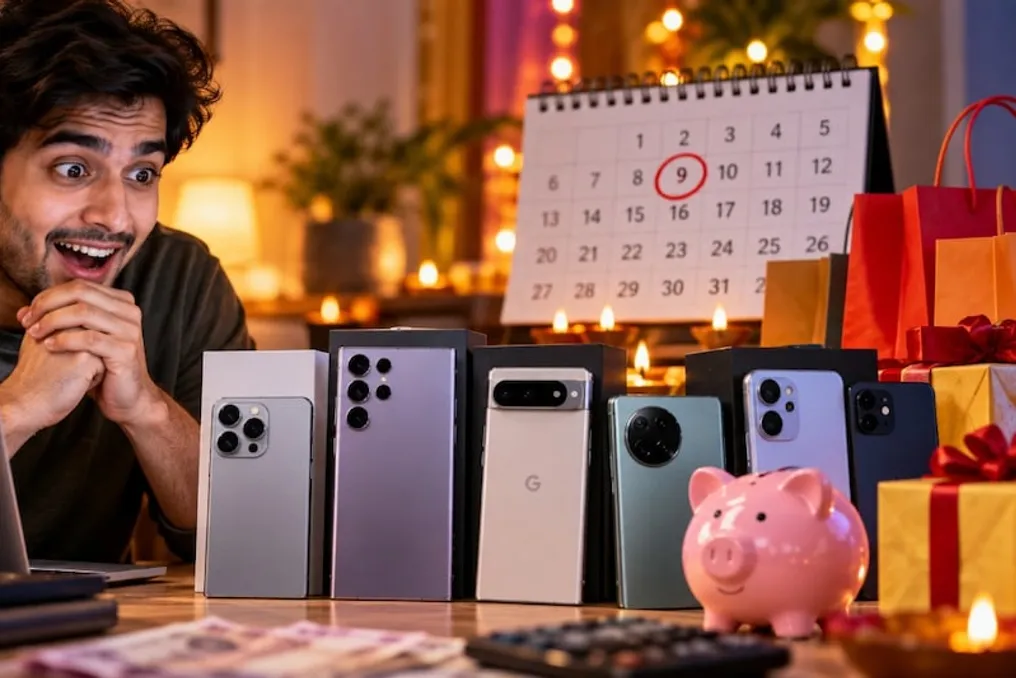
Those planning to purchase a new smartphone are advised to wait a little longer, as a favorable promotion is expected during the Big Billion Days 2026 sale from Flipkart. The date of this major festive sale has already been announced, and numerous offers are anticipated, especially for expensive models such as iPhone, Samsung Galaxy, and Google Pixel.

Flipkart confirmed that the Big Billion Days Sale 2026 will start on October 9th. Flipkart Plus, Flipkart Black users, and holders of Flipkart Credit Cards will receive early access to deals starting from October 8th, one day earlier than other customers.

Although Flipkart has not yet disclosed final prices for all smartphones, which prevents stating exactly which phone will be sold at a large discount, the company has begun providing information on bank offers and various deal formats. Therefore, if you plan to change your phone, it is wise to postpone the purchase until October.

Typically, significant discounts are offered on various iPhone models during the Big Billion Days sale. For example, the recently released iPhone 18 Pro is a very expensive device, so good offers can be expected on older generations of iPhone within this promotion.

Currently, many expensive smartphones have appeared on the market, and the prices of some models have also increased. In this regard, before purchasing an expensive phone, it may be necessary to wait for Big Billion Days. It should be noted that when paying with Axis Bank and ICICI Bank cards during the sale, an instant discount of 10 percent will be provided, although this depends on certain conditions. Additionally, a 10 percent discount is offered when using the Flipkart Axis Bank Credit Card, and offers with some UPI partners and payments will also be available.

Thus, if the phone price decreases during the sale and then a bank offer is applied, the final cost can be significantly lower than on regular days. Exchange offers may also be available, allowing you to reduce the cost of the new device by trading in an old one.

Apple iPhone, Samsung Galaxy, and Google Pixel phones are expected to generate the most interest during Big Billion Days. According to 91Mobiles, a discount is expected on flagship models from Samsung, iPhone, and Google Pixel. The iPhone 17 may also become a main focus of this sale. Since Apple recently changed the price of the iPhone 17, there may be many customers expecting offers on this model. A good deal on older iPhone models, such as the iPhone 16, is also expected, although Flipkart has not yet announced their final price.

Samsung Galaxy S26 Ultra and the Galaxy S26 series will also be featured. Especially if a bank discount and trade-in offer are active during the sale following recent price increases, the effective price of the phone could decrease significantly. Google Pixel may also play an important role in this sale. However, it should also be noted that Flipkart has not yet confirmed the pricing policy for any specific Pixel models, so decisions based on price rumors should not be made.

During Big Billion Days, one should not limit themselves to searching only for general discounts. Flipkart has announced various deal formats, including Price Crash, BBD Specials, Tick Tock Deals, Brand Hours, Double Discount, and Rush Hours. Some of these offers may be time-limited.

This means that the price of the phone you are interested in will not be constant. You can get a big discount on specific models at a specific time. For this reason, it is best to note down the current price of the desired phone before the sale begins.

Popular