In northern Sudan, in a beauty salon, a woman sat patiently while henna artist Nadjwa Mubarak applied crimson floral patterns to her hands, thereby preserving a valuable tradition that is under threat. Henna is a plant used to obtain dye that has adorned Sudanese brides for centuries, and it is also widely used at family celebrations and religious holidays across Sudan.
Nadjwa Mubarak, working in her salon in El-Damer, the capital of Nil State, used soft, smooth strokes, coloring the client's skin a deep reddish-brown. She noted that henna is both a hobby and a heritage for her, as well as a source of income, since applying henna for brides is an integral part of their joy.
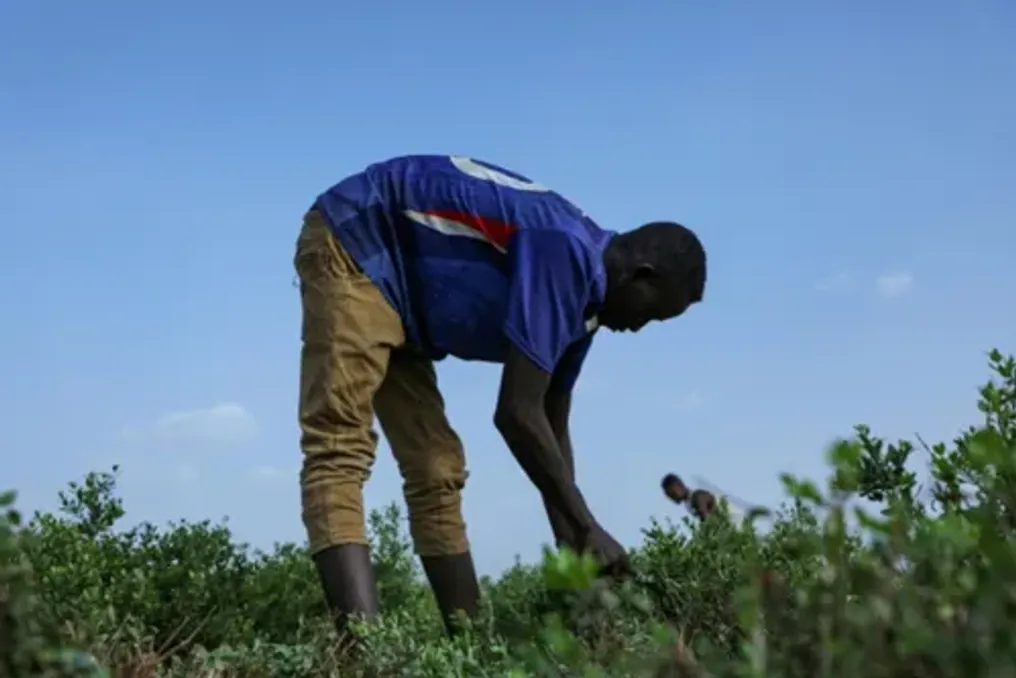
However, pressure on the harvest is felt beyond the salon. Farmer Abdalla Mohammed, located near El-Damer, inspected rows of heat-stressed henna bushes. For many decades, the 57-year-old farmer has grown this plant, whose leaves are dried and ground into powder. Now he worries that the land is slowly drying out, indicating that access to water is the main obstacle limiting production.
Like many farmers in the region, Mohammed relies on irrigation canals fed by the Nile. But sporadic supply and neglected waterways cause fields to dry up at critical moments, reducing both the quantity and quality of the harvest. The conflict in Sudan between the army and the Rapid Support Forces has undermined agriculture across the country.
The war, which began in April 2023, has led to damage to irrigation networks, clogged canals, pump downtime, and neglect of water management systems. Simultaneously, the El Niño climate pattern has disrupted weather systems, delaying seasonal rains and contributing to lower water levels in the Nile, depriving farms of vital support. According to central bank data, agriculture sustains the livelihoods of approximately 65 percent of Sudan's population.
The Food and Agriculture Organization of the United Nations (FAO) reported that rainfall in key agricultural regions between June and mid-August was 30 percent below the long-term average, exacerbating the drought and increasing risks to food and agricultural production.
Despite the difficulties, pockets of emerald-green henna fields are appearing amidst the ochre and brown in the El-Damer area. Farmers harvest the leaves using heirlooms passed down through generations. Environmental expert Al-Rashid Ali Mahdi called henna a 'crop of significant local economic importance.' Previously, Sudan was one of Africa's leading henna producers, exporting its unique dye to countries in the Persian Gulf, Europe, and North America, according to FAO data.
In Nil State, which has largely avoided the war, henna remains one of the most valuable cash crops, supporting livelihoods from farms and processing plants to markets and beauty salons. Although the Sudanese government has not responded to requests for the latest production and export data, workers at a factory in El-Damer dry freshly harvested leaves before loading them into mills. Worker Mohammed Ramadan stated that before the war, they exported products from Omdurman to various parts of the world, but after the start of hostilities, many exporters are forced to route shipments through neighboring Egypt because traditional trade routes, including routes through Chad, have become inaccessible.
Nevertheless, Omnia El-Saed, a 29-year-old salon owner in El-Damer, is confident that henna will survive, asserting that 'it is a cultural cornerstone.'