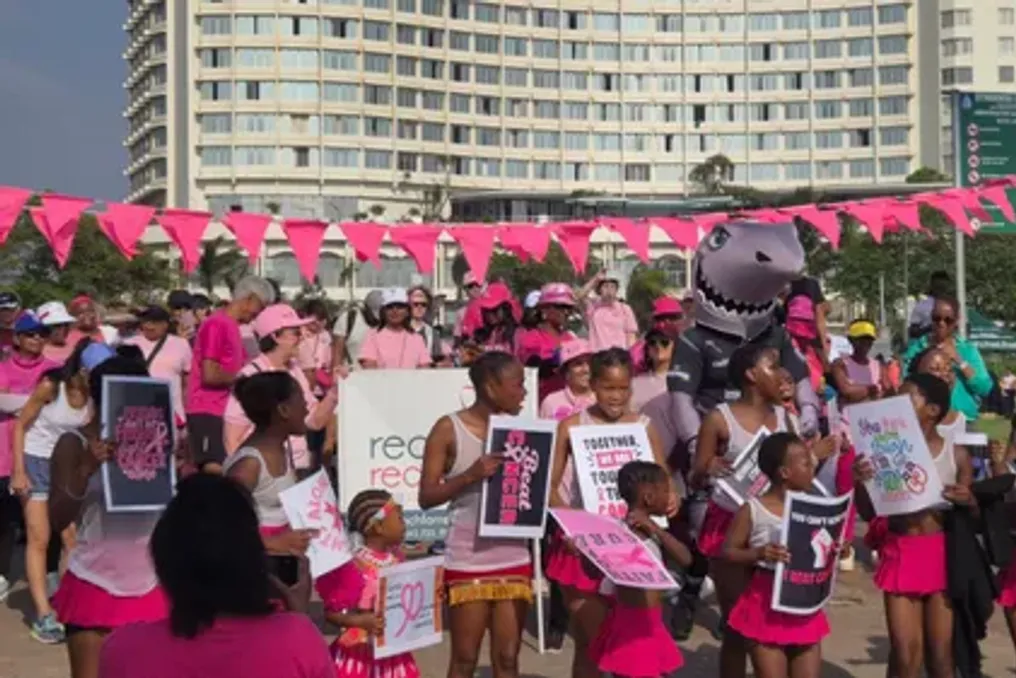
In the KwaZulu-Natal province, a breast cancer diagnosis within the public healthcare system often entails a dual burden: the fight for life and the loss of personal identity following a life-saving mastectomy. Cancer remains the most common disease among South African women, affecting one in every 27 women during their lifetime.
There is a critical gap between the moment of diagnosis, early detection, and subsequent post-operative care. For thousands of women without private medical insurance, timely screening, such as mammography, or reconstructive options remain inaccessible due to financial constraints.
Raising Awareness
The third annual 5-kilometer 'Reach for Recovery' walk along the Durban beachfront, held on October 3rd, aims to bridge this gap, turning community steps along Snell Parade into tangible medical support. In addition to raising public awareness, every ticket sold directly funds two vital measures for low-income women in KwaZulu-Natal: sponsored mammograms for early screening and silicone breast prostheses through the organization's DITTO Project.
Jenny Caldwell, regional chair of 'Reach for Recovery' in KwaZulu-Natal, noted that the event is aimed at increasing awareness about early breast cancer detection and celebrating life after the illness. She emphasized that her efforts and the network of volunteers are not limited to a symbolic morning of solidarity.
Since 1967, 'Reach for Recovery' has operated on a peer-to-patient mutual support model from survivor to patient. Today, over 225 active volunteers visit state and private hospitals across the country, accompanying more than 5,000 newly diagnosed patients annually to provide emotional support, practical care items, and life experience throughout the diagnostic and treatment process.
As part of the campaign in KwaZulu-Natal, there is a clear call: 'DETECT EARLIER. RESTORE DIGNITY.' Caldwell stated that the sponsored mammogram program can be a lifesaver for 'early detection,' which is key to survival. Furthermore, the DITTO Project helps women restore dignity and self-confidence by providing silicone breast prostheses after mastectomy.
Supporters of Reach for Recovery
Caldwell stressed that public education must translate into actionable, life-saving habits, even though October is traditionally a month for corporate awareness campaigns. She reminded people that October is Breast Cancer Awareness Month globally, and early detection allows the disease to be caught at its most treatable stage with the best outcome, which is key to survival.
Moreover, it helps people recognize signs and symptoms, prompting them to seek medical attention promptly. Ultimately, this initiative addresses the problem of deep isolation that often follows a cancer diagnosis, creating an accessible safety net for women utilizing the public healthcare system.
Caldwell highlighted that breast cancer awareness is not just knowing the disease exists; it is recognizing changes, seeking appropriate help in a timely manner, and being confident that one should not go through this journey alone, because 'Reach for Recovery is always there to answer the call.'
The free 5km event, suitable for wheelchair users, starts at 8:00 AM on October 3rd, with registration opening at 7:00 AM at the Durban Amphitheatre. Tickets can be purchased online via TicketPro or on the day of the race. For 'Reach for Recovery,' this event serves as a reminder that while medical intervention saves lives, community action restores dignity, allowing for a full life.