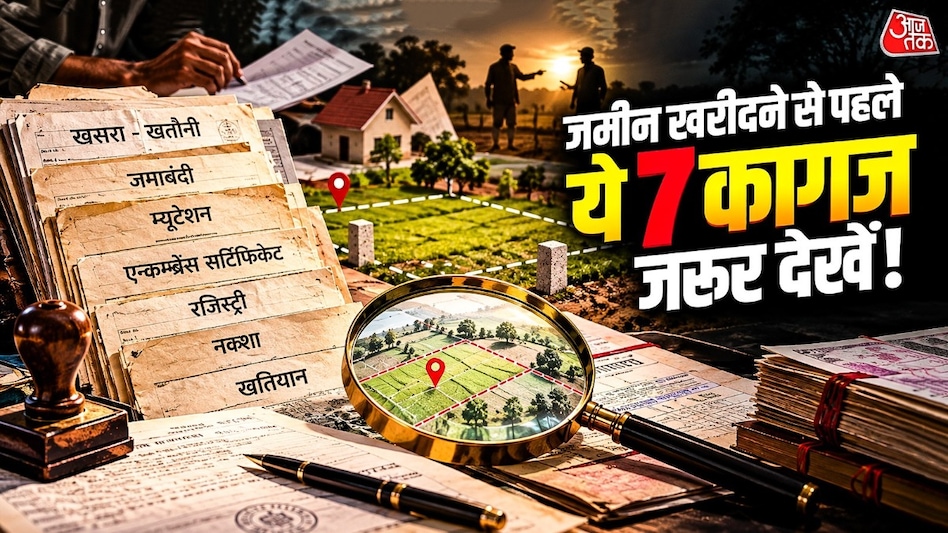
Purchasing real estate is a significant life decision, as people invest their savings in acquiring plots, fields, or houses. However, if the buyer does not properly check the documents, they may find themselves in a difficult situation. Potential problems include situations where the land belongs to another person, is already mortgaged, or is subject to a dispute. Therefore, one should not rely solely on the appearance of the land or the seller's words when handing over money; a number of important documents must be carefully examined before the purchase.
Below, it is explained in detail which seven documents need to be checked and what to look out for.
First, you should review the sales contract, or registry. This document allows you to determine whose name the land is registered under and whether the seller has the right to sell it. The registry specifies the plot number (khasra), area, owner's name, and other information related to the land. It is crucial to cross-reference this information with current government records. It must be remembered that one cannot limit oneself only to a copy of the registry; the information must be compared with official state data.
The parent document helps trace the history of land ownership and previous owners. If the seller claims to own the land today, it is necessary to find out how it came into his possession. One needs to understand who owned it previously and how the change in ownership occurred. This contributes to a full understanding of the chain of title to the land.
The Encumbrance Certificate (EC) is a very important document. It helps determine whether there is a registered debt, mortgage, or other legal transaction associated with the land. If the land is mortgaged to a bank, and you acquire it without checking, problems may arise in the future. Therefore, before purchasing, be sure to check for any existing encumbrances or registered transactions on it.
Land records, such as Khasra-Khatouni or Jamabandi, may be called differently depending on the state. These records contain the plot number, area, owner information, and other details concerning the land. The most important thing is to compare the information contained in the documents with the actual data about the land. It is necessary to ensure that the area indicated by the seller matches the area stated in the records.
Mutation, known in some places as Dahil-Khariz, is a record of changes in government registers after a change in land ownership. For example, if someone bought the land, inherited it, or changed ownership by other means, this will be reflected in the relevant records. Therefore, it is important to ensure that the seller's name is correctly entered into the government registers.
You also need to check the land map and its boundaries. If the area indicated in the documents differs from the actual condition of the land on site, this can lead to disputes later. When purchasing a plot, it is important to verify the plot number, all surrounding boundaries, and the actual condition of the land against the records. Especially when buying a plot, check where the access road to the land is located and if it is indicated in the documents.
Before buying land, you should also check whether any lawsuit, family dispute, expropriation, or other legal problem is pending regarding it. Often, land ownership is disputed by several family members. In such a situation, if you buy the land from one person, the other party may challenge the transaction in the future. Consequently, it is necessary to check all records related to the land and available legal information.
Even after checking these documents, one should not rush to pay the entire amount. It is necessary to match the names, plot numbers, areas, and boundaries in all documents. If the land was inherited, if it belongs to multiple people, or if any disputes are found, it is best to consult a local lawyer or real estate specialist to check the documents.
The most important thing when buying land is not to trust only the seller's words. You must ensure that the ownership is clearly recorded in the documents, that there are no debts or disputes on the land, and that the actual land corresponds to the records. Only after conducting such checks should you make a decision on further actions.