
Trump announced South Korea's investments in the US worth up to $200 billion
Read more
Noticias ao Minuto
noticiasaominuto.com

Trump announced South Korea's investments in the US worth up to $200 billion

Donald Trump stated on Wednesday that up to $200 billion would be invested thanks to agreements reached by his Administration with the Republic of Korea. He made this speech in the presence of several secretaries and company executives involved in the planned investments.

Despite welcoming these projects, which he said would 'further strengthen the alliance between South Korea and the United States,' the South Korean Ministry of Trade softened Trump's statements, noting that no decisions had been made regarding the gas pipeline.

The Trump Administration also announced in its statement a power plant project in Texas that will provide data centers in the area with over 6,400 MW of energy. According to this note, the plant is expected to begin full operation by 2032.

U.S. Secretary of Commerce Howard Latnik supported this information, clarifying that South Korea 'is investing just under $200 billion in state funds into energy infrastructure to enhance U.S. energy dominance.'

According to Latnik, the largest portion of the funds—up to $120 billion (€106 billion)—is designated for the construction of 'eight massive nuclear power plants' in Ohio, Tennessee, South Carolina, and Kentucky. Additionally, about $100 billion (€88 billion) is allocated for construction costs, and $20 billion (€17.6 billion) for unforeseen expenses. The Ministry added that $10 billion (€8.8 billion) would be available by the end of the current year.

Regarding the gas pipeline project, its goal is to transport gas mined in northern Alaska over a distance of 1,300 kilometers to a port in the southern part of the northeastern state. There, the gas will be converted into LNG (liquefied natural gas) and exported by sea to Asia, which is the main market.

However, this large-scale project has drawn criticism, particularly from biodiversity advocates, as well as uncertainty regarding its implementation due to cost issues and questions of economic viability, which hinders its progress. Seoul, meanwhile, denied that any decision had been made.

The South Korean Ministry of Trade stated in its message: 'The Alaskan LNG project will be analyzed subject to its commercial viability and compliance with relevant national legal procedures.' It also added: 'No decision has been made regarding the possibility of investment in this project or the scale of any potential investment.'

If implemented, the project is expected to create 12,000 jobs during construction, prioritizing local workers, followed by another thousand jobs during the operational phase. Construction, according to the schedule, will take three years after funding is allocated, and LNG exports are set to begin two years after completion, as detailed at the White House on Wednesday.
Similar stories

Uzbekistan and Belarus signed contracts worth over $140 million in Khiva
Read more
podrobno.uz

Uzbekistan and Belarus signed contracts worth over $140 million in Khiva

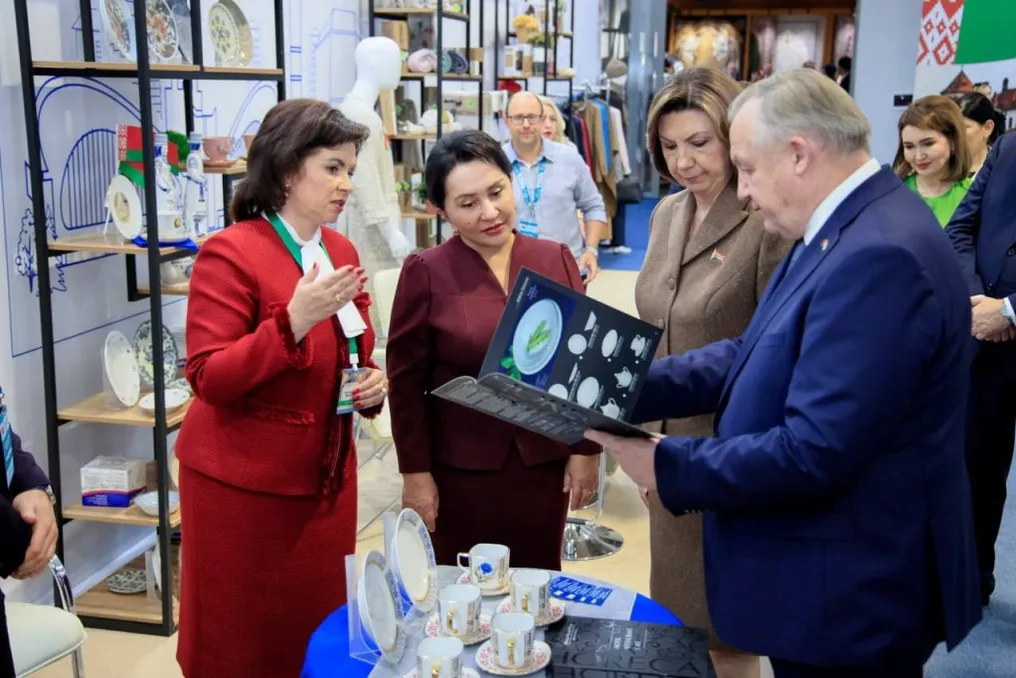
Enterprises and organizations from Uzbekistan and Belarus concluded fifty-nine direct contracts with a total value exceeding $140 million. These agreements were reached following the fourth Uzbek-Belarusian Interparliamentary Forum, which took place in the city of Khiva.

Areas of Cooperation Discussed

According to Natalya Kochanova, Chairwoman of the Council of the Republic of the National Assembly of Belarus, the exhibitions and dialogue platforms organized in Khiva demonstrated the mutual interest of the parties in long-term partnership. The main areas of interest included mechanical engineering, as well as the food and chemical industries, and the agricultural sector.

During the forum, participants also discussed issues of strengthening ties between regions, launching joint production projects, creating new jobs, and providing support to various entrepreneurial initiatives. Following the meeting, the Khiva Declaration was approved, the implementation of whose provisions is planned jointly with the interparliamentary 'roadmap' for the period 2026–2027.

Previously, information had been received about the conclusion of the fourth Uzbek-Belarusian Interparliamentary Forum in Khiva, where its participants signed a number of contracts, agreements, and memoranda of cooperation.

Four companies dominate the electric scooter market, 1.5 million units sold
Read more
www.aajtak.in

Four companies dominate the electric scooter market, 1.5 million units sold

The demand for electric vehicles in the Indian market continues to grow. An analysis of data from the first nine months of the current year, 2026, shows significant growth in the sales of two-wheeled electric bicycles. According to transport data, between January and September 2026, 1.561 million electric two-wheeled vehicles were sold in the Indian segment.

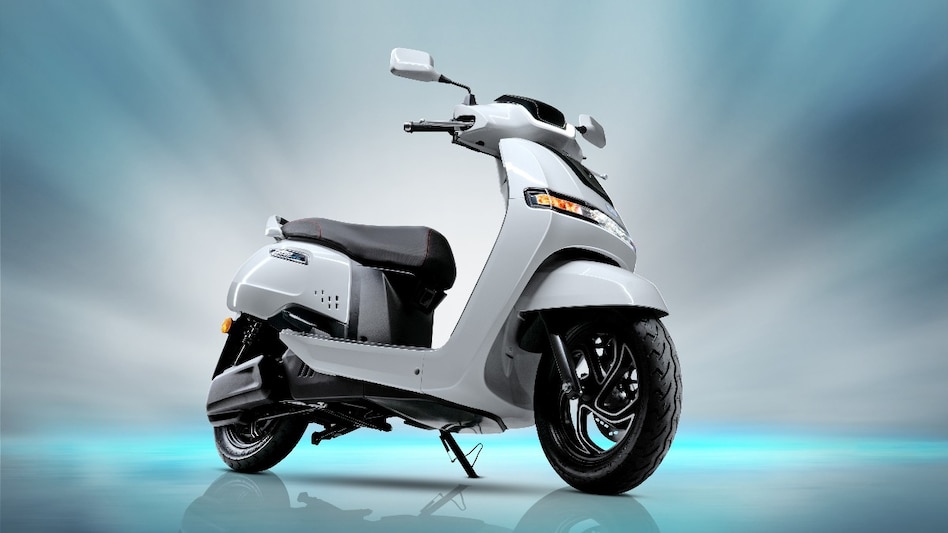
Companies such as TVS Motor, Bajaj Auto, Ather Energy, and Hero MotoCorp hold the largest market share. These four manufacturers control 76 percent of sales over the last nine months. These figures demonstrate that the market is effectively controlled by these four major producers.

For comparison, this figure was 9.61 million units during the first nine months of the previous year, 2025. Thus, over the nine months of the current year, sales of two-wheeled electric bicycles increased by 6 million units compared to 2025. The annual growth rate was 62 percent. Throughout all of 2025, these companies collectively sold 13.42 million electric two-wheeled vehicles.

Last month, 1.97 million registrations were recorded in the two-wheeled electric bicycle segment, representing a 7.7 percent increase compared to August. TVS and Bajaj contributed the most to sales.

Among the best-selling models are the iQube from TVS, which is highly popular, and the Bajaj Chetak, which became the best-selling electric scooter last month. The Rezo model from Ather Energy has also gained consumer recognition, and the Vida from Hero MotoCorp is among the most sought-after scooters.

Although data for September has not yet been published, two-wheeled segment sales in 2026 for nine months have already exceeded those of 2025. Any sales in the next three months will be included in the overall growth of this segment. Over the nine months of the current year, the companies sold 2.19 million more units than last year.

While major manufacturers have benefited the most in terms of market share, there is also impressive growth among smaller companies. For example, River Mobility's share increased from 1.27 percent in 2025 to 2.46 percent in 2026.

Absa shifts cash transactions from branches to ATMs and agent networks
Read more
techcentral.co.za

Absa shifts cash transactions from branches to ATMs and agent networks

Absa is beginning a phased reduction of cash withdrawal services through its branches in South Africa. Cash will now only be available at 'designated branches' as the bank redirects routine operations to ATMs, self-service devices, and eventually to local businesses acting as banking agents.

The bank announced these changes on Thursday, presenting them as a modernization of its network of branches, ATMs, and self-service devices. However, it did not specify how many of its 574 branches will retain cash services.

Absa reported that over 90% of retail customers have moved routine transactions from branches to self-service channels, and the volume of cash processed in branches and ATMs has decreased by 30% between 2020 and 2025. In 2019, more than half of deposits were processed by tellers, whereas now about 90% of deposits go through ATMs and self-service devices.

Peter van Idem, Executive Managing Director for Integrated Channels, stated in a release: 'Customers bank differently, and our front line in branches must adapt to these changes. At the same time, cash remains important for many people and businesses, especially where other options are limited.'

Absa emphasized that its branch network has expanded: from 551 points in 2021 to the current 574, and that its intention 'is not to reduce physical presence.'

However, the service structure is changing. In an interim results presentation in August, Absa reported increasing the number of small 'sales and service' points from 122 to 215 as of June 2025, because 'we are moving away from traditional full-service branches.' CEO Kenny Fihla called this a change that allows for the elimination of costs that no longer provide value.

Agent Banking Model

Business Times previously reported that traditional Absa branches have shrunk by 18%, totaling 359, which combined with 215 sales and service points gives a total of 574, while the ATM network has decreased by 2% to 4,976. Van Idem told the publication that the bank plans to gradually increase the number of free branches to 456, while Fihla noted that branches dispensing cash are significantly more expensive to operate.

The statement from Thursday indicated that 81 branches have already been converted to a 'consultancy model,' which focuses on providing advice rather than processing transactions. Absa did not explain how this figure relates to the 215 sales and service points.

Before implementing the 'network changes,' Absa stated that it would assess local demand for cash and the availability of alternative options nearby, and would add device capacity if necessary. The bank is also developing an agent banking model that will allow customers, especially in settlements and rural areas, to withdraw and deposit cash at local businesses. Cash will be the starting point, and other services may be added later.

Popular