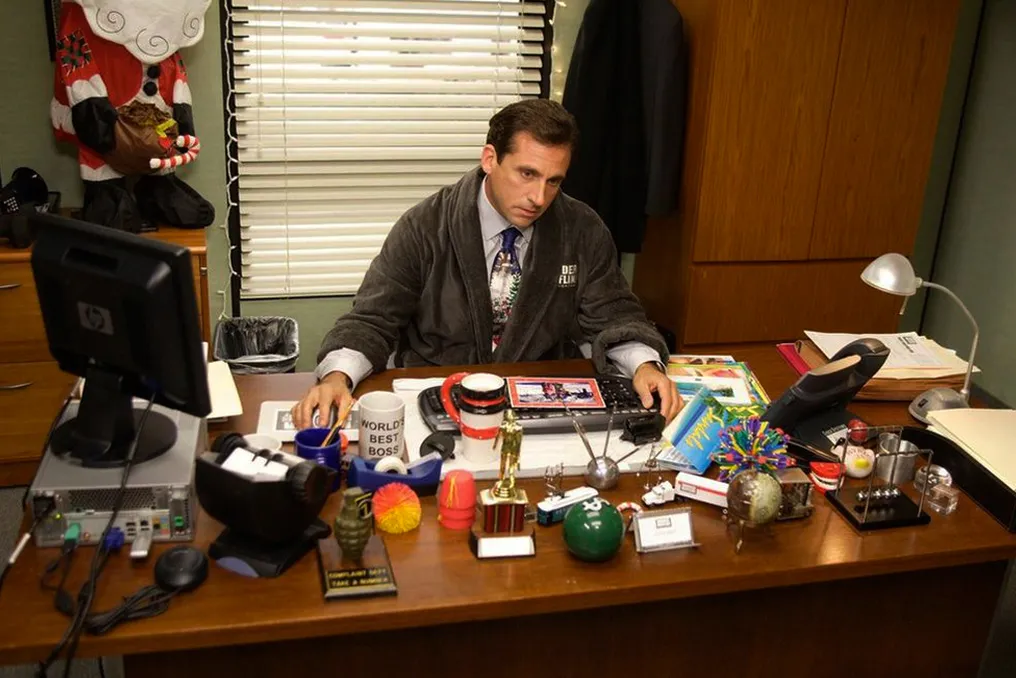
Research indicates that disorganized environments can stimulate greater creativity and innovation
Read more
Super Abril
super.abril.com.br

Research indicates that disorganized environments can stimulate greater creativity and innovation

Many people face the situation of having very messy desks, which can lead to complex searches for documents, pens, or other essential items. Despite this, some notable figures, such as Albert Einstein, Mark Twain, and Steve Jobs, are known for having chaotic environments, suggesting that this may not be inherently negative.

In 2013, researchers from the University of Minnesota conducted a test comparing two groups: one in an organized environment and another in a disorganized environment. Both were asked to propose ideas for new uses of ping-pong balls. An independent panel of evaluators rated the suggestions from the cluttered room group as more creative and engaging.

Another experiment conducted by the same researchers showed that individuals in disorganized rooms had a greater tendency to opt for novel products instead of established alternatives. The scientific conclusion pointed out that well-structured spaces tend to promote a mindset of maintaining the status quo and tradition, manifested in a greater choice of healthy foods and charitable donations. On the other hand, disorganized settings seem to encourage breaking conventions and seeking novelty, reflected in greater creativity and preference for options considered new.

The authors argue that these findings challenge the notion that organization is always beneficial and disorder always detrimental; each type of environment can favor distinct behaviors depending on the desired objective. While organization can support healthy and conventional choices, disorder can drive creativity and the generation of original ideas.

A parallel study, conducted in 2013 by Shandong Normal University, presented consistent results. Participants exposed to disorganized environments demonstrated better performance in creativity metrics, covering fluency, flexibility, and originality. This work also suggested that disorder has the potential to enhance cognitive flexibility and foster less traditional ways of thinking.

The same scientists revisited the topic in a subsequent investigation in 2020, focusing on the variable of individual self-control. They discovered that increased creativity is not universal. In the tests, those with a high level of self-control showed superior creative performance in the disorganized environment, while people with low self-control did not show a large difference between the two types of environments, indicating that personal characteristics can modulate this effect.

Finally, researchers from Jinan University examined the link between environmental order or disorder and how people process information. They found evidence that disorder can favor more conceptual and global processing, while order tends to promote more detailed and localized processing, which may offer a possible cognitive mechanism for the observed relationship between disorder and creativity.
Similar stories

Google DeepMind develops SynthID Bio system to tag AI-generated synthetic proteins
Read more
nplus1.ru

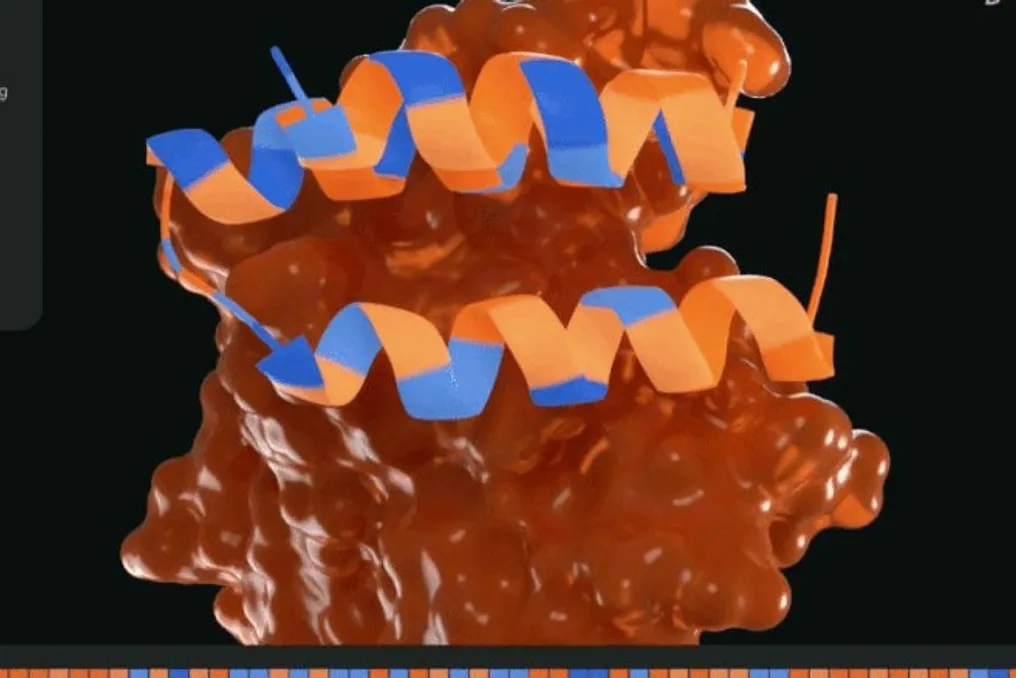
Google DeepMind develops SynthID Bio system to tag AI-generated synthetic proteins

Google DeepMind has announced the SynthID Bio system, designed to tag synthetic proteins that were designed using generative artificial intelligence.

This system is capable of adapting to various data types. It introduces minor yet detectable changes in the amino acid selection within peptide chains while simultaneously adjusting atomic coordinates according to the protein's three-dimensional structure.

Modeling and practical tests demonstrated the effectiveness of this system using several proteins: Vascular Endothelial Growth Factor A (VEGF-A), the SARS-CoV-2 coronavirus spike protein RBD, and the immune checkpoint PD-L1.

The results showed that the introduced modifications do not negatively affect the proteins' functionality, their ability to bind to ligands, or the natural diversity of the sequences, while remaining easily recognizable.

Donald Trump announced three key initiatives at the superintelligence summit concerning AI
Read more
www.aajtak.in

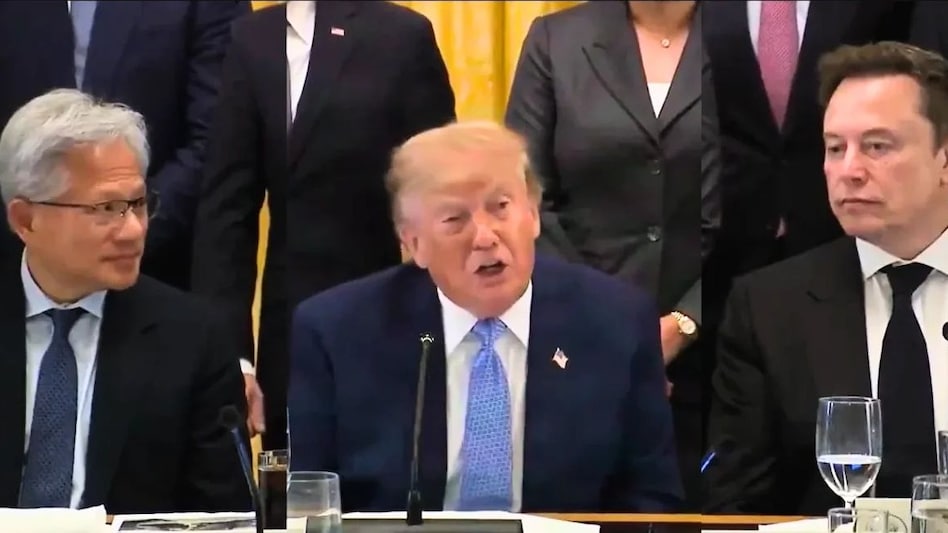
Donald Trump announced three key initiatives at the superintelligence summit concerning AI

US President Donald Trump held a meeting on Tuesday at the White House with leaders of many major technology companies. He described this meeting as an important consultation on intelligence and technology issues. High-ranking representatives from corporations such as OpenAI, Anthropic, Nvidia, Meta, Google, and SpaceX participated in the event.

This meeting took place during active global discussions about the development of artificial intelligence (AI). While companies advocate for the advancement of AI, concerns are also growing regarding its safety and potential misuse. Three main issues were discussed at the summit.

Companies will self-regulate AI

Trump and the leaders of leading AI companies signed a voluntary safety agreement. Trump characterized this document as a morally oriented agreement. It obligates companies to independently create robust systems to ensure the safety of their AI technologies.

According to this agreement, companies must maintain internal control over their AI models and ensure system verification through external and independent audits. Special attention will be paid to preventing unauthorized access to third-party technical systems by the companies' AI models.

Trump noted that this agreement bears some resemblance to a constitution, but it is not a legally binding law. Because of this, some experts have questioned its effectiveness.

Creation of new and larger data centers for AI

Data centers were also a significant topic at the summit. Since AI requires a huge amount of computational power to function, large-scale data centers are being built. Trump supported the expansion of these centers.

However, protests related to electricity consumption and impact on local communities have been observed in several areas of America. Trump emphasized that technology firms must cooperate with local residents and provide them with benefits.

Nvidia CEO Jensen Huang compared data centers to 'superintelligence factories,' asserting that they can boost industry growth and job creation in America.

Changing the name of AI to 'Superintelligence'

The most unexpected moment was the change in terminology regarding AI. Trump issued an executive order to use the term 'Superintelligence' or the abbreviation SI instead of 'Artificial Intelligence' (AI) for governmental purposes. Trump believes that the word 'artificial' does not reflect the true power of this technology. Therefore, the name 'Superintelligence' will be used in official documents, websites, and official correspondence in America.

Thus, Trump's summit discussed not only AI safety but also an attempt to change the approach to perceiving and using this technology. It remains to be seen how effective the model of corporate self-regulation will be and how often the term 'Superintelligence' will be adopted outside of America.

Google develops Gemini 4 model using Argon to enhance AI competition
Read more
techcentral.co.za

Google develops Gemini 4 model using Argon to enhance AI competition

After falling behind in the artificial intelligence race, Google has turned to the Gemini 4 model, introducing a new high-level AI model, Argon. This model is intended to be the foundation of the Gemini 4 generation in an attempt to catch up with competitors Anthropic and OpenAI.

A company representative stated that Argon surpasses Google's previous advanced 'Pro' models in size. He noted that it is their most performant model, created for complex tasks, and compared it to leading models such as OpenAI's Astra and Anthropic's Opus across key metrics in coding and cybersecurity.

Google announced that it is providing this model to select cybersecurity partners and participating in a voluntary Trump administration process for early access to the models. However, public release timelines have not been disclosed.

According to Google's own tests described in the press release, Argon outperformed Astra and Opus on several industry benchmarks, although it lagged behind them in two out of four coding tests included by Google.

Furthermore, it has become known that Google no longer plans to release Gemini 3.5 Pro, which CEO Sundar Pichai had previously announced for June. Meanwhile, Google has reorganized its AI laboratory, DeepMind. Co-founder Demis Hassabis stepped down as CEO in August, becoming chairman of the division, and several Gemini project leaders have left the company.

Lagging Behind

These delays have caused Google to fall behind Anthropic and OpenAI, who have continued to push the boundaries of research with new releases of their flagship models. Although Pichai objected in July to the idea that Google was losing ground in the AI race, in recent months Google has changed its communication strategy, shifting the focus from Gemini's advanced capabilities to cost advantage compared to competing models.

Popular