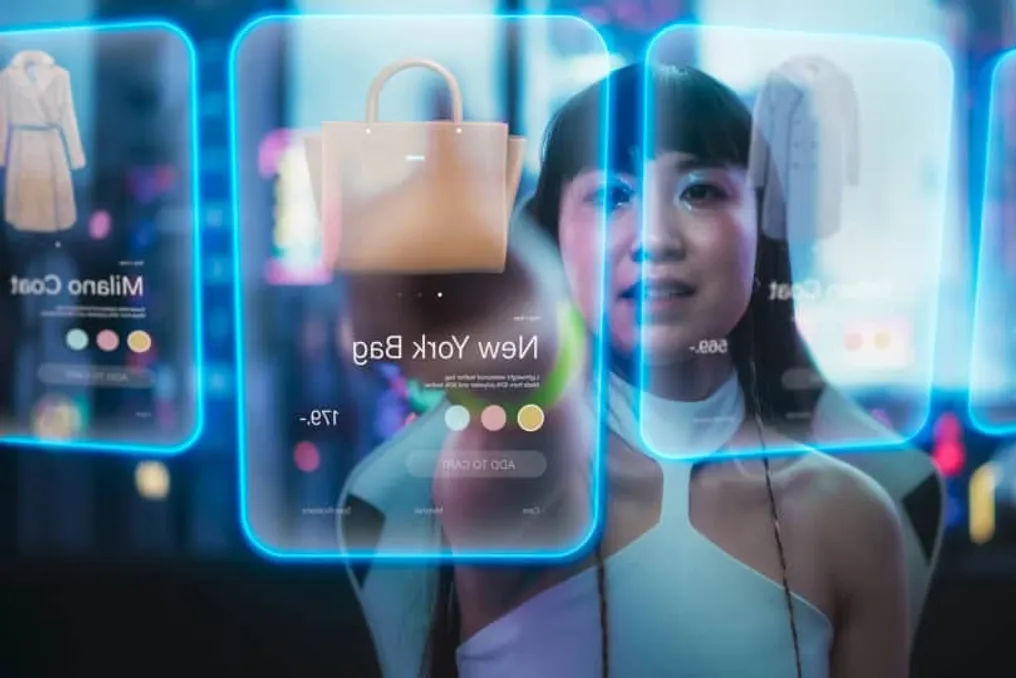
Meta and Tencent are striving to create a personal AI agent for everyday users, but their implementation methods reflect the differences between the American and Chinese internet spaces. For instance, the author used the built-in AI assistant Xiaowei in WeChat to order coffee through the Starbucks mini-program. Mini-programs are lightweight applications that run inside WeChat. In this case, the ordering service was provided by Starbucks, and Xiaowei facilitated the use of this service through the assistant without requiring the installation of a separate application.
While one coffee order does not prove Xiaowei's ability to handle complex routes or save time daily, it makes the abstract idea of a personal AI agent tangible, showing how it can integrate into daily life through the familiar process of purchasing a drink.
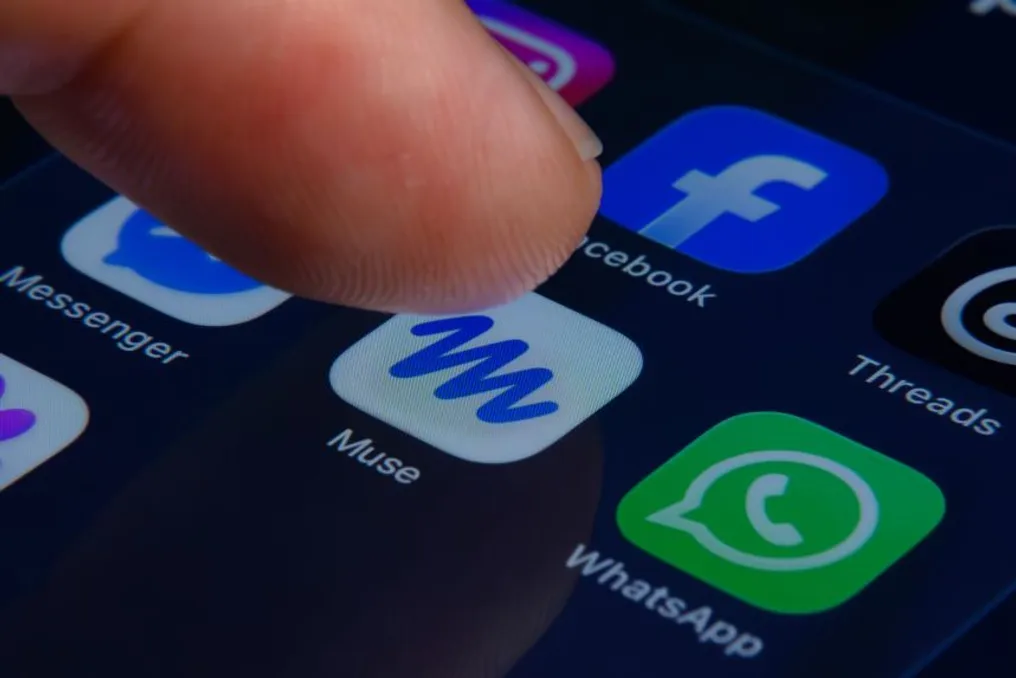
Meta pursues a similar broad goal with its product Muse. Both tools aim to move agents beyond technically savvy users and into the routine tasks of ordinary people, helping delegate real actions. However, because they are developing in different internet environments, they require users to form different habits.
Muse allows users to delegate work to an assistant that interacts with various services. Xiaowei, on the other hand, embeds the assistant within an environment where communication, content, and various services already converge. This fundamental difference defines the capabilities, obstacles, and nature of the relationship each product can build with its users.
Muse Approach: "AI First"
Muse demonstrates an AI-centric approach: first, a personal agent is created, and then the necessary services are connected. Thanks to the standalone application, users can assign tasks to the assistant, much like giving instructions to a secretary. The agent operates in a dedicated cloud environment, using a browser and service connections to perform tasks on behalf of the user.
The standalone application is not the only way to access Muse; it is also available via WhatsApp and a web interface. A key difference lies in the organization of work: the user delegates a goal to an assistant that has its own workspace, and this assistant goes out to execute it.
Xiaowei Approach: Integration into Existing Ecosystem
Xiaowei follows the reverse logic. It adds AI into the environment that people are already using. A user can invoke it directly within WeChat, including reading and communication contexts, and link this assistance to subsequent actions. This contrast can be described as "AI plus services" versus "existing ecosystem plus AI." In the former case, the assistant becomes the endpoint for the work, whereas in the latter, the assistance becomes part of ongoing activity.
Muse's offering for cross-service interaction focuses on connecting people with tasks that need to be done. Xiaowei expands this role to relationships between people. WeChat already contains a dialogue where an action is planned, alongside services that can help realize it. Trials reports on Xiaowei's social AI, where assistants communicate to coordinate plans with user approval, point to this capability.
This does not make social coordination exclusive to Xiaowei, but it gives Tencent a unique starting position: the assistant is close to where human needs are expressed, as well as where service purchases are made.
Muse's design addresses a common problem in American digital life: completing one task often requires switching between different services. A request might be in an email, booking on a website, and the result stored in a calendar. The user manually establishes the links between these elements.
Mature browser services used for shopping, travel, and work provide the agent with an existing surface area to operate on. Muse potentially can take over some of the navigation and coordination that humans do manually. However, this is a possibility, not a guarantee of seamless execution. A site designed for a human can still be complex for an agent to navigate, and technical accessibility does not equate to permission for automation.
Xiaowei benefits from the concentration of daily activity within WeChat. China's internet is not a single unified complex, but WeChat offers an unusually wide range of functions: messenger, publishing, payments, and mini-programs.
For a suitable user, testing Xiaowei does not require adopting an additional application. The service, the assistant, and the activity that triggered the request can remain within a familiar environment. This can lower the effort required to discover the assistant's usefulness.
Thus, both products solve different forms of fragmentation. Muse can help overcome disparate services, while Xiaowei addresses small gaps between understanding something, deciding on an action, and executing the next step within a single ecosystem.
Interacting with Other Companies
The differences become more apparent when other companies come into play. Muse's external reach gives it the potential to take on a broad role early on. However, this also exposes the agent to platforms that have their own ideas about who should control the customer experience.
Amazon has already blocked Muse from making purchases on its site. Explaining this move, Amazon voiced concerns about unauthorized access, agent identification, and handling customer credentials. These stated objections cannot be reduced to a dispute over commercial territory. But the incident also illustrates a structural problem: user permission does not automatically guarantee cooperation from the service the agent visits.
For a retailer, an external assistant can bring in orders while weakening the direct connection with the buyer. It can alter product selection, the way recommendations are presented, and the scope of the seller's interface seen by the customer. Some sellers welcome the additional demand, while others may resist losing influence over search and repeat sales. Thus, Muse's success partially depends on negotiating with the businesses it hopes to facilitate.
The metaphor of "rising walls" describes this vulnerability. A powerful agent can still encounter closed gates. Some of the most significant hurdles may come from service providers, not competing models.
However, Muse does not rely solely on unsolicited browser access. It also creates partnerships and service connectors. Spotify, for example, has announced integration. The open internet includes both willing partners and resistant platforms.
Xiaowei's approach is closer to opening doors within an existing ecosystem. On June 8th, before widespread public attention on the Xiaowei beta, WeChat announced a pathway for mini-program developers to participate in its AI ecosystem. This path includes an automatic mode, where developers allow the platform to analyze their mini-programs, and a development mode for custom capabilities. Integration does not always require special development, although reliable service coverage still depends on participation, testing, and maintenance.
The difference is that developer participation is considered before the assistant accesses the service. User authorization and developer authorization serve different purposes: one allows the assistant to act on behalf of a person, while the other establishes the service's consent to participate.
For sellers already operating within WeChat, Xiaowei can offer another way for customers to discover and use their services. This may make participation more acceptable than access by an external agent with whom they have no established relationship. This does not mean all commercial issues are resolved. Participation does not imply revenue-sharing agreements, nor does it guarantee permanent access or eliminate competition for ranking and customer relations. The advantage lies in a more coordinated basis of access, with fewer reasons to argue whether the agent should enter at all.
Muse must ensure cooperation between independently managed services. Xiaowei can organize cooperation within a common platform, at the cost of dependence on the boundaries of that platform and its participating developers.
How Users Interact with Agents
For ordinary users, these architectural differences boil down to a simpler question: how do I work with this tool? Muse's open interface offers freedom, but it also requires users to formulate the task. They need to decide what to delegate, connect relevant accounts, and explain enough preferences so the assistant can act usefully.
This does not require technical prompt engineering, but it does require learning to delegate. An open prompt might leave the assistant unaware of the outcome, budget, or decisions it can make without asking questions. The potential reward is relief over a longer period. Muse's cloud environment allows work to continue after the user closes the application. Relationships can evolve from a single query to ongoing responsibility, provided the assistant earns that trust.
Xiaowei can start with a narrower interaction. When a user invokes it in an article or a specific conversation, the immediate context can provide some context that would otherwise need to be explained. Context can reduce the burden of the prompt. A person reading a document already has a specific reason to seek help; they don't need to open an empty chat and invent a use case first. Assistance can become a small addition to an existing habit.
This does not mean Xiaowei automatically understands every intention or constantly reads private conversations. Access remains dependent on product permissions and user actions. Its promise is that the context the user intentionally provides can simplify the request for help.
Muse emphasizes the relief of delegating work and allowing it to continue. Xiaowei focuses on the relief of getting help at the moment a small need arises. These are trends, not fixed limitations. Muse can assist with immediate requests, while Xiaowei can handle longer-term tasks. Nevertheless, each offers its own path to making AI collaboration feel mundane.
The test for Muse is whether the effort spent instructing and connecting the assistant pays off in work the user no longer needs to monitor. The test for Xiaowei is whether proximity to daily activities brings useful help without adding interruptions or uncertainty. Ordering coffee at Starbucks is on the modest end of this spectrum. It shows how an agent can become part of existing routine. Together, they suggest that the future of personal agents will be determined not only by model capabilities but also by the willingness of services to cooperate, the level of authority people are willing to grant, and how naturally a request for help fits into daily life. One path begins with learning to delegate tasks. The other begins with seeking help that is already close at hand. Both must achieve the same result: the user feels that AI has made their life easier.