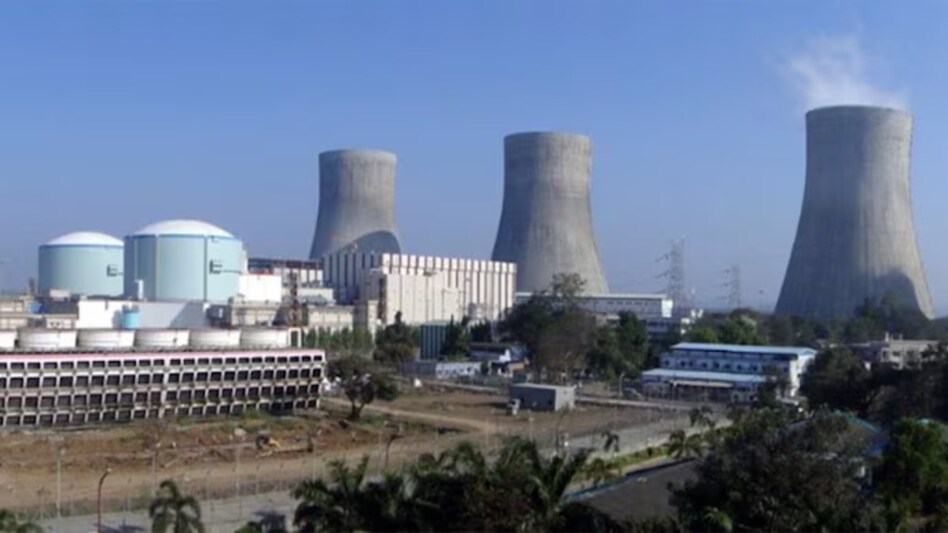
The Indian company Bhavini, having received information through an RTI request, has announced plans to expand India's nuclear energy sector. According to NPCIL data, the country aims to achieve a nuclear power station capacity of 100 gigawatts by 2047.
In Kalpakkam, Tamil Nadu, a 500-megawatt fast reactor prototype is under construction and is expected to be completed by March 2027. This reactor is a key part of Homi Bhabha's three-stage nuclear plan. The fast reactor is capable of producing more usable fuel than it consumes, paving the way for utilizing India's vast thorium reserves.
NPCIL's response details numerous projects with deadlines extending to 2030. In Rawatbhata, Rajasthan, the 700-megawatt RAPP-8 reactor is in its final commissioning phase and may begin operation in 2026. The total approved cost for RAPP-7 and RAPP-8 is 22,924 crore rupees; commercial production has already commenced at RAPP-7.
In Kudankulam, Tamil Nadu, four 1000-megawatt small reactors are being built in collaboration with Russia. Units 3 and 4 are scheduled for completion by June 2027 and June 2028, with an approved cost of 68,893 crore rupees. Units 5 and 6 are slated for completion by June 2029 and March 2030, with an approved cost of 69,437 crore rupees.
Furthermore, in Kage, Karnataka, construction of two 700-megawatt reactor units, 5 and 6, began on March 1, 2026, with the laying of the first concrete after obtaining necessary permits. In Groupur, Haryana, units 1 and 2, rated at 700 megawatts, are under construction and are expected to be completed approximately six years after work commences. Eight other 700-megawatt reactor units are also in early preparation stages: units 3 and 4 in Groupur, units 1 and 2 in Chutka, Madhya Pradesh, and units 1–4 in Mahi Banswara, Rajasthan. The Mahi Banswara projects are currently in the approval stage and will be built through Ashwini.
Existing reactors are located across six states. Tarapur hosts units 1 and 2, each rated at 160 megawatts, and units 3 and 4, rated at 540 megawatts. Rawatbhata has units rated at 200 megawatts (Unit 2), 220 megawatts (Units 3–6), and 700 megawatts (Unit 7). Kalpakkam features MAPS-1 and 2, both rated at 220 megawatts, while Kudankulam has Units 1 and 2, each rated at 1000 megawatts. Both units in Naura have a capacity of 220 megawatts. Kakrapur has Units 1 and 2, rated at 220 megawatts, and Units 3 and 4, rated at 700 megawatts. All units 1–4 in Kage are rated at 220 megawatts.