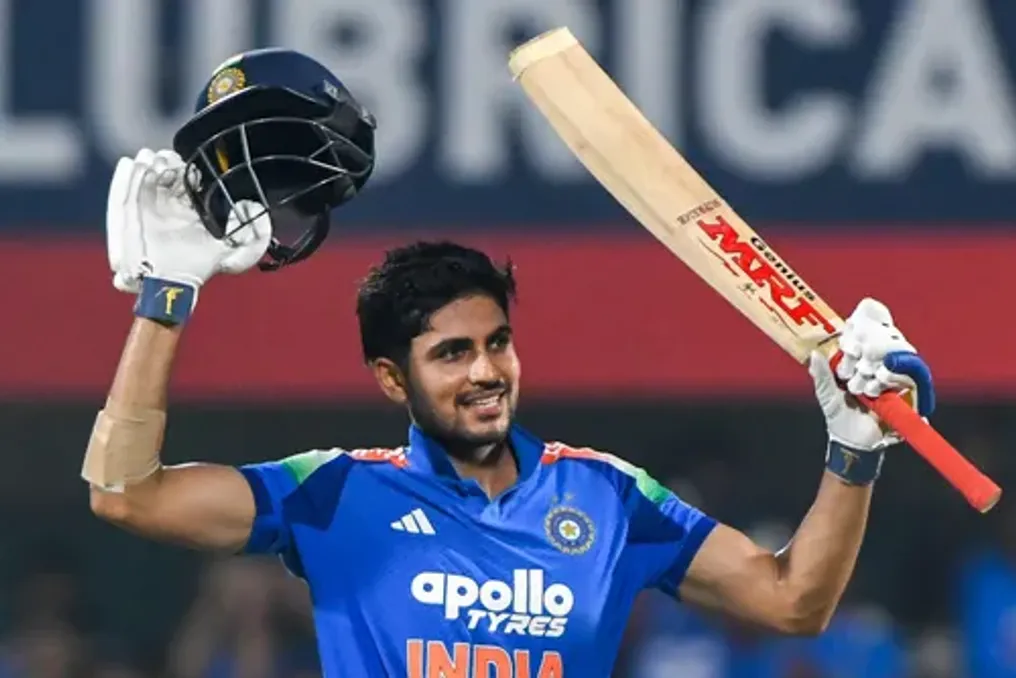
Unbeaten 223 by Shubman Gill helped India secure a record victory over West Indies
Read more
IOL
iol.co.za

Unbeaten 223 by Shubman Gill helped India secure a record victory over West Indies

India's captain Shubman Gill celebrated his century during the second ODI match against West Indies, which was held at the Barsapara Stadium in Guwahati.

Despite captains usually asking for a difficult ball after fifty overs played in high humidity and constant search for the ball, Gill requested it and was clearly prepared for what was to come. What followed over the next three and a half hours at the ACA Stadium in Guwahati became an unprecedented historical event.

Thanks to an incredible unbeaten score of 223 runs scored by Captain Gill off 133 balls, and a brilliant 101 from his opening partner Rohit Sharma, India managed to achieve its highest successful run chase in men's ODI. The team chased down the monumental target of 406 set by West Indies and secured the victory by eight wickets, spending only 39 overs.

This success also marked the second-largest successful chase in the history of 50-over cricket, trailing only South Africa's victory over Australia in 2006 when a target of 438 runs was achieved. India turned a complex multi-hundred target into something that looked like an easy task.

Earlier, West Indies had amassed an impressive 405/7, thanks to sensational centuries from Amir Jangu (114), captain Shy Hope (104), and John Campbell (101). On a normal day, such a total would have guaranteed a win.

Gill reached the 150-run mark off an impressive 89 balls, and then scored two hundred runs off just 117 deliveries, hitting a single off Lowes in the 39th over. Thus, he broke Ishan Kishan's record (126 balls) for the fastest double century in ODI world cricket.

This was also Gill's second double century in his ODI career, making him the only captain in cricket history to score double hundreds in both Tests and ODIs while leading the team. His unbeaten score of 223 also surpassed Glenn Maxwell's 201 against Afghanistan in 2023, becoming the highest individual score in an ODI chase.

In the sixth instance in ODI history where there were three centuries in one innings, Campbell scored the fifth fastest century for West Indies, reaching 101 off 65 balls, while Hope surpassed Brian Lara with his 20th ODI century, and Jangu matched the pace by scoring 114 off 77 balls.

When West Indies had three centuries in one ODI, it was only the sixth such occurrence in the format's history.

Kuldeep caught Kim Paul on the long side and took his 200th ODI wicket in 123 matches; among Indian players, only Mohammed Shami (104) reached this milestone in fewer matches.
Similar stories

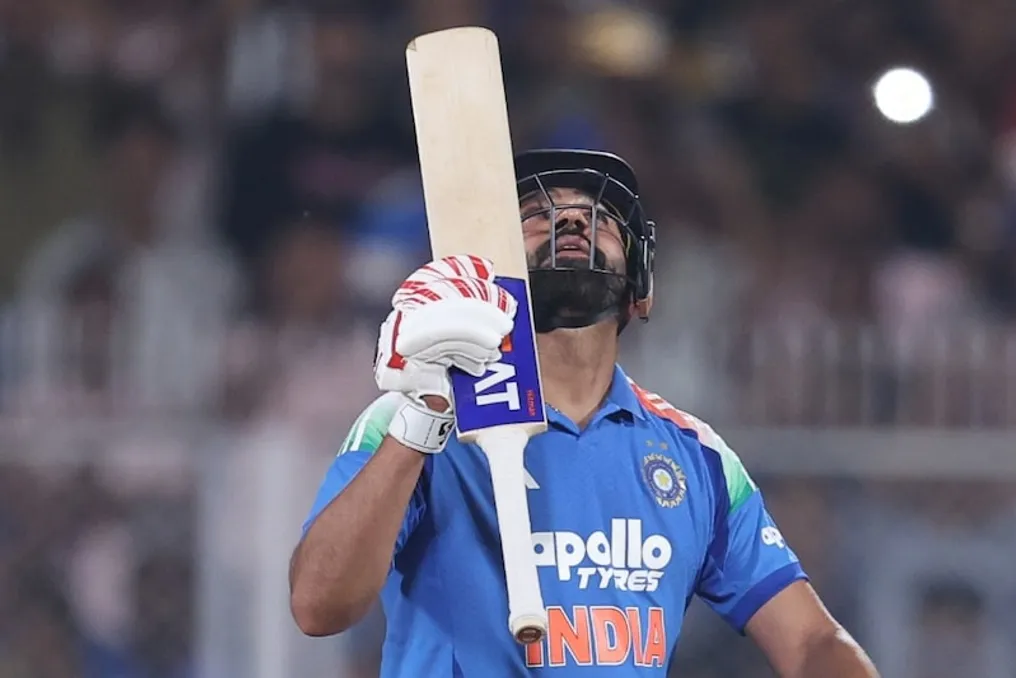
Rohit Sharma joins the club of players with 12 thousand ODI runs, surpassing Sachin Tendulkar's record
Read more
www.aajtak.in

Rohit Sharma joins the club of players with 12 thousand ODI runs, surpassing Sachin Tendulkar's record

During the second ODI match against West Indies in Guwahati, Rohit Sharma set several significant records. Chasing the target of 405 runs, Sharma reached the mark of 12,000 ODI runs, thereby breaking Sachin Tendulkar's record.

This milestone was achieved by him in his 282nd game. Because of this, he became the second fastest player in the world to reach 12,000 ODI runs. Previously, Virat Kohli had surpassed this benchmark, doing so in 242 games, and Sachin Tendulkar reached this figure in 300 games.

Currently, Rohit has only 12,028 runs in 282 games played across 290 matches. Thus, Rohit became the third Indian player to accumulate 12,000 ODI runs, following Sachin Tendulkar and Virat Kohli.

After achieving this feat, Rohit continued to play aggressively against West Indies, scoring his 101st strike for 72 balls. This marked his thirty-fifth century in ODIs. However, his innings ended immediately after reaching this result when Jaden Silas dismissed him via LBW. He scored 101 runs off 75 balls.

Rohit provided the team with a strong start alongside captain Shubman Gill, completing a half-century in 38 balls and accelerating the chase for 405/7 from West Indies.

It is worth noting that in the first ODI played in Tiruvannanthapuram, Rohit scored only 32 runs. His performance in Guwahati was a contrast. In 2026, his form in ODIs attracts attention. Before this match, he had scored 411 runs in 10 ODIs, with an average of 41.10. Among these matches was the game against England at Lord's, where he scored 138 runs. After retiring from Tests and T20 Internationals, Rohit is focusing exclusively on ODIs, and his current form is important for the Indian team ahead of the 2027 World Cup.

Kuldeep Yadav reaches 200 ODI wickets, surpassing Shane Warne in balls bowled
Read more
www.aajtak.in

Kuldeep Yadav reaches 200 ODI wickets, surpassing Shane Warne in balls bowled

In the match between India and West Indies, players from the West Indies demonstrated strong play, dealing a serious blow to the Indian bowlers. John Campbell, Shai Hope, and Amir Jangu each scored a century, bringing the West Indies total to 405 runs. In rainy conditions, Kuldeep Yadav recorded a significant record.

In his 123rd ODI match, Kuldeep Yadav completed his 200th wicket, becoming the second fastest bowler in Indian history to reach this milestone. He is only surpassed by Mohammed Shammi, who took 200 wickets in 104 ODIs. Following him are Ajit Agarkar (133), Zaheer Khan (144), and Anil Kumble/Javagal Srinath (147).

Kuldeep secured his 200th wicket of Kemi Paul, who was caught by Virat Kohli in the long-on region after 45.1 overs. This moment marked Kuldeep's achievement of a double century in ODIs. Furthermore, Kuldeep surpassed Shane Warne in the number of balls required to achieve 200 ODI wickets, completing them in only 6319 deliveries. Among spinners, only Shaklan Mushtaq (5451) and Rashid Khan (5782) achieved this result with fewer balls. Following Kuldeep are Adam Jampa (6385), Adil Rashid (6881), and Shane Warne (6983).

Despite the record attack by the West Indies, Kuldeep remained among the few Indian bowlers who managed to partially contain the pace of the game. In his full quota of 10 overs, he took 2 wickets, conceding 65 runs, resulting in an economy rate of 6.50.

Before the West Indies reached 405 runs, Campbell scored 101 runs off 68 balls, Hope scored 104 runs off 94 balls, and Jangu scored 114 runs off just 77 balls. This was a rare sight in one ODI match where three batsmen score a century.

Popular