UAE Universities Shift Focus from Diplomas to Practical Training and Industry Experience
Read more
Khaleej Times
www.khaleejtimes.com

UAE Universities Shift Focus from Diplomas to Practical Training and Industry Experience

When choosing a higher education institution, students from the United Arab Emirates are increasingly considering not only the qualification obtained but also what happens after graduation. Universities note a growing interest in aspects such as employment, internships, industry interaction, development of communication skills, and overall student experience.

At the Canadian University in Dubai (CUD), this shift required a revision of the approach to engaging with prospective students and their parents. Aya Sharif, CUD's Marketing Manager, reported that despite an increase in the total number of students compared to previous years, experience has shown an important lesson about what families now expect from higher education.

Sharif emphasized the need for a complete overhaul of the communication strategy to demonstrate the value and return on investment (ROI) in education, focusing on program employment outcomes. She noted that communication with families has moved beyond solely academic achievements; parents now want to know how the institution will help their children develop confidence and skills for future employment.

According to her, the more attention is paid to student life, the more significant it becomes. Today, students and their parents are looking not just for a diploma, but for a supportive environment where the child feels part of something bigger, where they are valued and heard. These values form a holistic, student-centric ecosystem.

Furthermore, students strive to develop outside the scope of their main academic discipline. CUD facilitates this by providing an individualized approach to each learner, helping them improve communication skills, confidence, and abilities.

The university actively integrates industry into the learning process. Sharif specified that a significant number of classes at CUD are conducted by industry professionals, and the faculty includes practicing specialists from relevant sectors. Students have daily opportunities to participate in new events, build contacts, or gain new opportunities.

This industry connection extends to partnerships and practical opportunities. CUD collaborates with organizations such as Dubai Media Academy, FinTech TV, and Dubai Municipality. Students also have access to AWS Academy, Cisco Networking Academy, and RedTeam Hacker Academy programs.

Students engage with the industry through case studies, guest speakers, site visits, seminars, and networking, as well as through specialized career and internship support. Sharif concluded that they 'live within the industry, not isolated,' which aligns with the concept of an urban campus or city university center.

The broader higher education sector is also being forced to adapt to changing expectations. Professor Dr. Amitabh Upadhyay, Director of Academic Affairs at Global Business Studies (GBS Dubai), stated that institutions must rethink methods for preparing students for an uncertain future.

He noted that higher education is at a crossroads, and the current structure and purpose of institutions may not meet the needs of society and the future industry. Therefore, educational institutions must implement a flexible model that instills ethically sound knowledge, necessary skills, and futuristic competencies for successful adaptation to uncertainty.

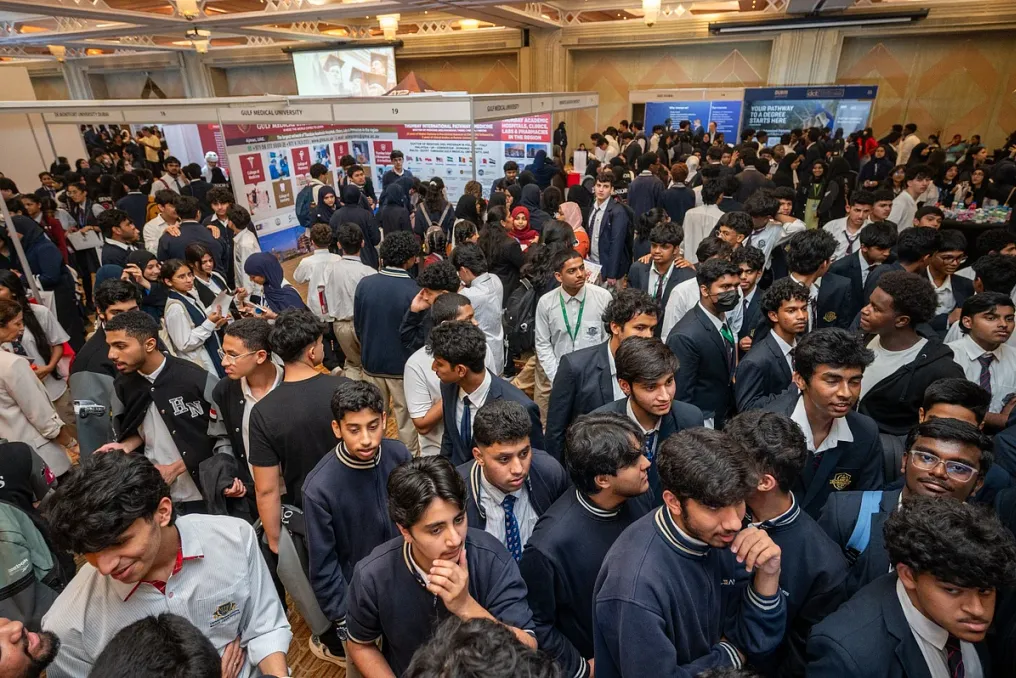
Meanwhile, universities use events like the Khaleej Times Uni Expo to gauge the demands of students and parents. Bhakti Rin, Head of Recruitment at De Montfort University, said the expo provided an excellent opportunity to communicate directly with families and education specialists. She called the event 'exciting and well-organized,' which helped showcase the university and establish meaningful connections.
Similar stories

UAE Students Consider Scholarships and Career Paths Amidst University Competition
Read more
www.khaleejtimes.com

UAE Students Consider Scholarships and Career Paths Amidst University Competition

For students from the United Arab Emirates choosing a higher education institution, the decision is increasingly dependent not only on the place of study but also on factors such as tuition fees, availability of scholarships, financial aid, and future career prospects.

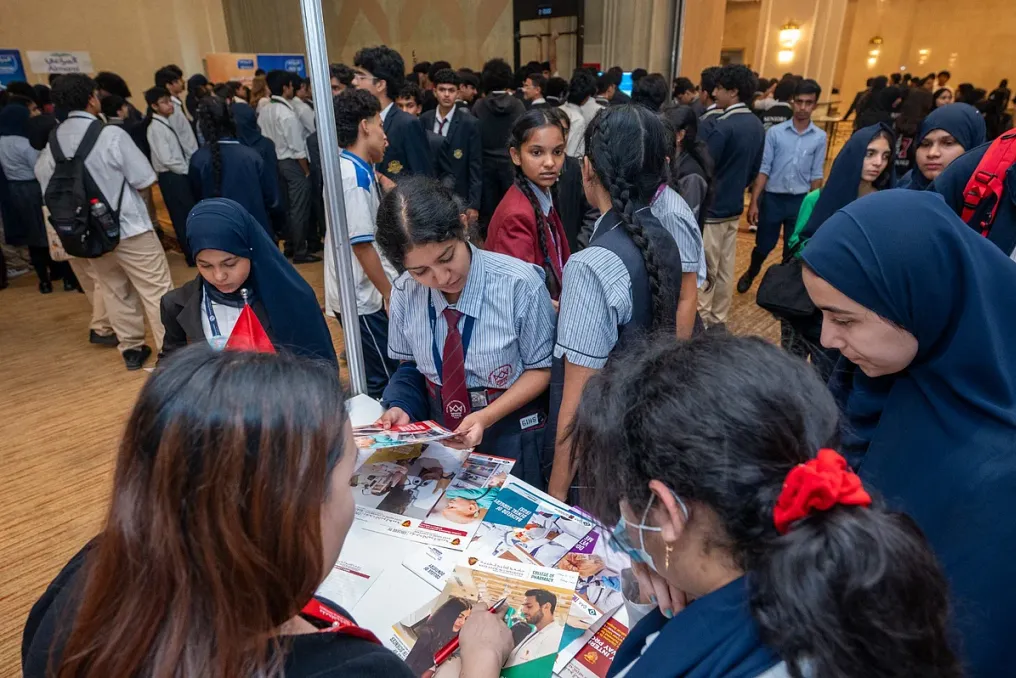
At the two-day KT UniExpo event held in Dubai on September 29th and 30th, high school students explored courses in fields such as engineering, medicine, journalism, psychology, and creative industries. Universities presented various forms of financial support, including scholarships and discounts, to attract potential students.

The event also highlighted a trend among students to remain open to choices, comparing educational institutions both within the UAE and abroad when evaluating programs, costs, and potential career trajectories.

Tom Broderick, an English teacher and head of senior school at Safa British School, noted the particular benefit of the event for students who are still in the decision-making process. He reported that the event allowed students to see a wide range of available options in Dubai, including international campuses located locally.

He added that they brought about 80 twelfth-grade graduates and considered it important for students planning to study abroad to have the opportunity to examine strong international universities with branches in Dubai, given the wide variety of options.

For universities, scholarships are becoming an integral part of the dialogue with applicants, with eligibility for aid often tied to academic performance, application deadlines, and current grades.

At Ajman University, early applicants can receive a 30 percent scholarship for one year, although this offer does not apply to medical and dental specialties. Mohammad Faisal from the Student Affairs Department at Ajman University explained that the university also uses academic performance to determine further support.

He specified that there is an exclusive scholarship for high school graduates: by submitting applications between February and the end of May, which is considered the early application period, students receive a 30 percent discount for one year. This is the highest scholarship for early applications and is available in all fields except medicine and dentistry. For medical and dental specialties, scholarships depend entirely on school achievements: students scoring 90 percent or higher may receive a 20 percent discount for one semester.

Furthermore, the university offers additional discounts based on post-enrollment academic results. In subsequent semesters, students may receive between 10 to 20 percent depending on their university GPA. Scholarships of 100, 75, and 50 percent are also provided to the top three students from each college based on their academic performance. Additionally, there are other preferential discounts, as well as financial aid for students needing extra support.

City University Ajman also provides scholarships in various categories, with the level and duration of support depending on the specific program. Riya Femin, an admissions officer at City University Ajman (CUA), noted that to maintain a scholarship, students must maintain a certain level of academic performance, and criteria can change from year to year.

Nevertheless, for the students themselves, scholarships are only part of a much broader decision-making process. Marcus Babor, a twelfth-grade student at Apple International School, is considering options in mechanical or aerospace engineering, keeping both UAE and international institutions on his list. He mentioned that he is looking at options in Europe, America, or Australia, and that some universities offer decent scholarships.

Other students are still defining their direction. Sophie Stack, a twelfth-grade student at Safa British School, is exploring options that connect her subjects with potential careers in creative and social sciences. She is studying psychology, sociology, and art, and is interested in something related to people and understanding them, but is not yet sure of her choice.

Naya Bashir, a twelfth-grade student at Safa British School, leans towards humanities and is considering both the UK and the UAE. She is studying various degrees focused on the humanities, related to English language and journalism, and dreams of attending Oxford, but remains open to options in the UAE.

Schools are also observing how students intentionally maintain flexibility in subject choices. Kala Balan, Head of Career Counseling at Safa British School, reported that STEM disciplines remain very popular, although economics and geography are also gaining momentum. She noted that students choosing subjects like physics, mathematics, and economics can later choose between fields such as engineering, business, or finance.

Popular