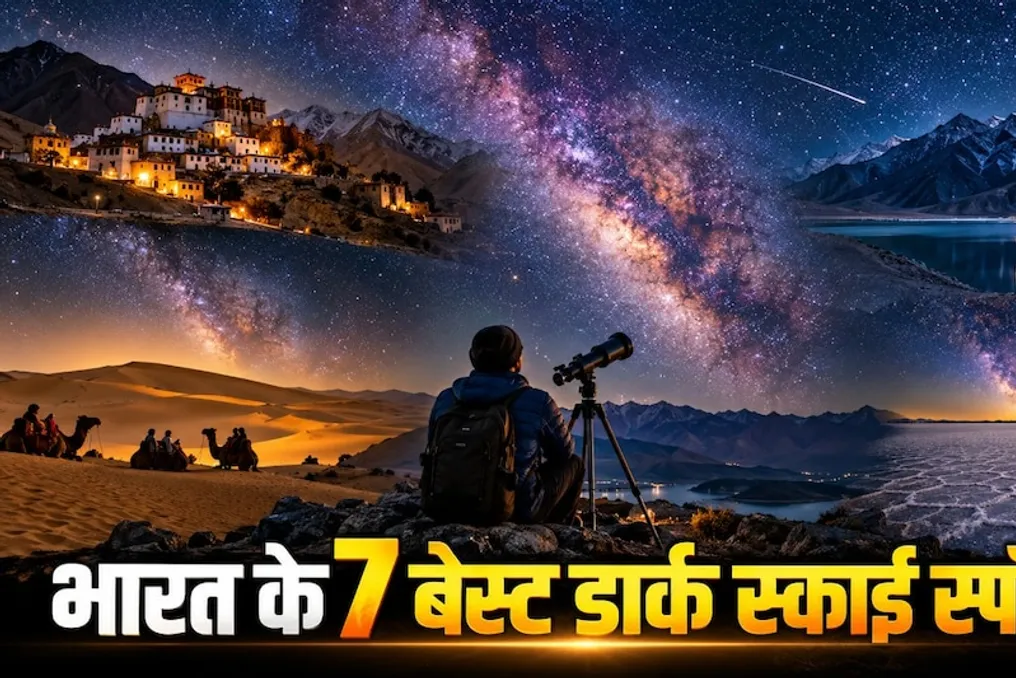
Review of Seven Places in India to Observe the Milky Way Without Cameras
Read more
Aaj Tak
www.aajtak.in

Review of Seven Places in India to Observe the Milky Way Without Cameras

For most city dwellers, observing the Milky Way is difficult because under urban light pollution, dust, and humidity, the sky looks like a photograph taken by a camera. However, there are places in India where, thanks to clean air and dark night skies, the Galaxy can be seen with the naked eye.

These locations are situated far from city lights, creating ideal conditions for stargazing. Below are seven such picturesque places in India.

Places to Observe the Milky Way in India:

Hanle, Ladakh

Hanle in Ladakh is one of the most suitable spots for astronomical observations in India. This small village, located at an altitude of about 4500 meters, is characterized by low population density and minimal light pollution. The Indian Astronomical Observatory is also located here. In December 2022, the Hanle area was officially designated as a Hanle Dark Sky Reserve to preserve the clean and dark sky and promote astrotourism and science.

Night observation here is a unique experience, as the absence of city lights allows the glow of the stars and the Milky Way to be clearly seen.

Spiti Valley, Himachal Pradesh

The Spiti Valley in Himachal Pradesh is known for its desert mountains, high villages, and ancient monasteries during the day. However, its appearance changes drastically at night. Villages such as Kibber and Langza are famous for their clear and dark nights. Due to the high altitude and low population, the night sky here is significantly clearer than in cities. Visiting Spiti allows one to enjoy the beauty of the mountains and villages during the day, and admire the sky at night.

Rann of Kutch, Gujarat

You do not need to go to the mountains to observe the Milky Way; the Rann of Kutch in Gujarat is an excellent example. During the day, this vast white salt desert landscape looks magnificent, and at night, it becomes even more attractive under the starry sky. The wide open spaces allow for long views into the distance. The lack of dense construction and bright lighting typical of cities provides a stunning view of the stars on a clear night. Imagine the white salt desert landscape below and the shining Milky Way in the deep black sky.

Jaisalmer, Rajasthan

Jaisalmer in Rajasthan is world-renowned for its golden sands, forts, and desert safaris. The night sky here also attracts tourists. Thanks to the large open areas in the Thar Desert and the limited artificial lighting in some places, good opportunities for stargazing open up on clear nights. For those spending the night in a desert camp, the sight of shining stars and the Milky Way becomes unforgettable. If the focus during the day is on the golden sands and distant dunes, the desert looks completely different at night under the starry canopy.

Pangong Tso, Ladakh

Pangong Tso Lake in Ladakh is known for its changing blue hues during the day. However, the landscape transforms after sunset. Since the lake is located at a high altitude, there is little artificial lighting around it, allowing the starry sky to be seen on clear nights. The combination of high mountains, a calm lake, and the starry sky makes the night view in Pangong Tso unforgettable for anyone.

Nubra Valley, Ladakh

The Nubra Valley in Ladakh is also a wonderful place for observing the night sky. During the day, this region is famous for its mountains, sand dunes, and Bactrian camels. At night, the same mountainous desert landscape serves as a beautiful backdrop for the Milky Way. Nubra's remote location, altitude, and relatively low level of artificial lighting make it favorable for stargazing. With good weather, the night sky here can become a special part of the trip.

It is not always necessary to travel to the Himalayas or the desert to see the Milky Way. Coorg in the state of Karnataka has also become a popular spot for stargazers in South India. In areas like Balayabane and Terelalu in South Coorg, the sky remains quite dark. From here, you can see the Milky Way and the Andromeda Galaxy on a clear night. The specialty of Coorg is that stargazing takes place not in barren mountainous regions, but among coffee shops and the Western Ghats.
Similar stories

Satellite image shows weather division across the country and monsoon movement direction
Read more
www.aajtak.in

Satellite image shows weather division across the country and monsoon movement direction

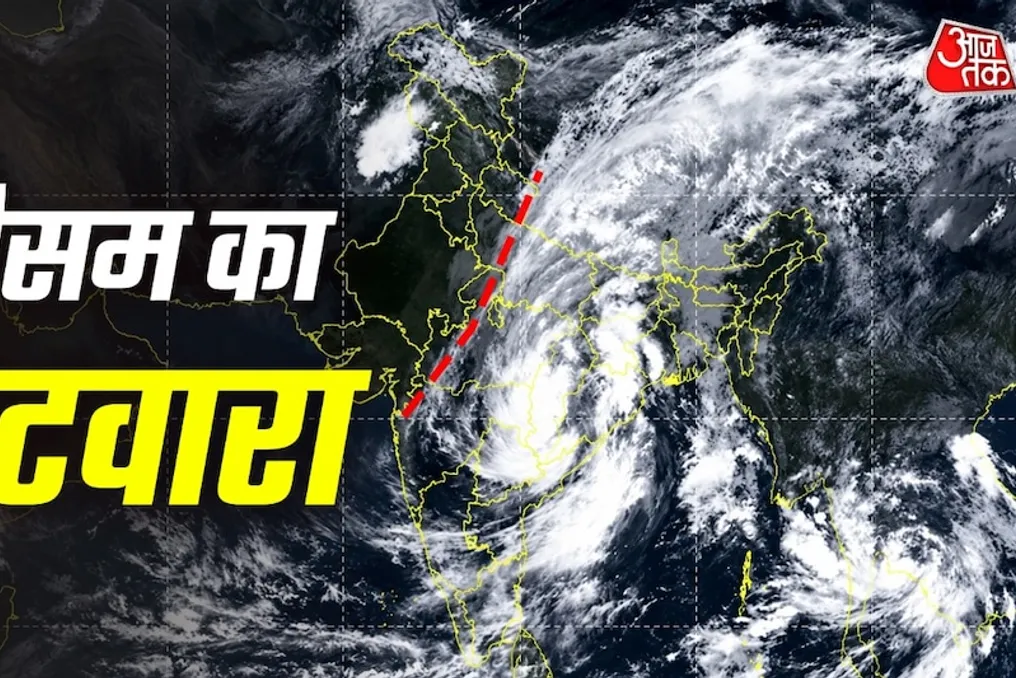
Currently, Indian weather exhibits a clear contrast: dense clouds hang over the central, eastern, and southern parts of the country, while the sky in the northwestern part remains clear. This image was taken by the INSAT-3DS satellite on September 24th. It clearly shows an extensive cloud mass stretching across the Indian subcontinent, as well as parts of Southeast Asia and South Asia.

This contrast corresponds to the weakening of a deep depression. As the depression weakens, its moisture and clouds concentrate in one direction, while another area remains open. The satellite image vividly captures this uneven distribution.

In the INSAT-3DS thermal channel, the brightest areas indicate cold and high clouds, which is potentially linked to heavy rainfall, especially if an active weather complex is associated with them. Large areas of central, eastern, and southern India appear bright in the image, indicating the presence of high and thick clouds capable of bringing rain. Meanwhile, northwestern India appears relatively dark or clear, meaning less or no cloud cover.

Such images are extremely useful for meteorologists as they allow them to immediately identify areas prone to rain and arid zones. A recent deep depression affected coastal areas and is now weakening. The moisture and energy of the weakening system are not distributed evenly across the country but often concentrate in a specific band.

For this reason, clouds are visible over Central India, the East, and the South, while clear skies persist in northwestern states such as Rajasthan, Punjab, and Haryana. This division directly affects people's daily lives. In areas with dense clouds, there is a risk of heavy rains, flooding, or localized inundation. At the same time, in areas with clear skies, temperatures may rise and humidity may feel lower.

Satellite system networks like INSAT-3DS serve as the 'eyes' for the meteorological service. Ground observatories provide information only about a limited area, whereas the satellite provides a map of the entire country simultaneously. Thermal images work even at night because they show cloud height based on temperature, making forecasts more accurate. Scientists also analyze such images to understand the direction and intensity of the weather system's movement. During the weakening of a deep depression, this monitoring is crucial to rule out sudden reactivation or the development of a new system. Cloud areas extending into neighboring countries also provide insight into regional weather patterns.

People in areas with dense clouds should pay attention to official weather warnings, and residents of low-lying areas need to be vigilant. At the same time, people working outdoors in the clear northwestern regions should take care to protect themselves from the sun. This dramatic split highlights the diversity and complexity of weather in India. The simultaneous presence of rain in one part and dry weather in another is common, but the satellite image demonstrates this on a scale that is easily understandable even to the average person.

The meteorological service continues constant monitoring and will issue recommendations according to the development of the situation. Overall, this INSAT-3DS image is not only scientifically significant but also serves as a simple way for the public to understand weather unevenness. This division, related to the weakening of the depression, may persist for the next few days, so residents of all regions should follow local forecasts.

Nine picturesque places in North India that are great alternatives to Manali and Shimla for family vacations
Read more
www.aajtak.in

Nine picturesque places in North India that are great alternatives to Manali and Shimla for family vacations

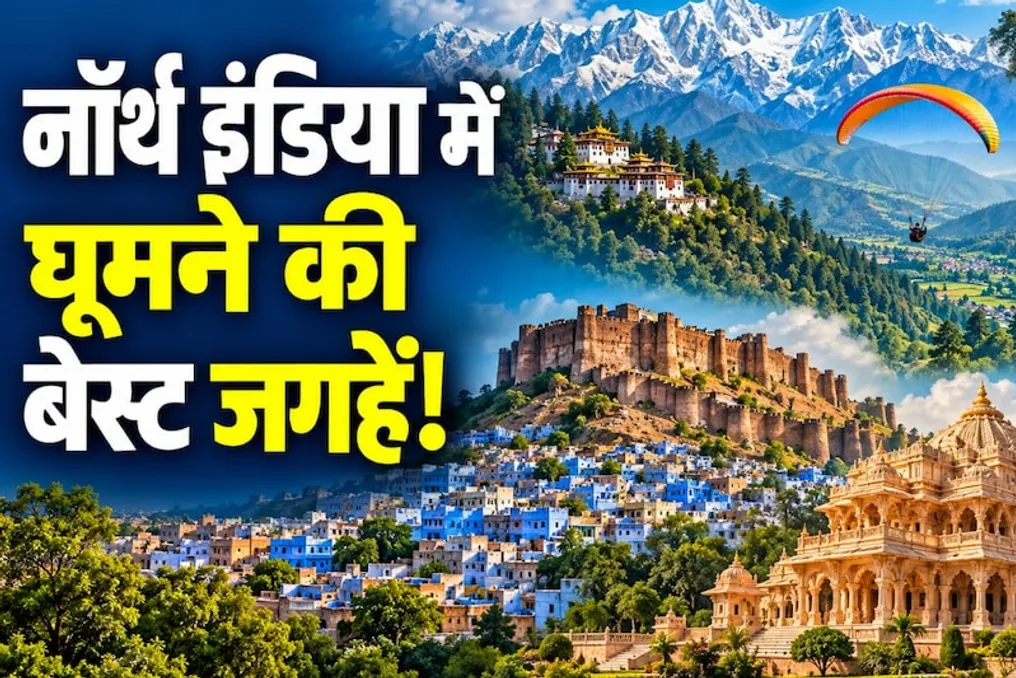
After August, September is considered a special month for travel enthusiasts. After the rainy season, the mountains, valleys, waterfalls, and greenery take on completely new shades. Although many tourists often head to Manali, Shimla, Mussoorie, and Nainital during holidays or weekends, there are many attractions in North India that often go unnoticed.

If you are planning a trip with friends or family in September, you can visit these unique places in North India where a completely different landscape awaits you. North India boasts incredible beauty, and the way of life in each city here has its own peculiarities, promising many diverse experiences during the journey.

North Indian Attractions Worth Visiting

Darshala, Himachal Pradesh

In Himachal Pradesh, people often limit their visits to Manali, Shimla, and Kasol, ignoring many hidden gems. Darshala, located in the Kangra Valley, looks particularly picturesque during the monsoon season. The views of the Dhauladhar mountains, lush greenery, and waterfalls are mesmerizing. Here you can visit places such as McLeod Ganj, Bhagsunag Waterfall, the Dalai Lama Temple, and the Norbulingka Institute.

Ayodhya, Uttar Pradesh

In Uttar Pradesh, some prefer to stay only in Bengal, whereas Ayodhya is an ideal place for a religious family trip. The main temples here are Ram Janmabhoomi, Hanuman Garhi, and Kanak Bhavan. During the rains, the banks of the Sarayu River look even more beautiful, and the evening Aarti on the Sarayu offers a special sense of peace, unlike the crowds found in Kashi.

Ladakh

In September, the weather and roads in Ladakh are usually favorable for travel. The main highlights of this region are the high mountains, pristine lakes, and Buddhist monasteries. Here you can explore stunning places such as Pangong Tso, Tso Moriri, Vali Nubra, Hemis, and Thiksey. A road or bicycle trip through the roads of Ladakh will remain unforgettable.

Kashmir

During this time of year, the valleys of Kashmir bloom with greenery and flowers. This is why cricketer Shikhar Dhawan recently visited Kashmir with his wife Sophie. In this season, a shikara ride on Dal Lake, visiting Mughal Gardens, and the beauty of Gulmarg, Pahalgam, and Sonamarg have a distinctly special level. This period is also the best time to visit Kashmir, as the Dal Lake freezes with the onset of cold weather, making a shikara ride impossible.

Rishikesh, Uttarakhand

Rishikesh, situated on the banks of the Ganges, is known as a center of spirituality and adventure. It is an excellent place for a short getaway from Delhi and Noida. Here you can attend the Ganga Aarti at Triveni Ghat, visit Beatles Ashram, and nearby temples. However, it should be noted that during the monsoons, the river current can be strong, so water activities should be undertaken while assessing the weather and local administration conditions.

Jodhpur, Rajasthan

Jodhpur is known as the Blue City. After the rain, the color of the blue houses and forts becomes even brighter. If you travel to Jodhpur, be sure to visit Mehrangarh Fort, Jaswant Thada, Umaid Bhawan Palace, and Sardar Market.

Bir Billing, Himachal Pradesh

Travel has ceased to be just a hobby for some people, turning into a profession. Because of this, many non-obvious places in Himachal Pradesh have become popular on social media. One such place is Bir Billing, where you can enjoy a peaceful atmosphere and engage in active recreation. This place is world-renowned for paragliding, and you can also visit tea plantations, Buddhist monasteries, and go trekking in the mountains.

Pachmarhi, Madhya Pradesh

Pachmarhi, known as the 'Queen of Satpura', fills with greenery during the rainy season. Waterfalls and forests enhance its beauty. Among the main places to visit here are Bee Falls, Pandav Caves, and Satpura National Park. If you want to see something beyond Himachal and Uttarakhand, Pachmarhi will be a good choice.

Digha, West Bengal

If you prefer beach relaxation over mountains, Digha in West Bengal is perfect. It is pleasant to walk on the beach, drink coconut water, and try local seafood cuisine. You can also visit the Marine Aquarium and Amrabati Park.

Popular