Seven South African National Parks Ideal for Birdwatchers
Read more
Getaway
getaway.co.za

Seven South African National Parks Ideal for Birdwatchers

South Africa is a wonderful destination for ornithology enthusiasts, as its national parks protect diverse ecosystems: from wetlands and estuaries to mountain grasslands, indigenous forests, and Lowveld scrub.

You do not need to be an experienced birdwatcher to enjoy these places. Many parks are equipped with bird hides, water points, rivers, and rest camps where you can spot vibrant species alongside the country's more famous wildlife.

Below are seven national parks that should be included in your birdwatching itinerary. The combination of forests, savannas, rivers, and water sources in these parks creates opportunities to see many species—from colorful sunbirds and rollers to vultures, larks, warblers, and raptors.

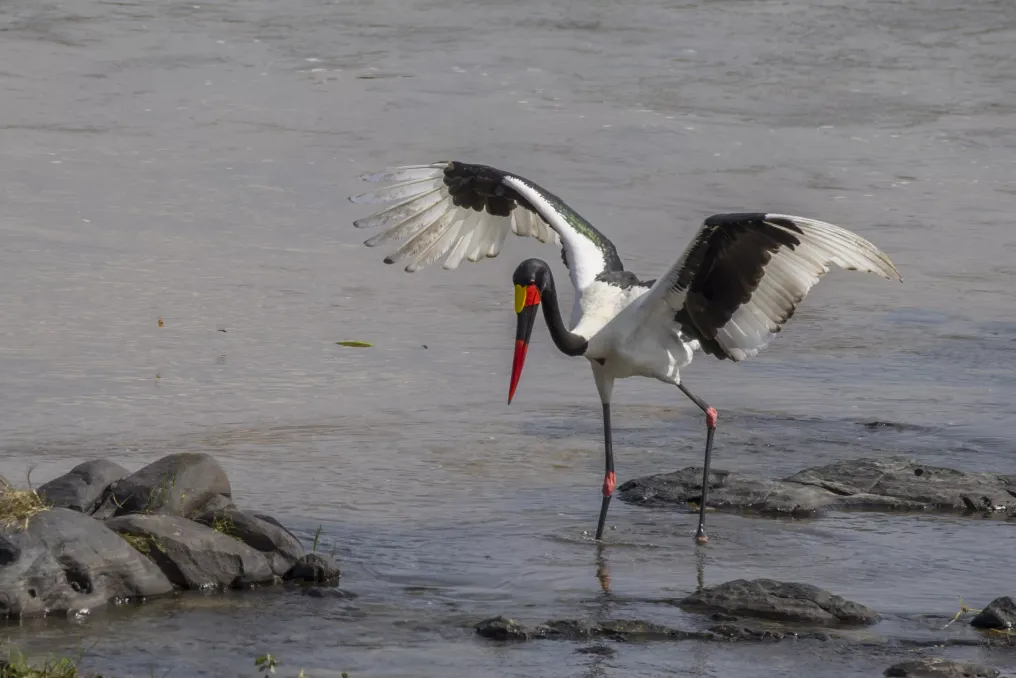
Bird lovers can also look for Kruger's unofficial 'Big Six': the saddle-billed stork, the kori bustard, the marshall's eagle, the booted scavenger, the pel's fish eagle, and the ground lark. SANParks notes that five of these are relatively easy to spot, while the elusive pel's fish eagle is mainly found near large rivers such as the Limpopo, Levuvhu, and Olifants.

The northern areas of Pafuri and Punda Maria are considered among the main birdwatching spots in the country, although excellent viewing is possible throughout the park.

Isimangaliso Wetland Park offers a completely different birdwatching experience due to its vast protected landscape, which encompasses lakes, estuaries, coastal forests, grasslands, and wetlands. It has recorded over 530 bird species, making it one of the most diverse destinations for ornithologists in South Africa. Its ecosystems include three major Ramsar-designated lake systems, as well as the largest estuarine system in Africa.

Pelicans, flamingos, storks, and egrets inhabit the park's waters, while the forests and grasslands offer a different set of species. The diversity of habitats allows one to see birds in a single trip that would usually require visiting several different locations.

In Mpungubwe National Park, which is at the intersection of South Africa, Botswana, and Zimbabwe, an intriguing mix of fauna is formed. SANParks is currently cataloging 447 bird species for this park. Due to its proximity to the Limpopo River, species associated with wetter Lowveld areas are found here, alongside birds typical of the country's drier western regions. Ornithologists can look for the Mewa sparrow, tropical bushbuck, and pel's fish eagle along the Limpopo. Raptors are also noticeable inhabitants of the park's rugged landscape.

Another feature that attracts attention in summer is that SANParks reports up to 11 species of cuckoos may be found in this area, including the less common common cuckoo and the thick-billed cuckoo.

West Coast National Park is an excellent choice for travelers wishing to combine scenic coastal landscapes with serious birdwatching. The park surrounds the Langebaan Lagoon, which is a Ramsar international wetland. SANParks has recorded 281 bird species in this park. The lagoon attracts a large number of migratory waterfowl. Registered species include the plover, sandpiper, little swift, Curlew sandpiper, godwit, grey gull, green heron, and willet. September and March can be particularly favorable periods for observing migratory waterfowl during their arrival or preparation for migration. Four bird hides provide additional opportunities for undisturbed observation of the animals.

The fynbos of this park also supports species such as the southern black kurrawong and the black kite, while flamingos, white pelicans, Cape goshawks, and African penguins add to the diversity.

Although birdwatching might not be the first thought when mentioning Addo Elephant National Park, its wide range of habitats makes it a surprisingly diverse destination. SANParks accounts for 418 bird species in the park. Dense spekboom scrub, open grasslands, forested gorges, Karoo vegetation, coastal plains, forest, and wetlands contribute to this diversity. The Tsaurberg region offers opportunities to observe forest species, including the African crowned eagle, Cape batis, and yellow-breasted warbler. Further towards the Alexandria forest, ornithologists can find the Knysna toucan and the Narina trogon, while the entire park offers species such as the blue crane, Denham's bustard, black kurrawong, marshall's eagle, and secretary bird.

The coastal extension of the park also includes seabirds, such as Cape goshawks and African penguins.

Garden Route National Park replaces Lowveld scrub with montane grasslands, sandy cliffs, and the Maluti Mountains. The park has recorded 256 bird species, and its mountainous environment provides opportunities to observe several impressive raptors and high-altitude specialists. The vulnerable booted scavenger is one of the birds most closely associated with this area. Other large birds sighted around the mountain escarpments include the Cape vulture, black crane, blind ibis, marshall's eagle, and Lanner falcon. The park's bird list also includes the orange-breasted rockjumper, tree cricket, Gerney's honeyeater, and Drakensberg siskin. A special bird hide on the Oribi self-drive route allows visitors to observe Cape and booted scavengers gathering at a feeding station.

Garden Route National Park is ideal for bird lovers who prefer varied landscapes over traditional safari settings. SANParks accounts for 300 bird species in the park, which includes wetlands, lakes, estuaries, indigenous forests, coastal zones, and montane fynbos. The Wilderness section is particularly good for waterfowl, as the lakes and wetlands attract grebes, ducks, herons, spoonbills, teal, and other aquatic species. Bird hides in Rondewelle, Langwelle, and along the Tuu River facilitate the study of these habitats. In the forests, attention should be paid to the Knysna toucan, Narina trogon, Knysna woodpecker, emerald cuckoo, and Cape batis. The park's rivers can also offer encounters with the half-necked kingfisher and the African finch. The Knysna Lagoon is another excellent birdwatching area, especially for migratory waterfowl and the endangered African black oyster catcher.

From Kruger's famous 'Big Six' and Mpungubwe's northern rarities to the West Coast's migratory waterfowl and Garden Route's mountain raptors, South Africa's national parks showcase an immense diversity of local avifauna. The best part is that birdwatching does not always require specialized equipment or an organized expedition. A pair of binoculars, a field guide, and enough time to slow down and look around can turn an ordinary safari trip, a forest walk, or a stop at a wetland into an unforgettable wildlife encounter.
Similar stories

Six South African locations for wildlife viewing from the water
Read more
getaway.co.za

Six South African locations for wildlife viewing from the water

Wildlife viewing via boat, canoe, or other watercraft offers a different perspective on the South African landscape. Instead of approaching animals by road, one can observe them from the water while they drink at the banks, move through wetlands, or gather along river shores.

These six locations, where one can see everything from hippos and crocodiles to elephants, dolphins, and colorful waterfowl, turn the journey itself into part of the wildlife interaction experience.

The Kosi Bay lake system in the northern KwaZulu-Natal province is one of the country's unique spots for water-based wildlife observation. Channels connect four interconnected lakes before they flow into the Indian Ocean, forming a labyrinth of waterways surrounded by coastal forests, wetlands, and dunes.

A boat trip through these lakes can lead to encounters with hippos, crocodiles, and flamingos, while birdlife includes kingfishers, herons, and African fish eagles. The water also allows viewing the traditional Tonga fishing traps woven into the channels and still used in local fishing.

The combination of wildlife, wetlands, and cultural history gives Kosi Bay a completely different feel compared to a typical boat safari. It is worth noting the traditional fishing traps between the lakes and bringing binoculars to observe the abundance of birds.

Joziini Lake, also known as Pongolaport Dam, offers one of the most unusual combinations of water-based wildlife viewing and large animal territory in South Africa. The lake borders the Pongola Reserve, allowing visitors to observe animals along the shoreline during boat cruises rather than from traditional safari vehicles.

Animals encountered may include hippos, crocodiles, elephants, antelopes, and various waterfowl. The surrounding Ubombo and Lebombo mountains add another layer of experience, while the lake itself is famous for tiger fishing. Boat cruises are particularly atmospheric early in the morning or late in the afternoon when wildlife comes to the water.

During special boat wildlife tours, it is advisable to watch the shoreline for elephants coming to drink or entering the water.

Mokolo Dam, located within 4600 hectares of bushveld in the Waterberg region, offers a quieter alternative to some of the more well-known wildlife destinations in South Africa. The dam is surrounded by wooded hills and is part of the wider Waterberg landscape.

Activities at Mokolo include boating and birdwatching, and hippos and crocodiles inhabit the dam itself. Therefore, this is a place where wildlife should be observed from a safe distance, not treated as a swimming or watersports location.

The area is particularly appealing to travelers who value the combination of open water and classic Limpopo bushveld. From the boat, the focus shifts to the shoreline where birds and other animals move between the water and the surrounding vegetation. Binoculars are recommended for birdwatching, and maintaining a respectful distance from the water's edge where hippos and crocodiles are found is advised.

Knisna offers a completely different wildlife viewing experience, shifting the focus from freshwater animals to marine and estuarine fauna. The Knysna Lagoon is essentially an estuary and is renowned for its exceptional biodiversity. Boat trips through the lagoon and past the Knysna headlands can lead to encounters with dolphins, seals, and numerous seabirds, while offshore excursions allow whale sightings during the season.

This area is especially good for bird lovers, as the wider Knysna region supports hundreds of bird species. Boat tours also provide a different angle on the landscape, with wooded hills rising around the waterways.

During whale season, typically from June to November, Southern Right and Humpback whales can be seen along the coast, and dolphins are present year-round. When cruising the lagoon, it is recommended to bring binoculars and scan the shoreline for dolphins and seabirds. If visiting between June and November, an offshore trip past the headlands is worth considering.

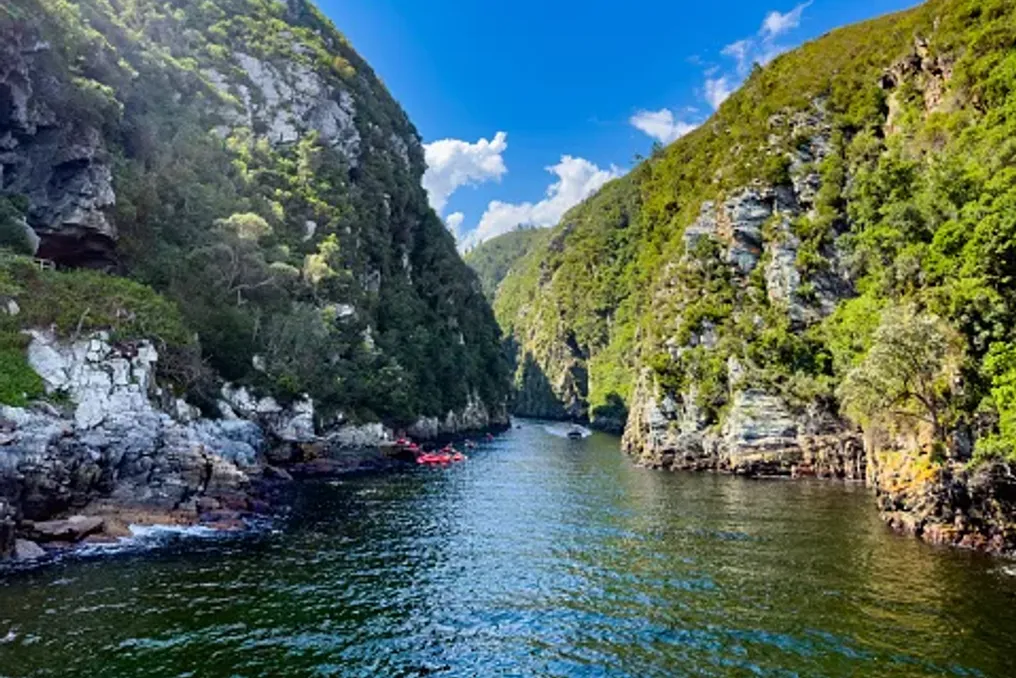
The Keurboom River near Plettenberg Bay offers a more intimate view of wildlife. Instead of venturing into open water, boats travel upstream through a landscape composed of local forests, riverbanks, and mountainous scenery.

The Keurboom River Nature Reserve is accessible by water, and boat trips travel several kilometers upstream. Along the way, guides point out birds and animals in the surrounding forest, including vervet monkeys, Knysna toucans, and fish eagles. The amber-yellow water of the river and the steep, wooded surroundings make this journey as memorable as the wildlife viewing itself. It is also a reminder that wildlife viewing does not always have to involve encountering the Big Five.

It is necessary to watch not only the water but also the treetops and riverbanks, as forest birds and monkeys are easier to spot from a slowly moving boat.

The waterways around Wilderness offer one of the most tranquil ways to experience wildlife from the water. Canoeing along the Tuu River takes visitors through local forest and a network of lakes and wetlands in Garden Route National Park. The surrounding lakes, including Rondewalle, Langwalle, and Eilandwalle, are part of the internationally recognized Ramsar wetland system. They support a wide range of aquatic and wetland species such as grebes, herons, grey herons, waders, kingfishers, ducks, and cormorants.

Paddling rather than motoring also changes the impression. A more relaxed pace makes it easier to notice birds moving among the reeds or perched on trees along the river. A canoe trip on the Tuu River is recommended, and binoculars should be brought. This area is particularly interesting for bird enthusiasts due to the multiple hides and waterways available for exploration.

The rivers, lakes, estuaries, and coastal waters of South Africa provide another way to see wildlife. A boat can take you to the level of a hippo in Kosi Bay, an elephant drinking at Joziini Lake, or dolphins moving in the waters around Knysna. This experience is also slower; instead of moving from one sighting to the next, you observe the landscape unfolding around you, with the possibility of spotting something unexpected along the bank or above the reeds. Regardless of the choice—an organized boat safari, a quiet river cruise, or a wetland paddle—the water can become as much a part of the wildlife story as the animals themselves.

Popular