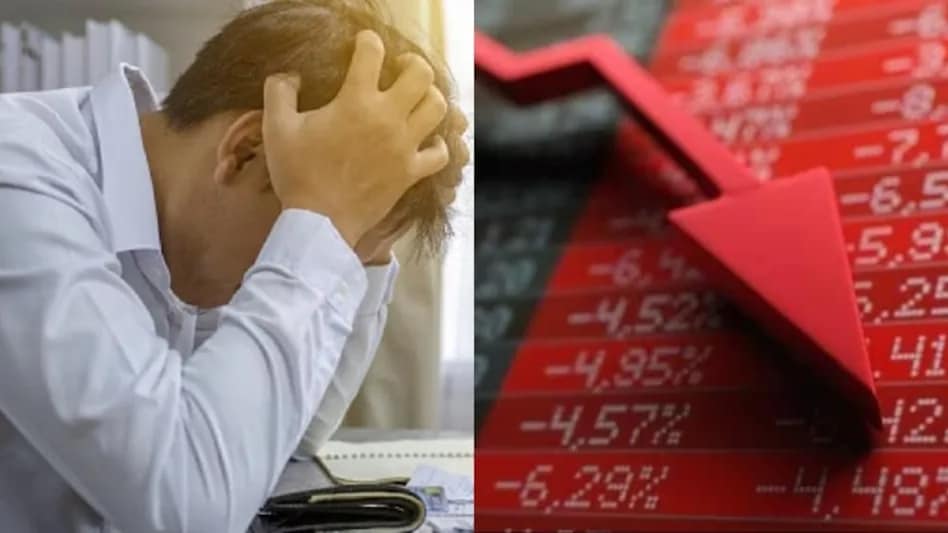
The Indian market is showing weak results in 2026. The SENSEX and NIFTY indices have lost 16% and 14% respectively from their record highs for the year.
The SENSEX index, comprising 30 leading stocks, peaked at 86,159 points on December 1 of last year but has since fallen by 13,630 points, which is 16%. Similarly, the NIFTY-50 has declined by 3,714 points or 14% from its record level of 26,373 points, reached on January 5, 202.
The significant fall in the stock market is also reflected in the 22% rise in the INDIA VIX index over the year. This NIFTY fear indicator signals increased volatility in the stock market.
Ongoing military actions in the Middle East, rising bond yields, sell-offs by FIIs, and increasing crude oil prices have influenced investor sentiment on Wall Street. On Monday, SENSEX and NIFTY hit six-month lows, continuing a seven-week slump after negotiations between the US and Iran stalled, leading to a rise in oil prices.
This deadlock has heightened concerns about oil supplies through the Strait of Hormuz, pushing Brent Crude prices to $108 per barrel. India is the world's third-largest crude oil importer and imports over 80% of its needs. Rising oil prices increase inflation, expand the import bill, and put pressure on corporate profits.
Last week, SENSEX and NIFTY50 recorded the seventh consecutive week of decline, marking the longest streak of falls since the start of the 2020 pandemic. On that day, SENSEX closed at 72,480, down 49 points, and NIFTY closed at 22,620, falling by 96 points.
Vinod Nair, Head of Research at Geojit Investments, noted that the market remains cautious. Investors are closely monitoring crude oil prices, bond yields, inflation expectations, and the potential impact of global politics. Therefore, market participants will be cautious about investing in companies with stable income and strong fundamentals until greater clarity emerges in the macroeconomic situation.
Sudip Shah, an expert in technical and derivatives analysis at SBI Securities, suggested that the level of 22,550–22,500 could serve as immediate support. A drop below this level might trigger new selling pressure towards 22,350. In an upward direction, the immediate barrier could be the 22,790–22,810 level; with sustained growth above this level, the index could rise to 22,950. However, the overall structure remains weak, and significant recovery will require consistent buying activity.
Vikram Kasat, Chief Operating Officer of PL Capital, advised investors to focus on earnings clarity, internal liquidity, and sectors with strong price potential, rather than short-term volatility in October. It is also important to closely monitor crude oil prices, the rupee, and global interest rates.
Ajit Mishra, Senior Vice President (Research) at Religare Broking, pointed out that the 22,600 level remains critically important support, followed by the 22,400 level. The immediate barrier is the range of 22,750–22,800, while 23,000 could act as primary resistance. Given that the index is trading near a six-month low and broad market participation remains weak, an atmosphere of caution is expected in the near future, requiring a selective approach and close monitoring of key support levels.