John Campbell scores one hundred runs off 65 balls after 2705 days, enters two record books in Guwahati
Read more
Aaj Tak
www.aajtak.in

John Campbell scores one hundred runs off 65 balls after 2705 days, enters two record books in Guwahati

At the Barsapara stadium in Guwahati, where a match between India and West Indies took place on September 30th, the West Indies players demonstrated a high level of play, consistent with the field's reputation as a high-scoring venue.

Special emphasis was placed on the fact that the opening batsman for the West Indies team, John Campbell, scored an impressive hundred runs. His half-century milestone was achieved in just 65 balls; his total innings comprised 68 balls and yielded 101 runs. His innings included nine fours and five sixes. He was dismissed by Gurunar Barara's bowling and caught by Naman Dheer.

In addition to this century, Campbell set two new records. He had previously scored his first ODI hundred in 2019, and it took him 2705 days to reach the second hundred. This interval is the fifth longest among all instances between the first and second ODI centuries, only surpassed by Andy Flower in this list.

Fastest ODI century for WI

Furthermore, in Guwahati, John Campbell scored a hundred runs off 65 balls, becoming the fifth fastest West Indies player to score a hundred in ODIs.

Thus, John Campbell secured two places in the record books in Guwahati: one record relates to scoring his second ODI hundred after seven years, and the other relates to reaching a hundred in just 65 balls.

Similar stories

September 27th marked six centuries: Kohli and Gill among the stars who amazed bowlers
Read more
www.aajtak.in

September 27th marked six centuries: Kohli and Gill among the stars who amazed bowlers

September 27th entered cricket history as an unforgettable day. In a single day across three different ODI matches, players demonstrated incredible batting, stunning the world of cricket by registering six magnificent centuries.

Among these outstanding achievements were the successes of Indian players Virat Kohli and captain Shubman Gill.

In the first ODI match, held at the Greenfield International Stadium in Tiruvannanthapuram, the West Indies team batted first and scored 295 runs, losing seven wickets in 50 overs.

In response, the Indian team received strong support from captain Shubman Gill and run-scoring machine Virat Kohli. Young captain Shubman Gill played a brilliant century innings, scoring 110 runs. Virat Kohli, playing without being dismissed, delivered a crushing performance, earning another century in his ODI career by scoring 139 runs, and helping India secure an easy victory by 8 wickets.

In the match against India, West Indies batsman Justin Griffin also showed excellent play, scoring 101 runs, which was his maiden ODI century.

In the match in Johannesburg against Australia, South Africa recorded two centuries. Captain Temba Bavuma scored 103 runs, and David Miller scored 142 runs in an aggressive style, not getting out, marking the best innings of his career. These two players formed an impressive partnership for the fourth wicket, scoring 156 runs, and bringing the team's total score to 365/9.

In the match played at the Oval, England opener Tom Banton made a breakthrough, scoring 126 runs, which was his first ODI century against Sri Lanka. He also participated in an excellent partnership with captain Harry Brook, scoring 150 runs.

Possible confrontation between Vaibha and Abhishek against Japan: A new format of play is expected in the country of baseball
Read more
www.aajtak.in

Possible confrontation between Vaibha and Abhishek against Japan: A new format of play is expected in the country of baseball

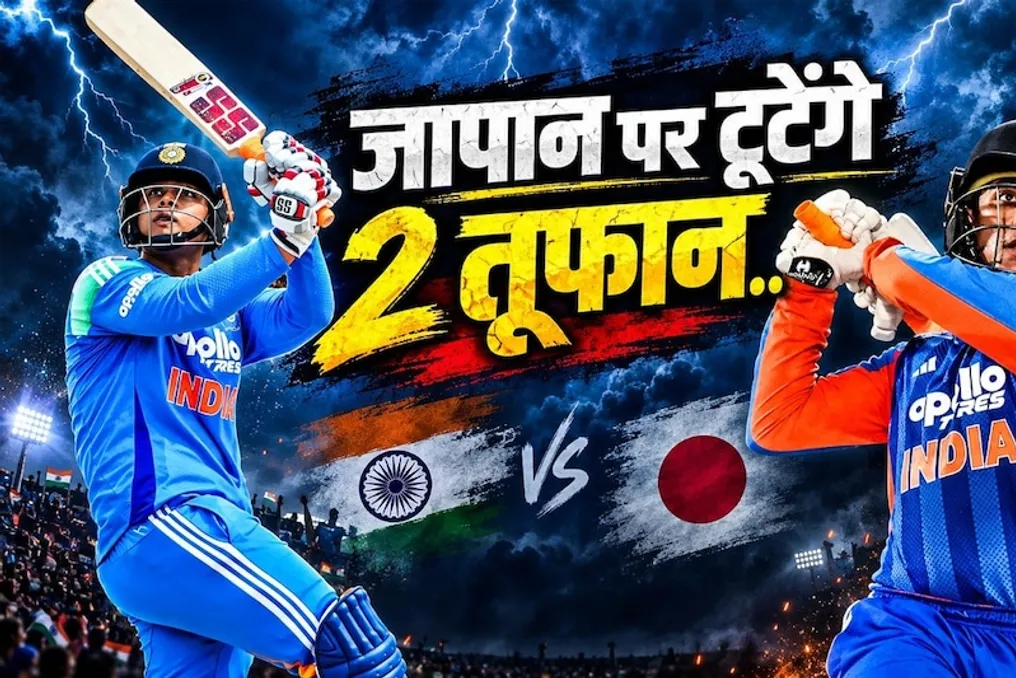
Although baseball is popular in Japan, attention will be focused on cricket on Tuesday. Representatives from India will take to the field, and interest is concentrated not only on this historic match but also on the potential opening pair—Vaibha Suryavanshi and Abhishek Sharma. This match is scheduled for 9:30 AM Indian time, but there is a threat of a typhoon.

Imagine: on one side is the 15-year-old 'Baby Boss' Vaibha, and on the other is Abhishek Sharma, who set a record by scoring a hundred runs in T20 International in 30 balls. Both are left-handed batsmen and are known for their aggressive style of attack from the very first ball. If they start the game at Sano, for Japan it will not just be a match against India, but a clash with a style of cricket they may never have seen at such a level before.

Nevertheless, this remains only a hypothetical scenario. India also has an option with Sanju Samson and Abhishek in the squad, and the team management has already signaled the need for patience regarding Vaibha. In a recent T20 series against Afghanistan, Vaibha failed to make the starting lineup, while Abhishek and Samson started the game.

Head coach Gautam Gurwir has stated directly that Vaibha will have to wait his turn. The coach justified this by saying that players who have demonstrated consistent performance in recent years cannot be suddenly ignored. However, the situation against Japan is somewhat different, and this is where the fantasy of the Vaibha-Abhishek pairing becomes interesting. The head coach of the Indian men's team for Asian Games is V.V.S. Laxman. Because of this, there is a possibility to change the squad, and Vaibha might get a chance in the starting eleven. If Laxman fields the 15-year-old 'Baby Boss' alongside Abhishek Sharma at the start, the most spectacular show in Sano could begin from the first over.

On one hand, Abhishek, who made history by scoring a hundred runs in just 30 balls in the third T20 against Afghanistan. On the other hand, Vaibha, whose strike rate has always attracted attention since the beginning of his international career. When they start together, India will have two left-handed batsmen in the powerplay, which can force the bowler to constantly make decisions instead of giving him time to think.

The essence of the match between India and Japan goes beyond just cricket. Baseball popularity in Japan is very high, whereas cricket has not yet reached the level achieved by India or other cricketing nations. Nevertheless, the visit of a world-class team like India to Japan is a big opportunity for this sport. This is the first T20 International match in men's cricket between India and Japan, which will be held at the Sano International Cricket Stadium. The match is also linked to the 75th anniversary of diplomatic relations between India and Japan. Both teams will also participate in the Asian Games. India will start its tournament in the quarterfinals, while Japan will play in the group stage.

Thus, for India, this is preparation for the Asian Games, but for Japan, it is a much more significant chance. In a country where cricket still competes with the popularity of baseball, the appearance of one of the world's largest cricket teams is in itself a big message.

The Japanese team views this match not just as an opportunity to watch Indian stars. For the team led by captain Kendall Kadawaki-Fleming, it is a chance to test themselves. Japan has selected the same team that will also begin its journey to the Asian Games. Captain Kadawaki-Fleming will lead the team, and among the Japanese players are those who have played in the local cricket structure for a long time.

Therefore, while the match is more of a preparation for India, for Japan it represents an opportunity to gain recognition. And if India fields Vaibha and Abhishek together, Japan will face a completely different challenge in the first overs.

The match will take place at the Sano International Cricket Stadium. The stadium is located in Tochigi Prefecture, about 100 kilometers from Tokyo, and has a capacity of about 2000 spectators. Interestingly, it is also used for baseball. Thus, in a country where baseball is part of habits and culture, a historical chapter of cricket will be written.

The International Cricket Council (ICC) has also named this match an important step towards the global expansion of cricket. This confrontation has different significance for both teams: for India—as a world champion, and for Japan—as a developing cricket structure.

And here is the question: when will Vaibha get his turn? The excitement surrounding Vaibha is not only related to his age. The question is what role the Indian team sees for him. He is not just a 15-year-old player; in recent months, he has demonstrated impressive momentum at various levels, making him one of the most discussed players in Indian cricket.

Triple Series in ODI: The Rise and Fall of a Golden Era
Read more
www.aajtak.in

Triple Series in ODI: The Rise and Fall of a Golden Era

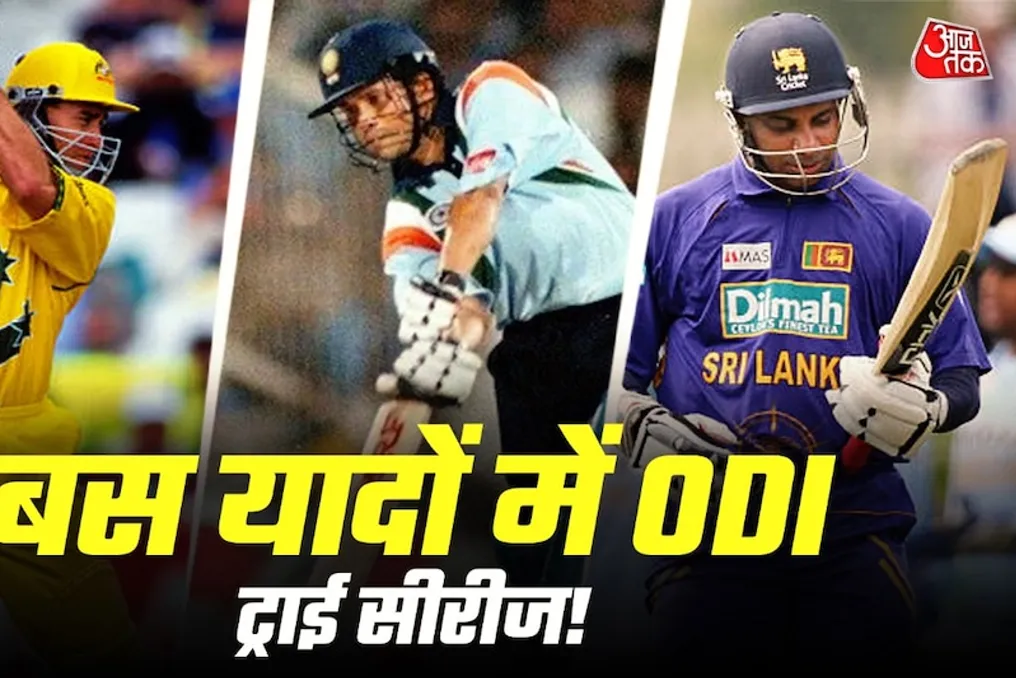
At one time, the ODI (One Day International) itself was synonymous with a major event. Although the World Cup is held every four years, between these tournaments, there were other significant competitions for fans, among which triple series held a special place. These tournaments involved a competition between three teams with a league stage, a leaderboard, a fight for the final, and constantly changing dynamics in every match.

The popularity of these series was so great that the excitement was not limited to the action on the field. Spectators watched which teams would reach the final, how many wins each team would need, and under what conditions the pace of the game would be decisive.

In modern realities, where Test cricket has gained the goal of a Test World Cup, and T20 cricket has captured a huge market thanks to franchise leagues, ODI is trying to find its place between them. At such a time, memories of old triple series are particularly interesting, as 50-over cricket did not need external stimuli then.

Kerry Packer is often mentioned in the history of triple series. A dispute arose between media magnate Packer and Cricket Australia regarding television rights. Following this, Packer launched World Series Cricket. To make this league successful, Packer needed the best cricketers in the world. At that time, the West Indies were the strongest team, and Packer's team attracted many of their star players.

After this, triple series were held between Australia, the West Indies, and World XI. Matches concluded in a single day. Bright uniforms and white balls were used, and the television coverage was much more modern than before. The quality of the cricket was also outstanding. The West Indies participated in four of the first six Australian seasons and were champions every time. Even after Packer and the Australian board reached an agreement, this format continued to be held within Australia's domestic cricket calendar.

When this model, popular in Australia, reached South Asia, its influence grew. In 1983, the then Chairman of the Indian Cricket Control Board (BCCI), N.K.P. Salve, began working on organizing the World Cup in India. He was joined by Nur Khan from Pakistan and Gamini Dissanayake from Sri Lanka. During this process, the Asian Cricket Council (ACC) was founded on September 19, 1983. Then, in 1984, India, Pakistan, and Sri Lanka held the first Asian Cup in Sharjah. This event marked the beginning of multinational cricket in Asia. Gradually, Sharjah transformed into not only a venue for the Asian Cup but also a major center for ODI cricket.

In the 1990s, the influence of English cricket began to spread to the Indian subcontinent, and Sharjah became the focal point of these changes. Major players from India, Pakistan, and other countries regularly played here. Celebrities attended the matches, and the popularity of the games on television steadily increased. Long before the era of franchise cricket, Sharjah turned cricket into a large-scale spectacle. By the end of 1992, 29 ODI tournaments involving three or four countries had been held. Of these, 15 took place in Australia, and nine in Sharjah. Thus, the history of triple series in ODI is mainly linked to two locations: Australia and Sharjah.

In the 1990s, international cricket from South Africa returned, and Sri Lanka also quickly became one of the strong global teams. In 1996, Sri Lanka became the World Champion. The number of strong ODI teams in international cricket increased. This directly benefited the triple series. From 1996 to 2008, full member teams held three-nation ODI tournaments in Singapore, Morocco, Netherlands, Malaysia, Ireland, Scotland, and Canada. The four-year interval between World Cups and the limited popularity of the World Cup also made these tournaments important. It was the main way to watch ODI cricket between strong teams throughout the year.

These tournaments saw not only trophies won but also events that influenced rules, tactics, and thinking in cricket. In 1979, in Sydney, the England team had to save three runs on the last ball. Captain Mike Brearley positioned almost all his fielders near the boundary. A year later, New Zealand needed to score seven runs off one ball. Greg Chappell from Australia asked his brother Trevor to throw the ball underhand. This incident caused a big controversy in cricket. In 1982-83, Lance Cairns hit six sixes at the MCG (Melbourne Cricket Ground) using a specially prepared bat. In the 1980s, Javed Miandad took advantage of the conditions at the WACA Ground in Perth and scored an unbeaten 59 against the West Indies, including 45 singles and no fours or sixes. In 1986, Gus Logie from the West Indies was named 'Player of the Match' for his fielding performance in Sharjah. This in itself was an exceptional event.


Popular