Tashkent ranks third among 80 cities worldwide in pace of change, according to BCG study
Read more
UzDaily
uzdaily.uz

Tashkent ranks third among 80 cities worldwide in pace of change, according to BCG study

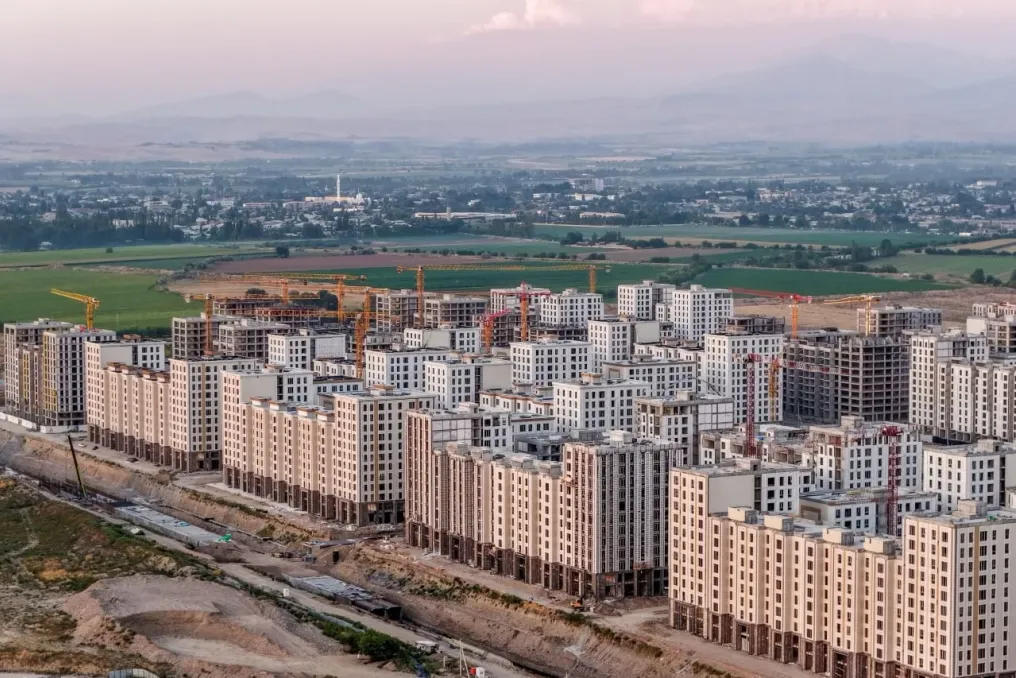
According to the new study by Boston Consulting Group (BCG) titled 'Built for Change: Cities of Choice 4.0,' published on September 29, 2026, Tashkent ranked third among 80 cities based on the pace of change indicator.

Compared to other Central Asian and Caspian region cities, BCG noted that Almaty scored 53 points, Astana scored 52 points, and Baku scored 49 points, while Tashkent received 45 points.

The study is based on the analysis of over 200 indicators, using more than 5 million observations and surveying 24,000 residents. BCG evaluates cities across five areas: pace of change, economic opportunities, quality of urban environment, social capital, and government interaction. Of this, 80% of the assessment is based on objective statistical data, and 20% is based on residents' opinions.

For comparison purposes, cities were divided into five socio-economic groups based on GDP per capita and population size. Tashkent, Almaty, Astana, and Baku fell into the group of medium-sized developing cities with a GDP per capita of up to $25,000 USD and a metropolitan population of up to 4 million people. Damman, Mecca, Medina, and Ulaanbaatar are also in this group.

All four cities from this region made it into the global top 20 for pace of change. Tashkent scored 88 points, trailing only Shenzhen with 92 points and Riyadh with 91 points. Astana scored 77 points, Almaty scored 71 points, and Baku scored 64 points.

According to BCG, Kazakhstan's cities demonstrate a more balanced profile and strong positions in the areas of economic opportunities and interaction with state bodies. Citizen support reached 86 points in Astana and 85 points in Almaty.

Katerina Shapochka, Partner and Director at BCG, Head of the Company's Urban Development Center and one of the study's authors, noted: 'We see an interesting set: Almaty and Astana already possess a solid economic and institutional foundation and continue to change rapidly. For the city, this is a very good starting point. But the next stage is usually harder than the previous one: economic growth and institutional potential must be translated into the everyday quality of the urban environment, including initiating its renewal.'

The study emphasizes that rapid growth places additional pressure on urban infrastructure. Between 2015 and 2025, Astana's population increased by approximately 78%, while Shymkent saw a growth of 46%, and Almaty saw a growth of 39%.

BCG forecasts that the three largest cities in Kazakhstan could account for over 31% of the country's population by 2035, compared to about 25% today and 19% ten years ago.

The number of passenger cars in Central Asian cities has grown by approximately 22% between 2021 and 2025, which is the highest figure among the regional groups covered by the study.

According to BCG's preliminary assessment, Almaty, Astana, and Shymkent will require at least $13.7 billion in additional infrastructure investment by 2035, excluding housing construction. The actual amount may be higher.

BCG believes that municipal and national budgets, as well as traditional public-private partnerships, will be insufficient for all types of projects. The company suggests attracting private and institutional capital by using joint investments and directing part of the revenue generated from urban development to the next cycle of infrastructure projects.

Mikhail Volkov, Partner and Managing Director at BCG, head of the company's office in Kazakhstan, stated: 'The first step is to create a transparent portfolio of infrastructure projects for five-, ten-, and fifteen-year periods and determine the most suitable financing model for each: budgetary financing, PPP, joint development, or institutional capital.' He continued: 'The second is to form a professional investment function on the city's side that can prepare projects, work with investors, and manage the economy of urban land and assets.' And concluded: 'The third is to link these decisions to the city's master plan and economic strategy.'

BCG was founded in 1963 and has over 100 offices in more than 50 countries. The company opened representative offices in Tashkent and Baku in 2022, and in Almaty in 2024.
Similar stories

Tashkent Metro Sets New Daily Passenger Traffic Record
Read more
uzdaily.uz

Tashkent Metro Sets New Daily Passenger Traffic Record

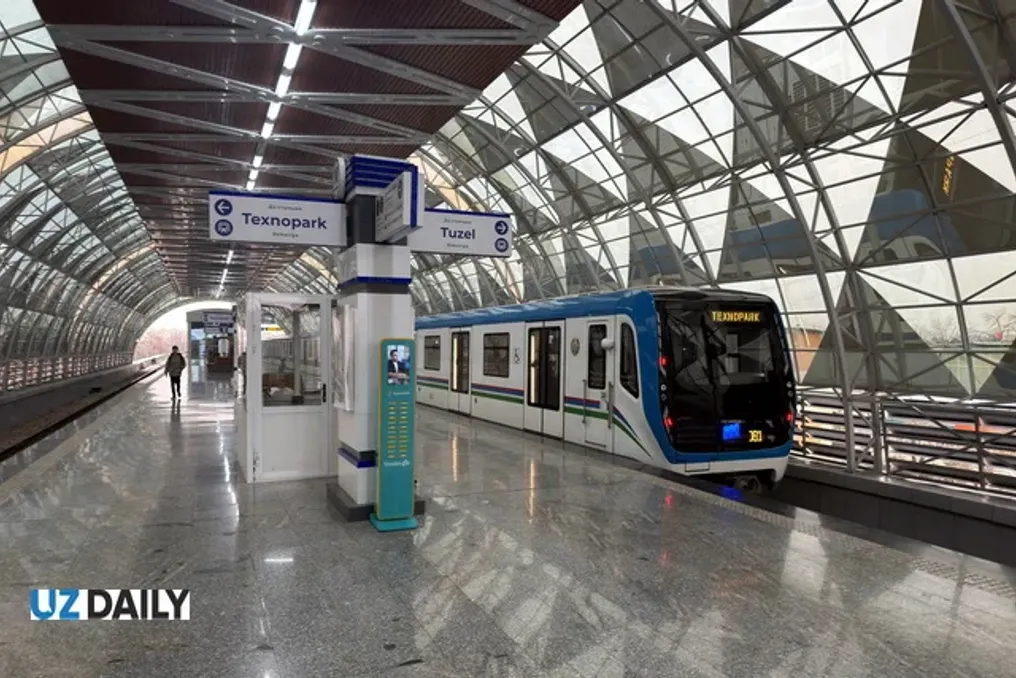
The Tashkent Metro set a new historical record for the number of passengers who used metro services in one day, on September 28. According to data from the metro press service, the total number of users reached 1,200,124 people on that day.

This figure exceeded the previous record of 1.18 million passengers, which was recorded on September 21, representing an increase of about 20 thousand people. To mark the achievement of a new record, metro employees organized an event aimed at finding the passenger who became the 1,200,000th user of the metro that day.

As shown in published video materials, this passenger was a woman who entered the metro at the Druzhba Narodov station. She was presented with a commemorative gift and a transport card providing free travel for one year.

Metro representatives reported that setting a new record indicates a growing demand for underground transport services among residents and visitors of the capital. The organization also announced plans to continue working on improving the convenience, safety, and efficiency of passenger service.

Nevertheless, buses maintain the absolute daily record in Tashkent's public transport system. On September 15, buses transported 1,520,113 passengers, which is 7.8% more than the previous record set in February 2025.

Tashkent Climbs 128 Positions in the Global Cities Index 2026
Read more
uzdaily.uz

Tashkent Climbs 128 Positions in the Global Cities Index 2026

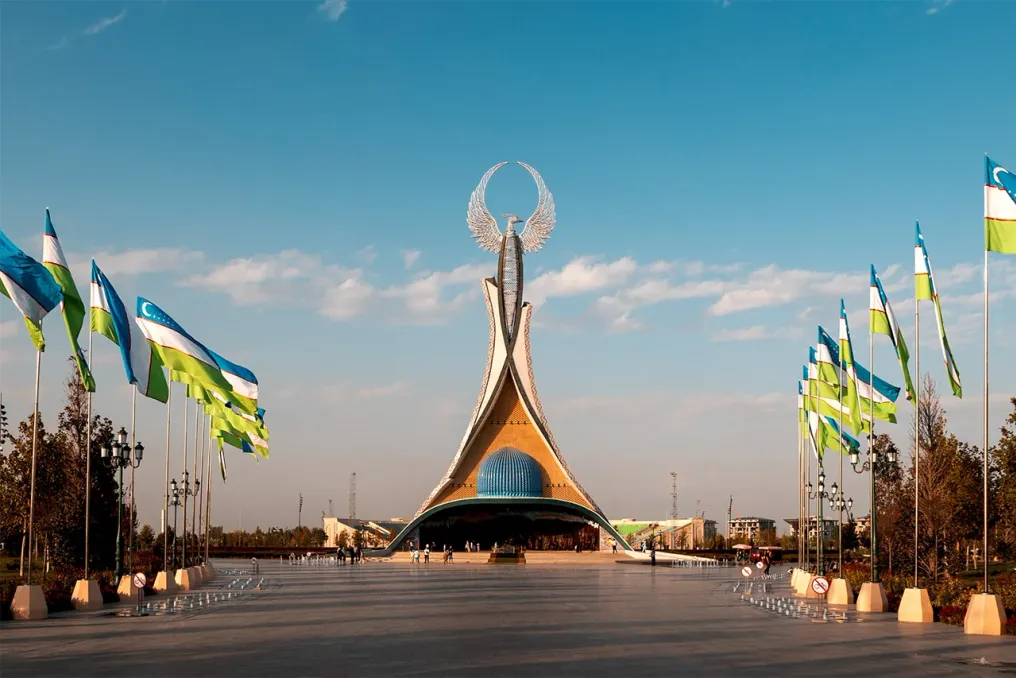
According to the analytical center Oxford Economics, Tashkent, the capital of Uzbekistan, ranked 343rd out of 1000 largest cities in the Global Cities Index 2026. Over the past year, the position of the Uzbek capital improved by 128 points.

Furthermore, Tashkent was included in the list of 28 cities to watch, as the study authors note that these cities are demonstrating significant momentum and possess the potential for further growth in the ranking.

Oxford Economics emphasized that Tashkent is gradually strengthening its position as a promising economic hub in Central Asia. Previously, before the collapse of the Soviet Union, the city was a major industrial center; however, after Uzbekistan gained independence and expanded international ties, its economy became more diversified.

The rating authors also drew attention to the continuous economic growth of the capital, active construction, and increased investment activity across various sectors. Moreover, Tashkent is experiencing steady population growth, which, according to Oxford Economics, distinguishes it from several other cities in Eastern Europe and Central Asia.

Analysts cited the capital's geographical location and skilled workforce as some of its advantages. Nevertheless, the relatively low GDP per capita, according to Oxford Economics, poses a risk of skilled labor outflow to countries with higher income levels. Other challenges include environmental pressure, such as water scarcity.

The Global Cities Index evaluates cities across five dimensions: economy, human capital, quality of life, environment, and governance. Each indicator is measured on a scale of 0 to 100, and the results are then combined to form the overall ranking.

In the economy sector, Tashkent scored 54.7 points, ranking 188th globally, which corresponds to being in the top 20% of the ranking. This category considers the size and structure of the urban economy, its past growth, and prospects for future expansion.

For human capital, the capital received 61.5 points and ranked 108th, also falling within the top 20%. This indicator reflects the scale and quality of the workforce, as well as the city's ability to attract, develop, and retain highly qualified specialists.

Regarding quality of life, Tashkent received 47.5 points, ranking 644th and situated in the lower quartile of the ranking. This metric accounts for residents' well-being and satisfaction, financial status, healthcare, and accessibility of urban infrastructure.

The capital's environmental score was 45.1 points, corresponding to 806th place and placing it in the bottom 15% of the ranking. Oxford Economics assesses both the city's ability to combine economic development with environmental protection and its vulnerability to ecological risks.

Tashkent showed its weakest result among the five categories in governance, scoring 40.2 points and ranking 825th, placing it in the bottom 15% of the ranking. This indicator measures the resilience of urban institutions, the quality of regulation, and the stability of conditions for residents and businesses. Oxford Economics emphasizes that effective governance is critical for planning, investment, and meeting the city's needs.

In the Global Cities Index 2026, New York ranked first with 100 points, London second with 98.8 points, and Paris third with 93.4 points. Seattle, San Francisco, Dublin, Boston, San Jose, Tokyo, and Zurich were also among the top ten leaders.

Among other Central Asian cities, Almaty ranked 265th, and Astana ranked 281st. Bishkek was ranked 461st, Ashgabat 668th, and Dushanbe 672nd.

In November 2025, the President of Uzbekistan, Shavkat Mirziyoyev, instructed ensuring Tashkent's inclusion in the top 300 cities with a sustainable environmental situation in the Global Cities Index. Measures planned to achieve this goal include the creation of artificial water bodies and the expansion of green zones.

Tashkent is renovating Gulsaroy Street, spanning 1.6 km
Read more
uzdaily.uz

Tashkent is renovating Gulsaroy Street, spanning 1.6 km

Journalists and bloggers visited Gulsaroy Street in Tashkent as part of a press tour to familiarize themselves with the improvement and beautification works being carried out there. This was reported by the administration of the city of Tashkent.

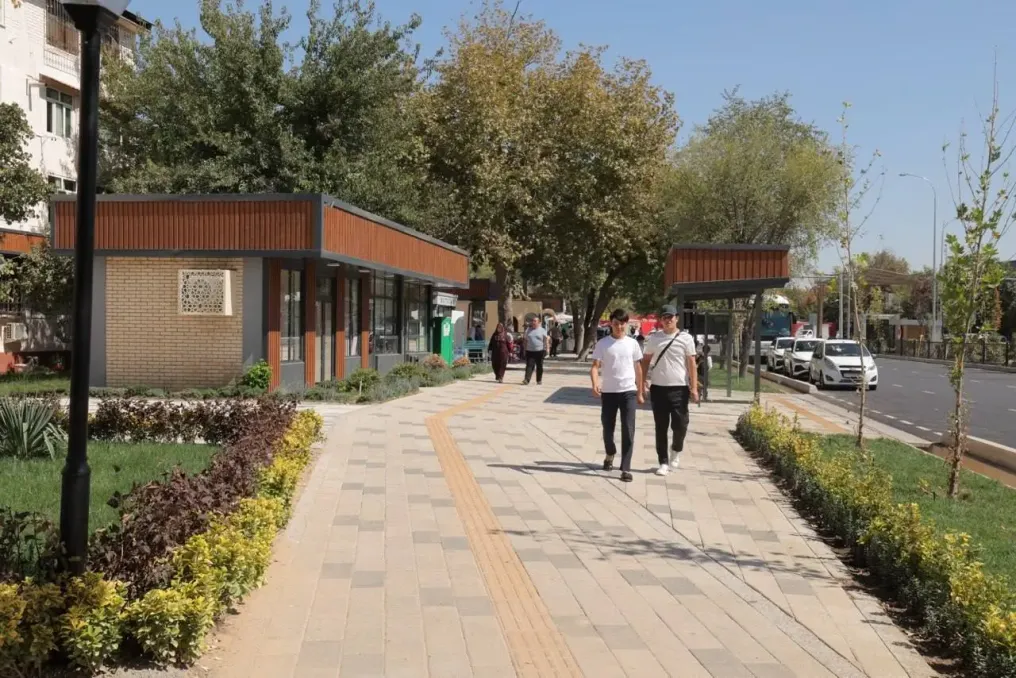
The 1.6-kilometer section of the street is being transformed into a modern area for tourists and gastronomic establishments. As part of the work, pedestrian paths, green zones, and an irrigation system were installed, along with 58 lampposts and 46 benches. Additionally, an extra 1.5 kilometers of concrete fencing was erected.

During the press tour, participants spoke with local residents and entrepreneurs to learn what amenities these changes have created. Specialists presented the completed project and announced further plans for the development of this area.

The city administration noted that the opportunity to personally see the transformations and hear the opinions of local residents became one of the most important parts of the press tour. After inspecting Gulsaroy Street, participants continued their journey to the next point on the route.

Popular