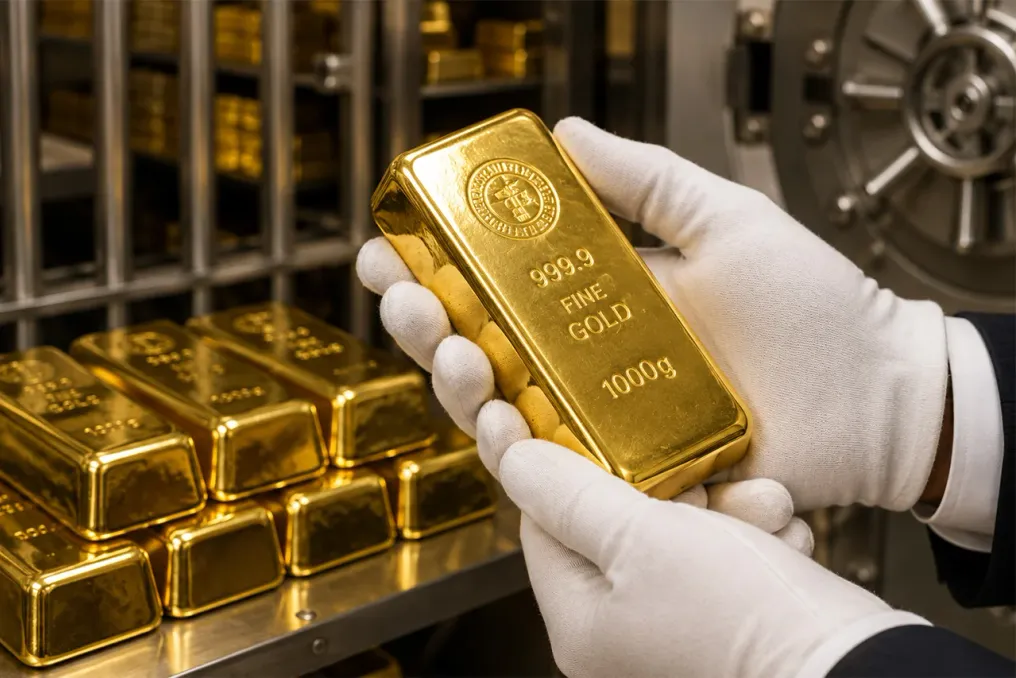
Gold faces pressure while copper maintains high levels, approaching records
Read more
UzDaily
uzdaily.uz

Gold faces pressure while copper maintains high levels, approaching records

The metals market in September was closely tied to the dollar exchange rate, bond yields, and Federal Reserve expectations. Global bonds ended the month with sharp sell-offs, while yields in the US and Europe remain at multi-year highs, and the dollar is strengthening and appreciating. This situation creates a complex backdrop for precious metals: investors are not completely abandoning safe-haven assets, but high interest rates are reducing the attractiveness of gold and silver.

Gold is trading at approximately $4170 per ounce after falling below the seven-week low. Silver holds slightly above $61 per ounce and is also under pressure. At the beginning of the week, metal prices dropped sharply due to rising oil prices and new inflation concerns, but later stabilized after oil price declines and moderately toned-down comments from Federal Reserve representatives.

The market has become less certain that a rate hike will occur immediately in October, although this issue has not entirely disappeared: inflation remains high, and the Federal Reserve continues to signal its readiness to adopt a tougher stance if necessary. The situation with gold is particularly contradictory. On one hand, geopolitical and debt risks support demand for safe assets. On the other hand, geopolitics affects oil prices and inflation, thereby increasing expectations for higher interest rates. As a result, gold has been unable to quickly return to growth. Buyers are appearing around $4000–$4150 per ounce, but every new yield increase again limits recovery.

Silver appears even more volatile in this environment, as it is more sensitive to both interest rates and industrial demand. Platinum and palladium remain weaker than gold. Platinum trades around $1700 per ounce, and palladium is priced at approximately $1210–$1220 per ounce. Both metals are under pressure from a strong dollar and overall investor caution. Nevertheless, platinum seems fundamentally more resilient, as the market still accounts for supply shortages and demand from hybrid vehicles. Palladium faces greater pressure due to the long-term increase in the share of electric vehicles and the substitution of palladium with platinum in automotive catalysts, which limits consumption expectations.

The main trend in the industrial metals segment is related to copper. Prices are holding around $6.60 per pound, close to the September record level of $6.85. Copper has changed little over the month, but over the year, it has still risen by more than 35%. The market is supported not only by long-term demand from the energy sector, power grids, data centers, and artificial intelligence. Trade flows also play an important role: US tariff expectations continue to attract metal into the United States, while China simultaneously increases stockpiles. This creates the impression that the less accessible metal remains outside the largest buyers.

Zinc remains one of the strongest metals this autumn. Its price is holding at about $3860 per ton after a recent rise above $4000, which is the highest level in several years. The market is reacting to actual supply disruptions: production in China has decreased, some facilities are undergoing maintenance, and exchange inventories remain low. As a result, even after pulling back from peak values, zinc does not look weak. Buyers understand that physical metal is not as freely available as they would like.

Aluminum is trading at about $3250 per ton and is moving more calmly than copper and zinc. On one hand, some concerns about supplies from the Persian Gulf have eased, and the market expects a gradual production recovery. On the other hand, inventories remain extremely low, preventing prices from entering a deep correction. A key issue for aluminum is the balance between supply and demand: if supplies truly recover faster, the market may cool down, but a new logistical problem could quickly bring the shortage back into focus.

Overall, as of September 30th, the metals market is defined by two main themes. Precious metals are under pressure due to the strong dollar, high rates, and Federal Reserve expectations. Industrial metals are more dependent on the actual availability of raw materials, trade flows, and long-term demand from the energy and technology sectors. Consequently, gold and silver are still seeking support, while copper, zinc, and aluminum are being held up by physical supply constraints and structural demand.


Similar stories

Gold and Silver Prices Fall Following US News
Read more
www.aajtak.in

Gold and Silver Prices Fall Following US News

On the first trading day in the commodity market (MCX), prices for gold and silver saw a decline. The price of gold dropped to 153050 rupees, while silver traded at 2,39,399 rupees per kilogram. In gold, a drop of 1300 rupees was recorded.

Similarly, the price of silver decreased by 2400 rupees. This fall occurred against the backdrop of a general downturn in the international market. On the COMEX exchange, gold was also under pressure, with its price at $4.416 per ounce, and silver fluctuated between $66.550 and $67.555 per ounce.

The main reason for the decrease in gold and silver prices is the rise in the yield on US Treasury bonds. High yields put pressure on gold because this metal does not generate interest income. Furthermore, the strengthening of the US dollar compared to other currencies intensified the downward pressure on gold prices.

Events occurring in the Middle East previously supported gold and silver prices by attracting people to 'safe haven' assets during periods of tension. However, the influence of this factor weakened due to fluctuations in yields and the dollar exchange rate, leading to a decrease in precious metal prices.

A decline in gold and silver prices is also observed in the Indian precious metals market. The price of 24-karat gold fell by 700 rupees, reaching 1.53 lakh rupees. The price of 22-karat gold is 1,52,200 rupees per 10 grams, and 18-karat gold is sold at 1,14,752 rupees per 10 grams.

Changes in Gold and Silver Prices: Metal Dynamics Over Four Days and New Market Rates
Read more
www.aajtak.in

Changes in Gold and Silver Prices: Metal Dynamics Over Four Days and New Market Rates

Significant fluctuations were observed in the prices of gold and silver over the past week. Changes affected both the commodity market (MCX) and the domestic market. Therefore, for those planning to invest in precious metals or purchasing jewelry, it is crucial to know the current rates for 20, 22, and 24-karat gold, as well as the price of silver.

During this reporting period, there were only four trading days instead of the usual five. This was due to an extended holiday period that began after the weekend, as well as the celebration of Ganesha Chaturthi on Monday, September 14th, which led to a declared holiday on the markets.

On the MCX exchange, the price of gold showed rapid growth. By the close of trading on the last working day, Friday, 24-karat gold reached the mark of 154,263 rupees per 10 grams, showing a jump of 1,282 rupees. Over the four trading days, the cost of this precious metal increased from 152,784 rupees to the current level, representing an increase of 1,479 rupees.

In addition to exchange data, gold prices also rose in the domestic market. According to information published on the Indian Bullion Jewellers Association (IBJA.Com) website, on September 11th, 10 grams of 24-karat gold cost 151,938 rupees. Compared to the previous Friday, this price rose to 153,727 rupees. It should be noted that when purchasing jewelry in the domestic market, in addition to 3% GST, a making charge is also levied, which further increases the final cost.

Furthermore, prices for other gold purities have changed. According to IBJA data, on Friday, 22-karat gold closed trading at 150,040 rupees per 10 grams, 20-karat at 136,820 rupees per 10 grams, 18-karat at 124,520 rupees per 10 grams, and 14-karat gold was 99,150 rupees per 10 grams.

The rise was not only observed in gold but also in silver. Analyzing changes on the MCX Silver Rate, it can be seen that 1 kilogram of silver with an expiration date of December 4th cost 234,974 rupees on September 11th. Compared to the previous Friday, the price rose by 397 rupees, reaching 242,000 rupees per kilogram, which means an increase in the cost of silver by 7,026 rupees over four days.

Despite the strong rise, the current price of silver is still significantly below its historical high. Previously, at the end of January, the Silver Price reached the mark of 420,048 rupees, and currently, this metal is available 178,048 rupees cheaper.

Prices for silver have also increased in the domestic market. According to data updated on the IBJA website on September 11th, the price was 228,920 rupees per kilogram. Compared to the previous Friday, the price of 1 kg of silver rose to 236,908 rupees, corresponding to an increase of 7,988 rupees per kilogram in the domestic market.

Popular