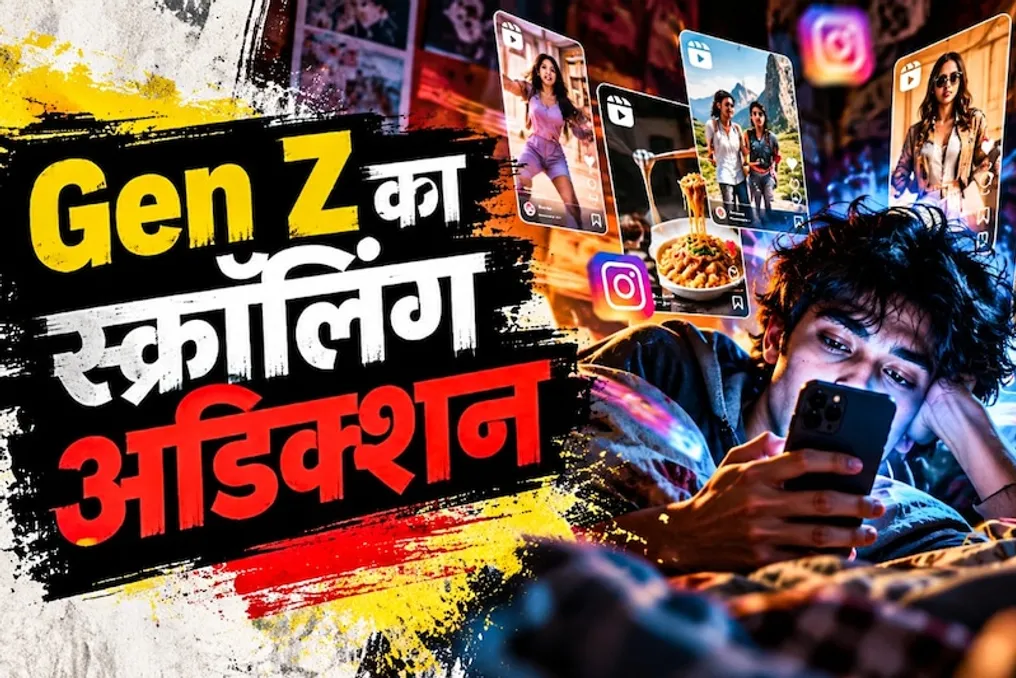
Reasons for the frequent use of Instagram among Generation Z and the phenomenon of endless scrolling
Read more
Aaj Tak
www.aajtak.in

Reasons for the frequent use of Instagram among Generation Z and the phenomenon of endless scrolling

When people take a break from work and go onto social media, such as Instagram, they may not realize that instead of a short break, they are actually continuing to work. What started as watching Reels for five minutes can easily turn into one or two hours, and the user often doesn't notice this.

For members of Generation Z, this experience is very common. Instagram has transformed from a simple platform for messaging and viewing friends' posts into a space where most of the time is spent continuously viewing new content and searching for something fresh. Users get caught in a cycle where they constantly say, 'I'll watch just one more video.'

The scrolling style of Generation Z differs from the styles of previous generations. Instead of lingering on one post for a long time, they prefer to quickly switch between content, pausing on a video they like, and then immediately moving to the next. The goal here is not just to open the app, but to see what content will come next. Generation Z strives to consume as much information as possible in the shortest amount of time.

A significant factor contributing to this is the Reels format itself. Short videos are easily absorbed, and the constant stream of new content maintains interest, eliminating boredom. If a video is not liked, it can be instantly skipped; if it is liked, one can linger on it for a few seconds. Thus, scrolling continues even without a predetermined goal.

For Generation Z, Instagram has become a platform not only for entertainment but also for keeping up with trends, memes, fashion, music, and even news. Therefore, opening the app is not always related to the desire to view a specific person's profile; often, it happens simply to find out what is new happening on the internet. Users rush to open Instagram at the slightest update.

For this reason, Generation Z's scrolling is perceived not just as a waste of time, but as an integral part of their daily digital routine. One video ends, and the next one starts immediately. Often, users themselves do not understand how they moved from one video to another, and then to a third.

Thus, the true power of Instagram lies not only in prompting you to open the app, but also in keeping you engaged so you watch 'one more video.' Although this serves as a way to relieve stress for many, this phenomenon also has its negative aspects.

Similar stories

Reasons for the Decline in X's Popularity Among Generation Z Amidst the Rise of Instagram and Snapchat
Read more
www.aajtak.in

Reasons for the Decline in X's Popularity Among Generation Z Amidst the Rise of Instagram and Snapchat

Twitter, known as X, was once a major platform for discussing news, debates, and new trends. However, the situation is changing now, and X's influence among Generation Z is becoming less noticeable compared to other social media platforms.

According to a 2025 report by the Pew Research Center, 33% of young people aged 18 to 29 in the US use X. Among this same age group, 80% use Instagram, and 63% use TikTok, indicating a significantly wider reach of Instagram and TikTok among Gen Z compared to X.

Not only the way social media is used is changing, but also the approach to news consumption. Another Pew report, published in December 2025, shows that 43% of young people aged 18–29 regularly get news through TikTok, and 40% through Instagram. Young users prefer to receive information on platforms where video and short-form content are easily found.

This change is also reflected in X's overall availability. According to a 2026 DataReportal report, X's potential advertising audience was 611 million in April 2024, but by April 2026, it had decreased to 450 million, representing a drop of more than 25% over two years. It is important to note that these figures reflect the potential number of users who can be shown ads, not the total number of active X users.

The decline in X's popularity is also observed in India. According to a 2026 DataReportal report for India, by the end of 2025, X's advertising reach was about 22.2 million, while Threads reached approximately 26.6 million, demonstrating competition from newer platforms like Threads.

However, the question remains why young people are moving away from X. Several factors influence this decision:

Firstly, the preference for video content. Generation Z prefers short videos, reels, and visual content over long texts and discussions. Platforms like TikTok and Instagram focus primarily on this type of content, which attracts young users.

Secondly, concerns about hate speech and disinformation. X has issues with political debates, trolling, bots, and the spread of false information, which reduces the platform's appeal for some young users compared to the past.

Thirdly, the prevalence of conflict over connection. Generation Z prefers social networks where the atmosphere of communication is lighter, more fun, and less confrontational. X has long been associated with political arguments, controversial topics, and strong opinions, which can make the constant atmosphere of debate toxic for youth and prompt them to switch to other platforms.

Thus, the shift of Generation Z away from X cannot be explained by a single reason. Statistics indicate a change in youth habits regarding social media and news consumption. Under these changing preferences, X faces serious competition from platforms such as Instagram, TikTok, and Threads.

Gen Z Consumers Use Social Media for Purchases, But Are Skeptical of Its Information
Read more
www.aajtak.in

Gen Z Consumers Use Social Media for Purchases, But Are Skeptical of Its Information

For the young Generation Z, social media has evolved beyond just being a tool for watching videos or communicating with friends; it has become an integral part of the entire process of discovering and purchasing brands. However, an interesting point is noted: although Gen Z actively uses social media and artificial intelligence (AI), it does not accept the information presented there blindly.

According to the 'From Likes to Buys' study based on a McKinsey survey from 2026, social media has transformed into the most important channel in Gen Z's buying journey, especially when searching for and purchasing goods. In contrast, Baby Boomer representatives still rely more heavily on physical stores at both stages.

McKinsey analyzed responses from 929 members of Generation Z and 1,448 Baby Boomers to understand where they get product information. This survey was conducted in March-April 2026.

The report shows that while the use of social media and generative AI among Gen Z is widespread, Gen Z's trust in most channels for receiving product information is lower than that of Baby Boomers.

The most noticeable difference is here. For Gen Z, social media is the primary source for discovering new products and brands, but the picture differs in terms of trust. According to McKinsey, advice from friends and family, expert recommendations, and seller assistance are among the most reliable sources for both generations. Nevertheless, Baby Boomers trust these sources significantly more than Gen Z.

Next follow online search, brand websites, and online stores, which people trust to a moderate degree. This indicates that Gen Z does not consider all online sources equally reliable.

Among algorithm-driven sources, YouTube and online reviews receive more trust compared to social media and generative AI. The lowest trust was noted for responses on social media and generative AI. However, there is an important nuance here: Gen Z's trust in social media is slightly higher than that of Baby Boomers. On the other hand, Baby Boomers trust generative AI more than Gen Z.

Thus, although Gen Z actively searches for new products and brands on social media, it is not quick to fully trust them based solely on a video, post, or AI advice.

The McKinsey report demonstrates a curious contrast: the digital platform that Gen Z uses the most for finding and buying new products and brands is not the most trusted in terms of reliability. For Gen Z, purchasing is no longer a simple 'see and buy' scheme. Social media leads them to new items, but when getting product information, Gen Z also considers advice from friends and family, expert opinions, reviews, online search, and other sources.

It is clear from the McKinsey report that Gen Z's buying journey is rapidly becoming digital, but this does not mean that trust has automatically become digital.

Popular