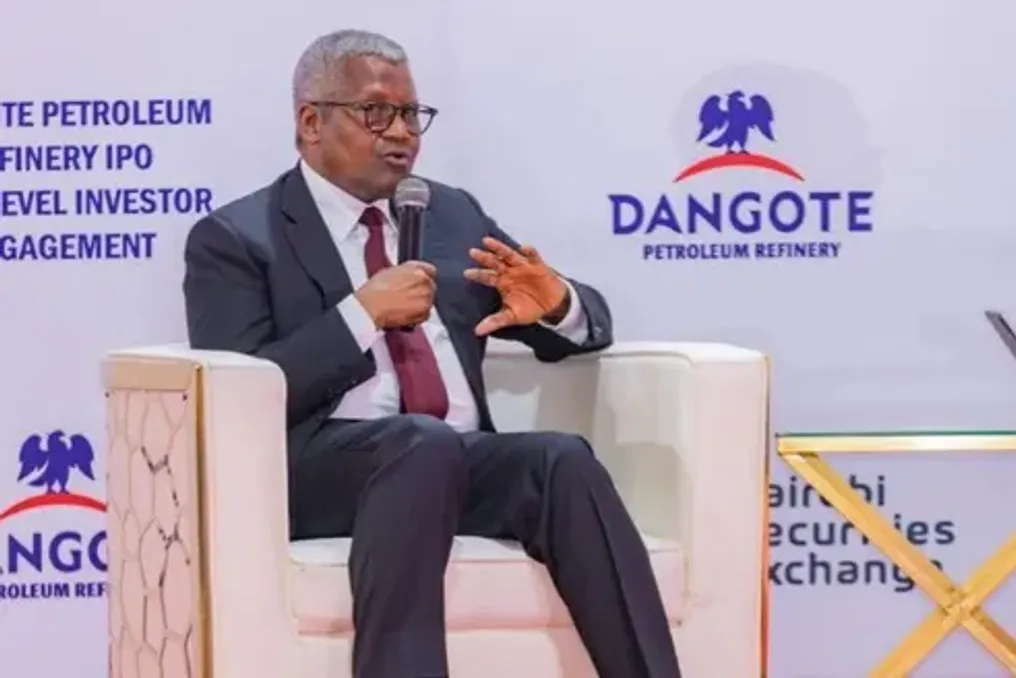
Aliko Dangote, one of Africa's wealthiest individuals, has begun construction of a new $16 billion mega-refinery in Kenya. He stated that this project is a key step towards achieving the continent's fuel self-sufficiency.
Construction of this new refinery on the Kenyan coast commenced on Wednesday. At the opening ceremony, Dangote emphasized that this demonstrates Africa's capacity for independent industrialization. During his speech, he noted: 'This is Africa uniting to build Africa. Today we are not just laying the foundation for a refinery; we are laying the groundwork for a new chapter in Africa's industrial journey toward a brighter future.'
Dangote previously built the largest refinery in Africa in his native Nigeria. The East African version will have a capacity of 700,000 barrels per day, exceeding the capacity of any plant in Europe. The facility is being built on the Indian Ocean coast in Lamu, near a deep-water port, and is scheduled for completion in 30 months.
Legal Proceedings
The project faced a lawsuit from the local community regarding land rights. Although a court ruling published on Monday allowed work to continue, the case remains open. Furthermore, environmental activists, including Greenpeace, voiced objections regarding the project's potential impact.
Dangote dismissed these claims, telling reporters: 'In fact, there is no problem with such things... There are people who do not want Africa to develop.'
Attendees at the ceremony included Dangote, Kenyan President William Ruto, and regional leaders, including Ethiopian Prime Minister Abiy Ahmed and Ugandan President Yoweri Museveni. However, this project comes amid complex regional rivalries, as Uganda and Tanzania announced a competing $20 billion refinery complex in the Port of Tanga in August, although details of this initiative remain unclear.
Uganda will begin extracting its first oil in the coming weeks and has nearly completed the pipeline to the Tanzanian coast in collaboration with French giant TotalEnergies. Consequently, at least in the initial phase, most of the crude processed at Dangote's Kenyan refinery will need to be shipped by sea from other regions.
Dangote informed reporters that the raw materials will be supplied from the Middle East, the United States, and other locations, but he will be ready by the time countries like Kenya and Mozambique start producing more oil. He had previously considered building the refinery in Tanzania but ultimately chose Lamu due to its deep-water port and 'solid ground.'
A Crucial Step
He presented the refinery as a vital step toward reducing Africa's dependence on imported refined fuel and foreign expertise. Dangote stated: 'By 2030, most African countries will be self-sufficient (in terms of fuel). It doesn't matter where it is refined, but it must be on the African continent, on African soil.'
He added: 'If someone intends to implement a major project in the future, they do not need to involve the Chinese or Indians to build it for them.' He insisted that the Kenyan refinery would only be a small part of the demand that will arise as Africa's economy grows. He clarified: 'When you talk about 700,000 barrels per day, that is actually small. For the region, it is a large plant, it is a major investment, but it is a beginning.'
It was also announced that the refinery would include a 1000-megawatt power plant, half of which will be fed into the Kenyan energy grid.