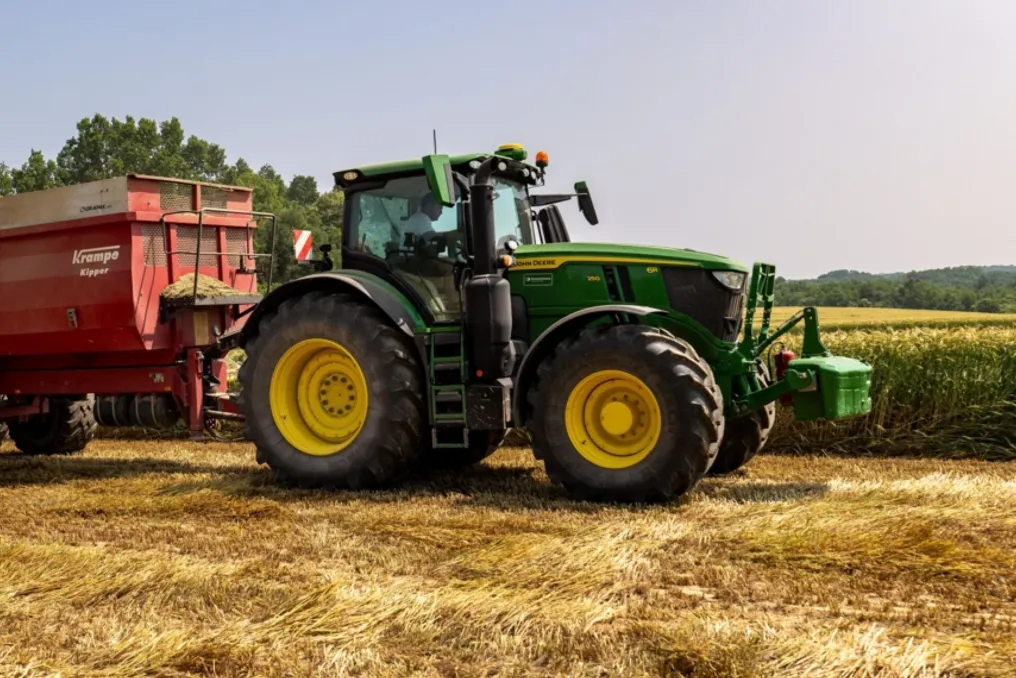
Grain producers in South Africa are beginning a new planting season amid rising resource prices, significant domestic grain stocks, and uncertainty in export markets.
A recent webinar on cereal and oilseed crops, organized by the National Agricultural Marketing Council (NAMC) and the Ministry of Agriculture, detailed the numerous challenges facing the industry.
Helen Viljoen, an economist from Grain SA, noted that farmers are forced to consider multiple factors when deciding what to plant, especially concerning staple crops such as maize, soy, and sunflower.
South Africa produces a wide range of cereals and oilseeds, with maize remaining the largest crop in the country, reaching over 17 million tons in a good season. Soy production has expanded significantly over the last decade, and sunflower maintains its importance as an alternative to maize in summer grain-producing areas.
However, for maize producers, large volumes create uncertainty before the start of a new season. Viljoen suggested that farmers are considering whether the current maize surplus can be exported quickly enough, especially if the El Niño event leads to lower yields in the upcoming season.
She explained that 'if we leave a massive local surplus, even with lower production, there will still be enough stock in the market.' This could limit the price reaction that farmers usually expect when production declines during an El Niño season, as substantial carryover stocks may continue to meet domestic demand.
High resource costs are another major concern. Viljoen reported that fertilizer prices have increased by approximately 140% since 2019, while herbicide prices rose by about 15%, and diesel fuel by 83%.
Commodity prices have not risen at the same rate, putting pressure on producer margins. Viljoen emphasized that 'this raises significant concerns regarding local production trends, as it definitely affects what producers are considering for planting, both white and yellow maize.'
The current price environment may prompt some producers to revise their cropping patterns. According to Viljoen, soy production may benefit from relatively low fertilizer requirements, while sunflower is currently showing higher profitability compared to maize and soy.
Grain SA financial reports indicate that several crops are struggling to cover fixed costs, with some operating at variable cost levels. This raises concerns about producers' ability to meet financial obligations, such as equipment and other fixed expenses.
Pressure on domestic markets also increases the importance of exports. Jean-Pierre Kotze from the South African Cereal and Oilseed Traders Association (Sacota) stated: 'For maize and soy, we generally trade closer to export parity, and for wheat, we generally trade closer to import parity.'
The soy industry illustrates the problem caused by growing production. According to Kotze, local soy supply has increased by an average of about 20% over the last nine to ten years, while domestic demand has grown by about 10%. This difference must either be stored or exported, making access to export markets increasingly vital for sustaining production growth.
Maize faces similar dynamics: long-term supply growth is around 6% compared to demand growth of about 2%. Kotze noted that efficient infrastructure is critical for moving grain surpluses to domestic and international markets. Rail transport, in particular, remains important as it can be significantly cheaper than road transport. Many grain silos were originally designed with rail logistics in mind. He added: 'Having effective and cost-effective infrastructure is very important.'
Thus, the upcoming planting season for farmers will involve more than just comparing crop prices. Planting decisions and risk management in the coming season will depend on resource costs, expected production, existing stocks, export opportunities, exchange rates, and grain transportation costs.
Lita Kutta, Head of Partnership and Ecosystem Coordination at Land Bank, stated that farmers also need to address issues such as water rights, compliance, and market access before they can receive financing. Kutta said: 'Financing is not the first problem you face. You see that you need much more before you get financing.'
He reported that the Land Bank partnership team supports farmers on market readiness, business planning, access to finance, and post-investment support, utilizing partnerships with private buyers and provincial governments to help connect farmers to markets and finance. Kutta also mentioned that the bank approved approximately 83 million rand for black farmers in the current financial year as of the presentation, with approximately 70 million rand linked to the cereal and oilseed sector.