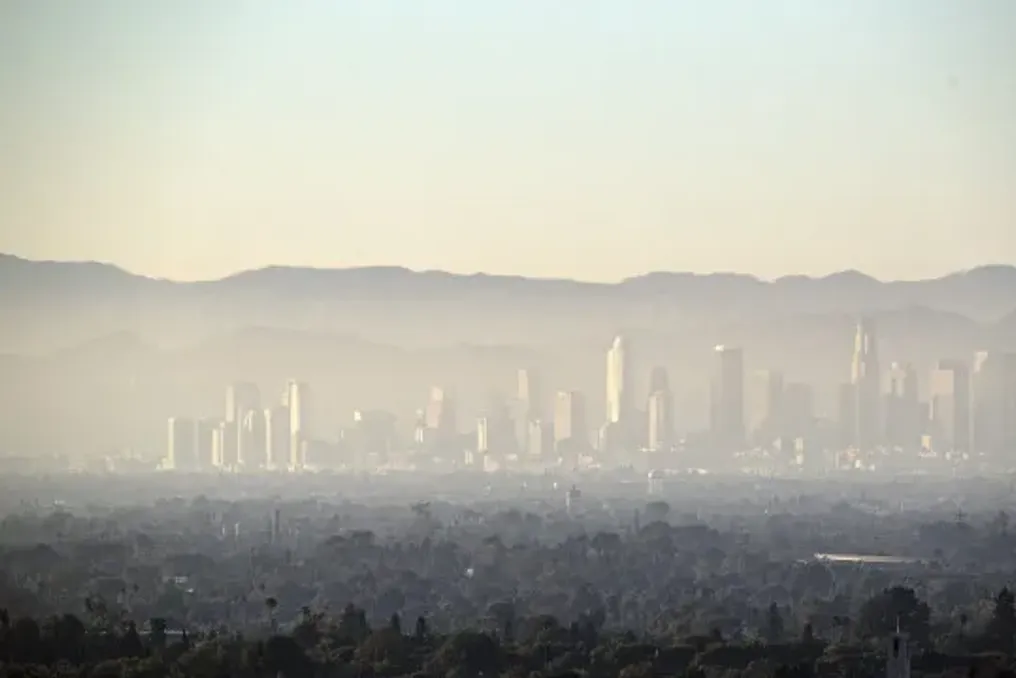
A global analysis conducted by the Copernicus Atmosphere Monitoring Service (CAMS), operated by the European Centre for Medium-Range Weather Forecasts (ECMWF), revealed that about 40% of the world's population has been exposed to dangerous levels of tropospheric ozone due to the combination of extreme heat and pollution generated by human activities.
This study demonstrates how air pollution has crossed borders and continents this year. Tropospheric ozone, found at an altitude between 10 and 12 kilometers, arises from the chemical reaction of pollutants emitted by road traffic and industry, such as nitrogen oxide, under strong heating.
The main environmental risks to human health and ecosystems, according to the 'Atmosphere Watch' analysis, include harmful tropospheric ozone (different from protective stratospheric ozone), along with smoke from large fires and dust transport episodes.
Florian Pappenberger, director-general of ECMWF, highlighted that 'Atmosphere Watch' shows that air pollution does not respect geographical boundaries. He mentioned that fire smoke, ozone, and dust have the capacity to travel thousands of kilometers, impacting communities located far from their origin.
Pappenberger also referred to the upcoming UN climate summit, COP31, reinforcing that the presented data underline that climate change, air quality, and public health constitute 'deeply interconnected challenges that require coordinated global action.'
In the first eight months of the year, conditions favorable for the formation of tropospheric ozone occurred in several regions, affecting millions of individuals. Asia was the most affected area, followed by Europe and then North America, with much of the northern hemisphere recording values above the target set by the World Health Organization (WHO).
In Asia, 60% of the population faced extremely high levels of tropospheric ozone. In Europe, although there have been improvements regarding certain harmful pollutants, ozone, as a secondary pollutant, remains a 'particularly complex global challenge,' according to Copernicus, as more than half of the population was exposed to harmful levels, mainly due to successive heatwaves.
Concentrations were also high in North America, aggravated by wildfires, affecting over two-thirds of the population. Oceania was the region with the lowest ozone pollution so far, followed by South America and, thirdly, Africa.
CAMS pointed out that a notable feature of 2026 so far is the way pollution has dispersed across borders, traveling long distances to influence the air quality of millions of people far from the initial source. This includes wildfire smoke, such as those in Canada and the western United States.
In Southeast Asia, fires also contributed to the spread of cross-border haze; in July and August, fires in Indonesia, intensified by the El Niño phenomenon, exposed millions to dangerous pollution. Furthermore, Saharan dust affected areas beyond North Africa, reaching the North Atlantic, Cape Verde, the Canary Islands, and even the Caribbean zone.
In conclusion, CAMS states that the observed events prove that air quality cannot be analyzed solely based on local emissions. 'Atmosphere Watch' consolidates the global balances of the state of the atmosphere in the first eight months of 2026, using the ability to integrate millions of data from satellites, ground networks, aircraft, and other sources with the global atmospheric pollution forecasting system.