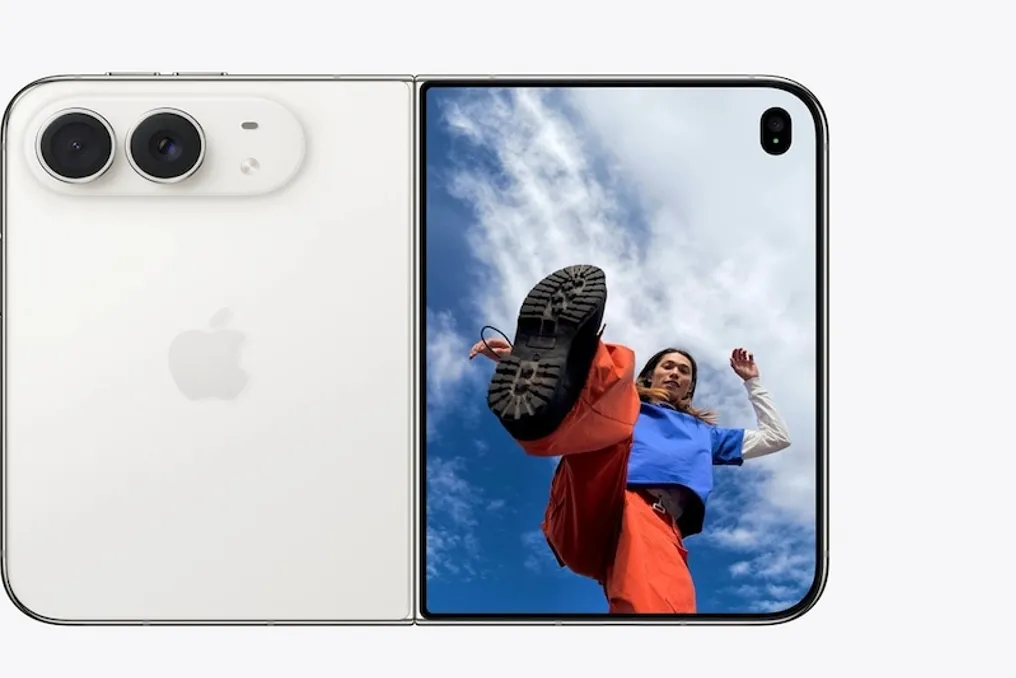
Following the recent unveiling of a new foldable smartphone unofficially named iPhone Duo, Apple is joining the foldable device race. This launch, carried out by John Tarnus, successor to Tim Cook, marks one of the most significant smartphone updates from Apple in a long time and has quickly become a subject of widespread discussion.
Apple's entry into the foldable segment indicates that this form factor has become too prevalent to ignore. However, unlike Huawei or Samsung, which offer numerous types of foldable models, Apple has focused its efforts on creating a passport-style widescreen form factor.
Huawei's lineup of foldable devices includes various designs—from clamshell and book-style to passport and even tri-fold. Many of these concepts were first introduced by Huawei. Through years of refinement, Huawei has achieved significant improvements in durability, camera performance, and multitasking capabilities; for instance, the Mate XT model with a triple fold supports PC-like configuration using an external keyboard.
Samsung also offers three different foldable form factors: Flip, Fold, and Fold Ultra. The company also tested the market with the Galaxy Z Trifold, its first primarily experimental triple-fold smartphone. Now that both Apple and Samsung are releasing widescreen foldables, it appears to be the next stage of evolution in this category.
There are obvious advantages to the wider aspect ratio of the Galaxy Fold 8 and iPhone Duo compared to the more traditional and narrow Galaxy Fold 8 Ultra. The main advantage lies in the greater usable screen space for watching videos and using the most frequently used applications. While Samsung entered the widescreen device segment only in the eighth iteration of its series, Apple completely skipped high-end foldable models and went straight to the 4:3 aspect ratio with the iPhone Duo.
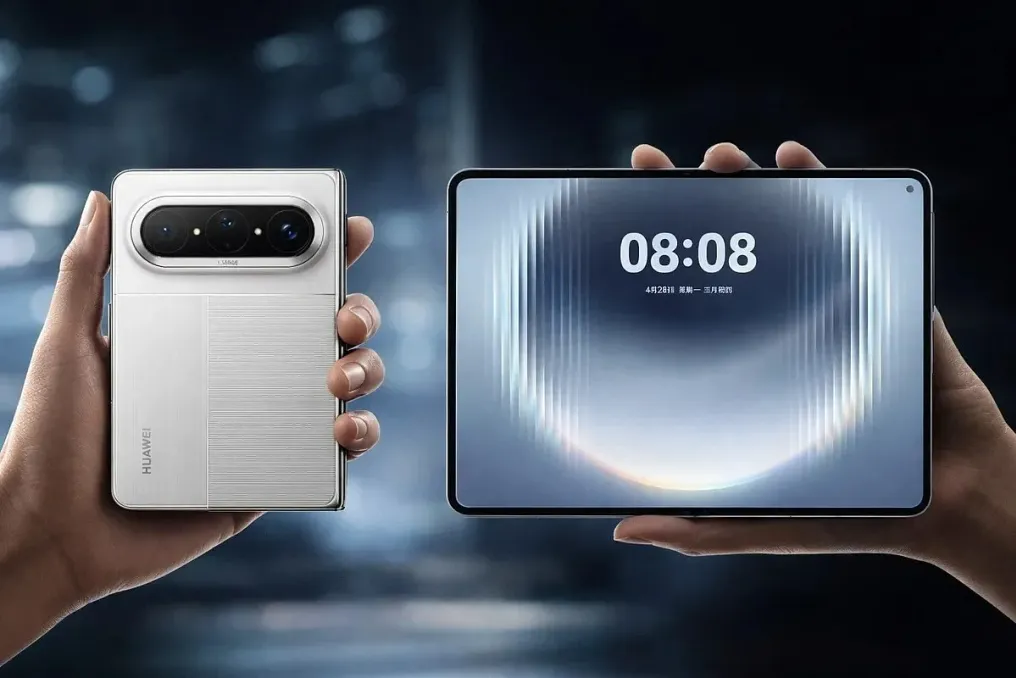
Despite the new form factor potentially seeming avant-garde, Huawei was the pioneer of widescreen foldables. The company introduced the Pura X in China in March 2025. This phone featured a 6.3-inch internal display with a 16:10 aspect ratio. When folded, it was approximately the size of a passport and equipped with a 3.5-inch external screen for basic tasks and notifications. Unlike Samsung's more traditional design with a taller internal display and square aspect ratio, the wider display provided a more immersive viewing experience.
Subsequently, Huawei released the Pura X Max in April of this year, introducing several significant improvements. The new device features a larger 7.7-inch internal screen and a 5.4-inch external screen, comparable to the Galaxy Fold 8 and iPhone Duo.
Historically, one of the biggest challenges for foldable smartphones has always been camera performance. The need to accommodate complex hinges, dual displays, and increasingly thin designs often forced manufacturers to compromise compared to their conventional counterparts. For example, Apple's iPhone Duo combines a main 48MP module with a 48MP ultrawide module, placing a strong emphasis on computational photography and video. Samsung uses a similar approach with the Galaxy Z Fold8, prioritizing portability and weight, offering a 50MP main module and an ultrawide system. However, the Galaxy Z Fold8 Ultra takes a more ambitious approach, combining a 200MP main module with a 50MP ultrawide and a dedicated 10MP optical telephoto camera with 3x zoom.
Nevertheless, the Pura X Max has also significantly improved camera quality. It is equipped with a triple rear camera system, including a 50MP telephoto lens and a 50MP main module with the Second Generation Red Maple imaging system, allowing it to meet Pura flagship standards. Furthermore, it offers an extremely versatile system, combining long-range shooting with close-up macro capabilities. What Huawei has achieved in camera technology on its foldable models suggests that the compromises previously associated with the folding form factor are becoming harder to justify.
Despite its compact foldable design, the Pura X Max is also equipped with a large 5300mAh battery and supports 66W wired charging and 50W wireless charging. Durability has also reached new heights thanks to a new folding mechanism, a second-generation Kunlun protective glass for the external screen, and a three-layer composite structure for the internal screen, enhancing its strength.
Perhaps the most interesting part of this story lies in rumors of the upcoming global launch of the HUAWEI Pura X Max. If true, users worldwide will have the opportunity to purchase a widescreen foldable smartphone with flagship-level camera capabilities.