Agricultural producers in the North-West region received equipment to increase mechanization
Read more
Food For Mzansi
foodformzansi.co.za

Agricultural producers in the North-West region received equipment to increase mechanization

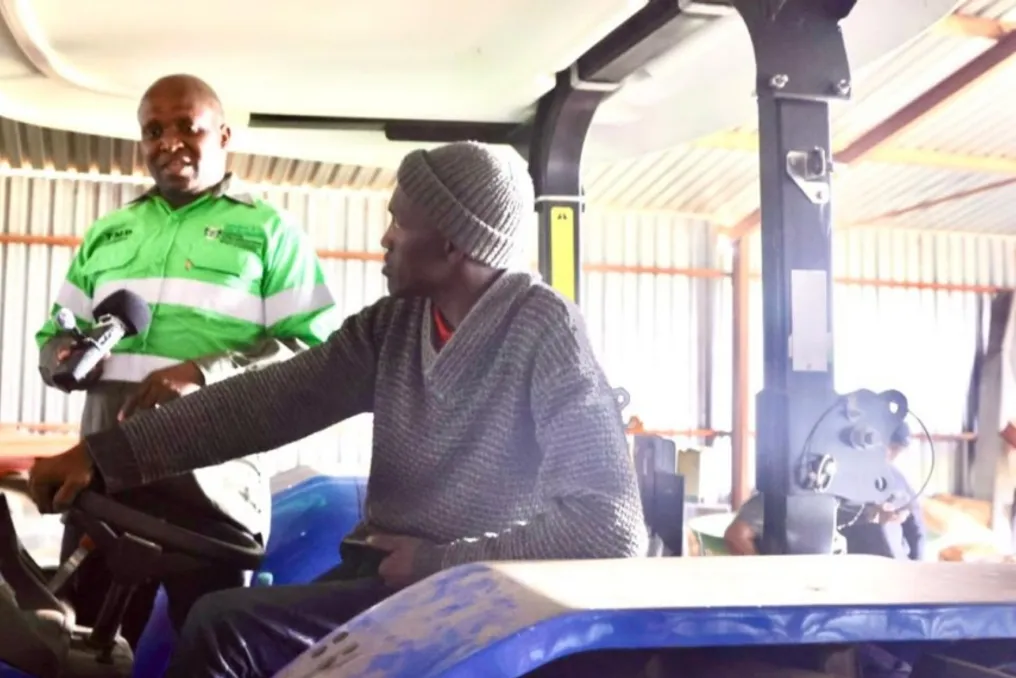
Agricultural producers and Community Property Associations (CPAs) in Tigane, near Clerksdorp, received a tractor and other agricultural equipment. These tools were handed over by Madoda Sambata, a representative of the Ministry of Agriculture and Rural Development for the North-West.

According to the department, this handover was a necessary step aimed at solving the problem of limited access to agricultural machinery among small and emerging farmers, as well as strengthening agricultural activities in rural areas.

The tractor will be used as a shared service for farmers from the CPAs Seven Seasons, Oblate, Thusanang, and Ikageng in the Tigane community. In addition to the tractor, the department also provided a sprayer with attached equipment and a plough to enhance the production capabilities of the farmers.

Limited access to mechanization remains a serious obstacle to agricultural production, especially among emerging farmers. Therefore, providing farmers with necessary equipment is critical for increasing productivity, boosting yields, and strengthening the food security of households and communities.

One of the beneficiaries and a local farmer, Ramasimane Kaloute, expressed gratitude for the support provided. He noted: 'I want to thank our Minister of Agriculture and Rural Development for the North-West, Madoda Sambata. This will greatly help us as emerging farmers here in Tigane. Farming without the necessary equipment can be difficult, but we are grateful for this support and promise to use the equipment as intended.'

Sambata emphasized that ensuring farmers have access to machinery is vital for improving agricultural production and supporting livelihoods in underserved rural areas. He stated: 'We have provided the tractor and other equipment to assist small and emerging farmers in Tigane. This support will help increase crop yields and secure livelihoods by improving access to mechanization.'

Madoda Sambata added that this initiative aligns with the commitment to improving rural farming communities. He explained that the transferred tractor and equipment are not just machines, but indispensable tools for scaling up production, strengthening livelihoods, and enhancing food security.

He also reported that this measure is part of the province's broader strategy to transform the agricultural sector, reduce poverty, and increase the resilience of small farmers. Sambata noted that through such interventions, the department strengthens farmers' access to the resources needed to increase production, improve living conditions, and contribute to food security across the province.
Similar stories

How unity, technology, and added value contribute to the profitability of farms
Read more
foodformzansi.co.za

How unity, technology, and added value contribute to the profitability of farms

Success in modern South African agriculture depends on the ability to adapt, establish thoughtful partnerships, and ensure resilience to climate change. Following the Nampo Cape 2026 event, Daniel Rossouw from Nedbank shared his thoughts on the key trends shaping South Africa's agricultural sector and how strategic collaboration can guarantee long-term commercial sustainability.

As Head of Agricultural Sales at Nedbank, Rossouw noted that this year's Nampo gathering gave the sector a new impetus and a shared sense of purpose. Faced with complex market and operational challenges, industry stakeholders are increasingly uniting to protect productivity and build sustainable growth.

Under the theme 'grow together,' the event highlighted the growing demand for collaboration across the entire agricultural ecosystem. Discussions brought together representatives from organized agriculture, agribusiness, financial institutions, and political leaders, including the Minister of Agriculture and the Minister of Land Reform and Rural Development.

Rossouw emphasized: 'For me, the drive towards greater unity in agriculture was a truly outstanding moment, and I believe very deep discussions took place.' These meetings focused on critical regional and national issues, such as the future viability of the Western Cape grain industry, current biosecurity efforts related to rinderpest vaccination, and the role of local government in maintaining rural infrastructure to support agricultural logistics.

On the exhibition floor, farmers' interest was concentrated on innovations designed to optimize efficiency and reduce environmental risks in crop and livestock farming. Demonstrations of high-quality equipment included localized weather forecasting systems and data management platforms, as well as renewable energy sources designed to protect farms from utility costs.

Equipment developed for climate-smart agriculture also took center stage, with an emphasis on zero and minimum tillage machinery that minimizes soil disturbance. For Nedbank, the main focus was on regenerative agriculture and creating practical links in the value chain to help clients effectively implement sustainable farming principles.

Highlighting the link between environmental stewardship and farm performance, Rossouw asserts that economic success and environmental responsibility are inseparable. Long-term profitability depends on conserving and restoring natural resources, especially soil health and water availability.

He explains: 'You cannot talk about profitability and sustainability without the other. It is a completely integrated system.' He adds that ultimately, any activity of a farmer or agribusiness must be profitable for more than one generation while caring for natural resources.

This focus on long-term resource management underlies the ability of a farm to remain economically viable amid changing climatic cycles and market conditions.

A significant shift in the sector is the move towards vertical integration. Since raw material producers are typically price takers in open commodity markets, moving into processing, local packaging, and specialized export logistics offers a direct path to generating additional profit. Rossouw notes: 'We definitely see a major opportunity beyond primary agriculture.' He continues that instead of increasing raw material production, the focus is on vertical integration, both up and down the value chain. If these connections can be established and greater integration achieved, he believes it will significantly benefit the raw material producer in terms of profitability.

This shift aligns closely with national development goals within the Agricultural and Agri-processing Master Plan (AAMP), which prioritizes localization, export expansion, infrastructure development, and digital integration. By integrating operations upstream or downstream, producers can reduce their exposure to raw material price volatility.

Overcoming market changes, implementing technologies, and adapting to climate requires continuous financial support and a personalized approach to risk management. Financial institutions play a crucial role by going beyond traditional banking services, providing structured, climate-smart solutions that allow producers to diversify, adopt new technologies, and expand into value-adding areas.

To learn how Nedbank can partner with your agricultural business to navigate market transitions and transition to more climate-resilient practices for long-term profitability, contact business@nedbank.co.za or reach out directly to your regional Nedbank business manager.

Popular