Clarification of the Concept of 33 Crore Deities in Hinduism: An Analysis of Vedic Texts
Read more
Aaj Tak
www.aajtak.in

Clarification of the Concept of 33 Crore Deities in Hinduism: An Analysis of Vedic Texts

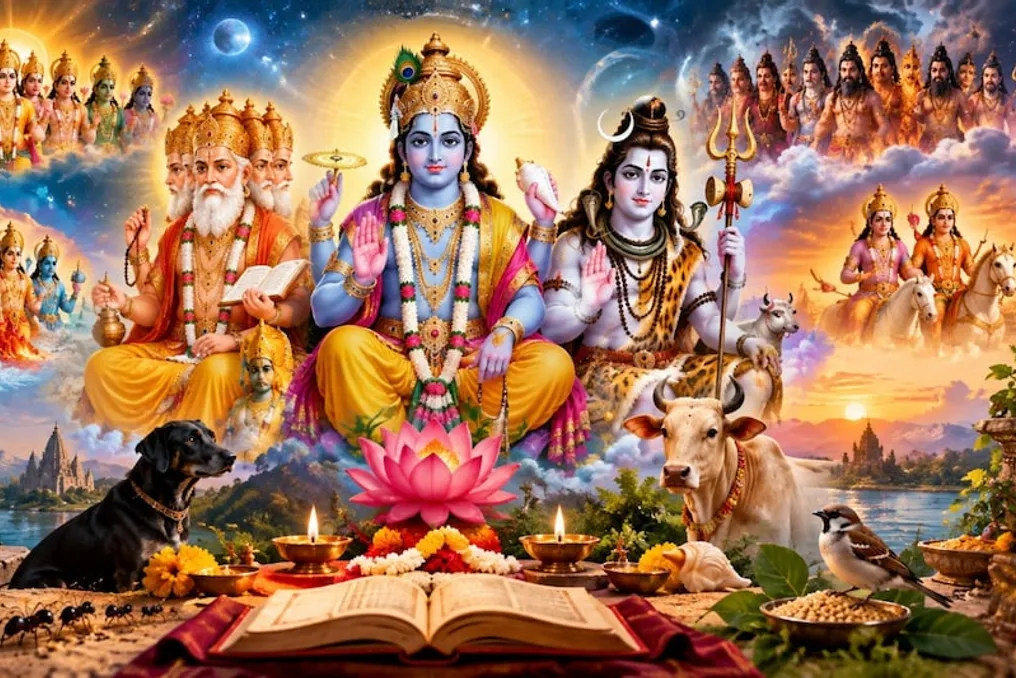
The assertion that there are 330 million deities in Hinduism is often heard, and this information has been perceived by many as an undeniable fact. However, if one refers to the most ancient sacred scriptures, such as the Vedas and Upanishads, the picture appears different. It is important not just to discuss the number 330 million, but also to understand what the word 'deva' meant in the Vedic context, how the count of 33 deities was made, and what the place of Brahma, Vishnu, and Shiva is in this system.

The root of this dispute lies in the Sanskrit word 'koti'. Today, 'koti' is often used as a synonym for 'crore', but in Sanskrit, it has multiple meanings: category, class, type, or even superiority. Therefore, directly equating '33 koti' with '330 million' is not correct from the perspective of classical tradition and Vedic interpretations.

Vedic literature does indeed mention the number 33 deities. Although there may be minor differences in lists or classifications across various Vedic texts, the main group includes 8 Vasus, 11 Rudras, and 12 Adityas, totaling 31 deities. In a well-known dialogue from the Bhuridarpanaka Upanishad, when asked about the number of deities, 33 is first mentioned. Subsequently, the number decreases sequentially to 6, then to 3, to 2, to one and a half, and finally to one. In the same dialogue, the 33 deities are explained as 8 Vasus, 11 Rudras, 12 Adityas, Indra, and Prajapati. Thus, the discussion is not about a list of 330 million deities, but about a specific Vedic count.

Who are the 8 Vasus?

In the Bhuridarpanaka Upanishad, the Vasus are associated with the forces upon which the world rests. These include fire, earth, air, cosmos, sun, Dhyuloka, moon, and stars. The word Vasu implies that which serves as the foundation or habitat for the world. Therefore, the Vasus should be viewed not so much as deities with human forms, but as a Vedic concept related to the fundamental forces of nature and the universe.

What do the 11 Rudras represent?

There is also a divergence between the popular understanding and the Vedic interpretation of the Rudras. Although today the word 'Rudra' is often associated with the god Shiva, in the Vedic tradition, the concept of Rudra is much broader. In the Bhuridarpanaka Upanishad, the 11 Rudras are explained in the context of the ten vital energies of a person and their soul. When a person leaves the body, their relatives mourn, which is why they were named Rudra. It is necessary to understand the historical development, as in later Hindu traditions, Rudra became closely associated with the god Shiva.

How are the 12 Adityas understood?

The 12 Adityas in Vedic literature are also connected to the concepts of the sun and time. In the Bhuridarpanaka Upanishad, the 12 Adityas are explained as the 12 months of the year that advance the world. Lists of the names of the 12 Adityas appear in subsequent texts, but they may differ depending on the tradition, so all lists cannot be considered identical.

How is the number 33 reached?

The most interesting point is the completion of the count. The sum of 8 Vasus + 11 Rudras + 12 Adityas equals 31. To reach the number 33 in the calculations of the Bhuridarpanaka Upanishad, Indra and Prajapati are added. Nevertheless, the structure of the number 33 may differ in other Vedic texts. For example, in one interpretation of the Shatapatha Brahmana, 8 Vasus, 11 Rudras, 12 Adityas, and Dyus-Pritivya are mentioned, whereas another Vedic text features Indra and Prajapati. Thus, although the number of 33 deities is discussed, their final composition does not match across all Vedic sources.

The Place of Brahma, Vishnu, and Shiva in This System

The question of the place of Brahma, Vishnu, and Shiva is also natural. In later major Hindu traditions, they are regarded as the Trimurti, responsible for creation, maintenance, and destruction or transformation. However, asserting that this Trimurti concept was present in every Vedic text in the same form is incorrect. The popular concept of Trimurti developed gradually over the long evolution of Hindu thought, so it is more accurate to consider the Vedic deities and the development of later mythological traditions separately.

Unity or Multiplicity of Deities in Hinduism?

This reveals an important aspect of Hindu philosophy. The Upanishads discuss various deities and forces, but simultaneously emphasize the unity of the Supreme Truth. In the same dialogue from the Bhuridarpanaka Upanishad, while asking about the number of deities, the number one is ultimately reached. The famous phrase from the Rigveda, 'Ekam sat vipra bahudha,' reflects this idea.
Similar stories

Clay elephants worshipped instead of deities in Hati Keda temple in India
Read more
www.aajtak.in

Clay elephants worshipped instead of deities in Hati Keda temple in India

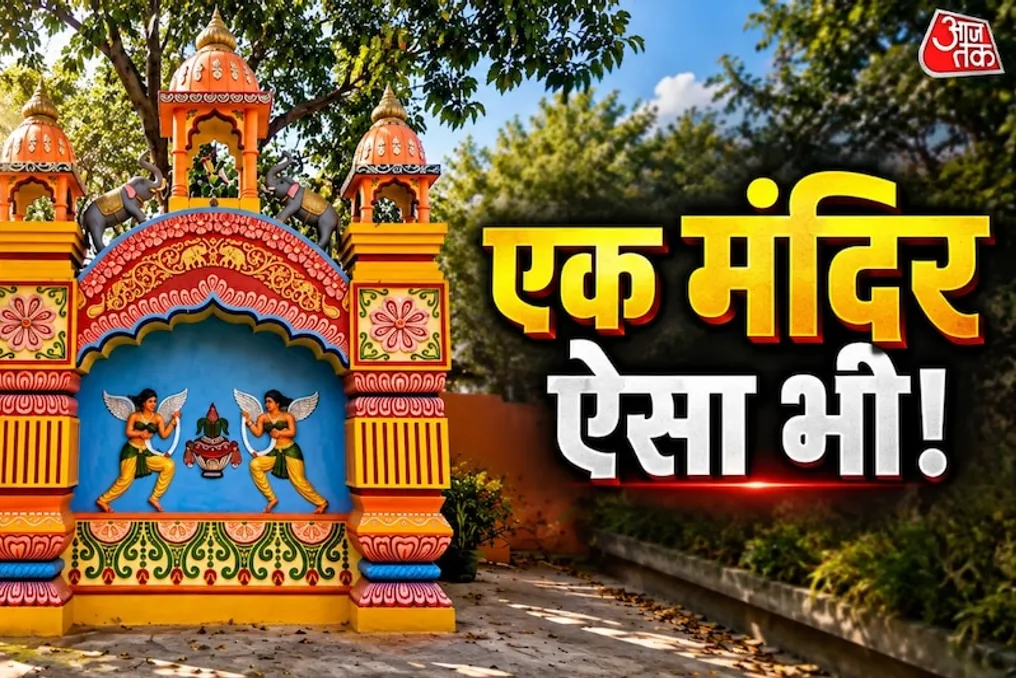
The Hati Keda Thakur Temple, located in the East Singhbhum district of Jharkhand state, is known for its unique beliefs and traditions. This temple differs from ordinary shrines in that instead of traditional depictions of deities, worship is paid to clay elephants. According to accounts, the traditions associated with this temple have existed for about 300 years.

Historically, the Dalma area faced a severe threat from wild elephants that raided villages at night. Local residents tried to scare them away by setting up night patrols, lighting torches, and playing drums. However, the problem did not disappear completely.

According to legend, elders advised the villagers to make elephants out of clay and venerate them. Following this, people began to worship the clay elephants with reverence. It is believed that soon the aggression of the wild elephants decreased. The residents perceived this as the grace of Hati Keda Thakur and began conducting rituals in this place, which became the center of their faith.

Significance of the name 'Hati Keda'

The name 'Hati Keda' is also connected to the temple's beliefs. In the local language, 'Keda' is associated with expulsion or warding off. Therefore, 'Hati Keda' means a prayer for deliverance from attacks by wild elephants and their deterrence. This is why the tradition of offering clay elephants here holds special significance.

Absence of traditional deity images

The main feature of the Hati Keda temple is that instead of a traditional statue of a deity, clay elephants are worshipped. Within the temple complex, one can see elephants made of clay of various sizes. Pilgrims come here with their wishes and offer a clay elephant after worship. In addition, they also bring coconuts, shawls, incense, and lamps.

Tradition of sacrifices

Local religious customs associated with the temple also include the practice of animal sacrifice. Some devotees, following age-old beliefs, offer rams or sheep as sacrifices. This is considered part of local religious rites, although such practices are closely linked to the community's local beliefs and customs.

Unique belief about communion in the temple

Some local beliefs make the Hati Keda temple even more special. It is said that women do not partake in communion at this temple. Furthermore, it is forbidden to take the communion outside the temple complex or to take it home. These rules are part of local traditions and beliefs that pilgrims follow according to their faith.

Deep connection with the Dalma hills and elephants

The Hati Keda temple is also connected to the surrounding forests and hills of Dalma. Wild elephants still inhabit the Dalma area today, and sometimes herds reach nearby villages in search of food. Because of this, the folk belief in the temple is related not only to religious convictions but also to the long-standing relationship between humans and wild animals.

When the largest crowds gather

The largest crowds gather at the temple during Makar Sankranti, the month of Chaitra, and local tribal festivals. Additionally, a large number of pilgrims arrive here on Sundays and Tuesdays. On these days, people from remote areas come to see Hati Keda Thakur and pray for their wishes to be fulfilled.

How to reach the Hati Keda temple

If you plan a trip to the Hati Keda Thakur temple, you can first travel to Jamshedpur. The Tatanagar railway station is one of the main ways to arrive. From Jamshedpur, you can reach the temple by bus, taxi, or private transport. Before starting your journey, it is recommended to find information about local routes, road conditions, and the current schedule of services at the temple.

Other nearby attractions

While visiting the Hati Keda temple, you can also explore other natural and tourist spots. The Dalma Sanctuary and Dalma Hills are special places for nature lovers. Additionally, Dimna Lake and Jubilee Park in Jamshedpur are good options for visiting. If you have enough time, you can visit other nearby natural attractions.

History of coexistence of faith and nature

The Hati Keda Thakur Temple is known not for its magnificent architecture, but for its simplicity, local traditions, and unique folk belief. The figures of clay elephants in the temple complex are its most distinctive feature. This tradition, which has existed for about three centuries, is maintained by local residents with deep respect. This temple tells a story not only of religious faith but also of ancient connections between the forest, wildlife, and human life. This is why the Hati Keda Thakur Temple is considered one of the unique religious sites of Jharkhand, where the practice of worship differs radically from that accepted in ordinary temples.

Who is Kalki and when will his appearance occur according to Hindu beliefs
Read more
www.aajtak.in

Who is Kalki and when will his appearance occur according to Hindu beliefs

The texts of Hinduism describe various incarnations of the God Vishnu. According to beliefs, whenever lawlessness increases and righteousness weakens on Earth, God takes some incarnation to restore Dharma. Scriptures and religious traditions mention avatars of Vishnu such as Matsya, Kurma, Varaha, Narasimha, Vamana, Parashurama, Rama, Krishna, and Buddha. Following these, the Tenth and final avatar—the avatar of Kalki—is mentioned.

There is a belief that in the final phase of Kali Yuga, when lawlessness reaches its peak, God Vishnu will appear in the form of Kalki and restore Dharma. However, people's minds still hold curiosity about when and where God Kalki will be born, who his parents will be, and what his appearance will be like. The following examines the main religious concepts regarding such an avatar and its description as laid out in the Puranas.

God Incarnates to Establish Dharma

In the Bhagavad Gita, Krishna asserts that whenever Dharma declines and lawlessness increases, He takes an incarnation to restore it. This idea is connected to the tradition of various avatars of God Vishnu. The avatar of Kalki is considered the future incarnation in this sequence. The description of the Kalki avatar is contained in the XII Skanda of the Shrimad Bhagavatam Mahapurana. According to this text, the appearance of God Kalki will happen in the last stage of Kali Yuga.

Where Will God Kalki Be Born?

The Shrimad Bhagavatam Mahapurana indicates that God Kalki will be born in the house of a Brahmin named Vishnuya in the village of Shambhal. The same text states that God Kalki will appear in the house of the eminent Brahmin Vishnuyasha in Shambhal. Thus, the religious scriptures mention Shambhal as the birthplace of God Kalki. Nevertheless, there are differing opinions among religious and scholarly traditions regarding the geographical identification of Shambhal.

What Will God Kalki Look Like?

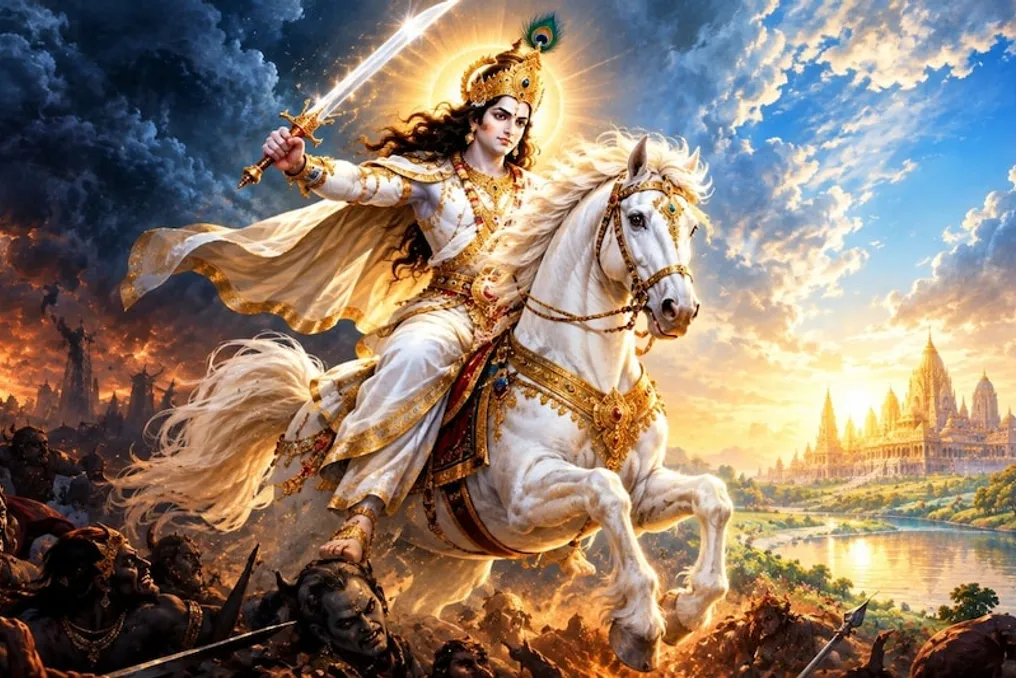
According to religious beliefs, God Kalki will appear as a divine warrior. He is described as a rider on a horse, holding a sword in his hand. In the Puranic descriptions, his mount is named Devadatta, a divine horse. It is believed that in the last stage of Kali Yuga, God Kalki, on this horse, will end lawlessness and tyranny. After this, the restoration of Dharma will occur, and the process of epoch change will begin.

Who Will Be God Kalki's Mother Named?

In mythological traditions, the father of God Kalki is named Vishnuyasha, and the mother is Sumati. It is in this family that the religious concept of God Kalki's appearance exists. Detailed stories related to the Kalki avatar are found not only in the Shrimad Bhagavatam Purana but also in other texts and Puranic traditions. Therefore, differences may be observed in the descriptions of his family, marriage, and other details depending on the source.

Who Will Be God Kalki's Teacher?

In the Puranic tales associated with the Kalki avatar, special mention is given to Parashurama. It is believed that Parashurama will teach Kalki military arts and weaponry. For this reason, the connection between Kalki and Parashurama is considered special in the Hindu religious tradition.

When Will the Kalki Avatar Occur?

The most important question is when exactly the avatar of God Kalki will occur. In religious texts, the Kalki avatar is linked to the last stage of Kali Yuga. According to Hindu chronology, the period of Kali Yuga is considered very long, and according to religious beliefs, there is still much time left until then. Consequently, the scriptures do not establish any specific date or year for the appearance of God Kalki at present.

The Kalki avatar is viewed as a future event that will happen when Kali Yuga reaches its conclusion, and God Vishnu will appear in the form of Kalki to restore Dharma.

What Will Happen After the Kalki Avatar?

According to Puranic beliefs, when lawlessness, injustice, and chaos reach their limit in the last stage of Kali Yuga, the appearance of God Kalki will take place. He will put an end to lawlessness and restore Dharma. After this, the process of epoch change will begin, and there is a religious belief in the revival of Satya Yuga.

Thus, the Kalki avatar is not just a story about the last incarnation of God Vishnu, but an important Puranic concept related to the restoration of Dharma and the change of epochs. However, the time of God Kalki's appearance relates to religious questions of the future, so establishing an exact date for his avatar does not align with the teachings at present.

According to Legends: How Radha Died and the Story of Her Last Meeting with Krishna
Read more
www.aajtak.in

According to Legends: How Radha Died and the Story of Her Last Meeting with Krishna

There are numerous stories about how Radha passed away, as various religious traditions and folk tales describe the final moments of Radha's life differently. However, this review examines the version found in the Puranas and Vaishnava traditions.

The love between Lord Krishna and Radha is considered a symbol of love, selflessness, and devotion in Indian tradition. Both were born on the same day—Ashthami—but their birthdays fell on different lunar cycles.

According to religious beliefs, Lord Krishna was born on the eighth day of the dark fortnight (Krishna Paksha) of the Bhadrapada month. Radha's birth, on the other hand, is believed to have occurred on the eighth day of the bright fortnight (Shukla Paksha) of the same month. Thus, Radhashtami is celebrated approximately 15 days after Krishna's birth.

Vrishabhanu is considered Radha's father, and Kirti is her mother. Barsana is considered Radha's birthplace, where she was raised, and she also had a deep connection with Vrindavan.

How the Gopis Came to the Sound of the Flute

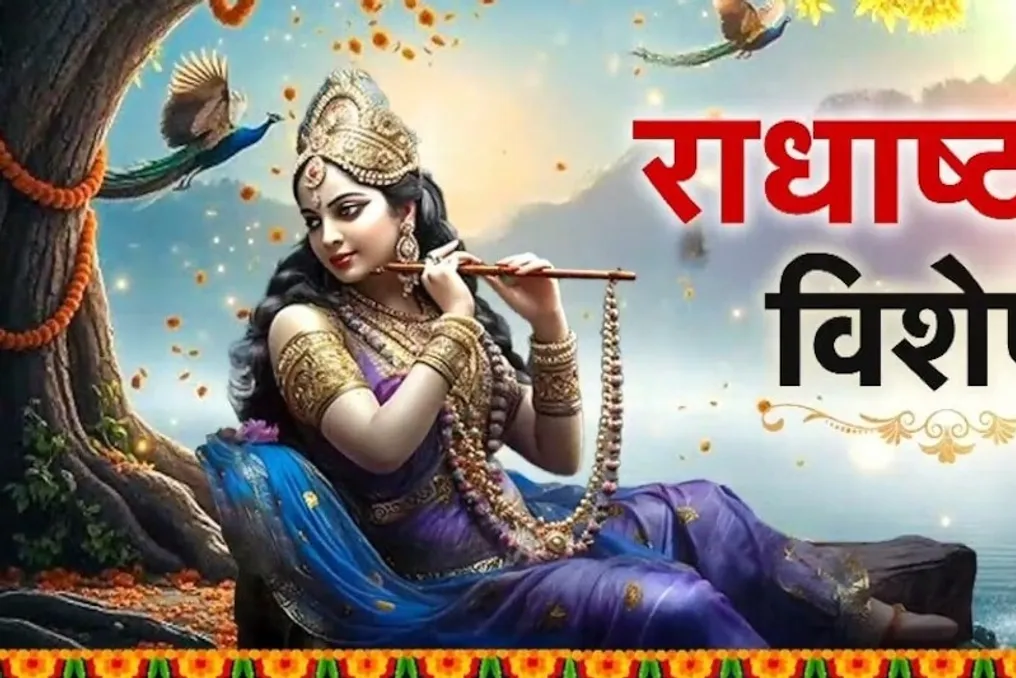
The love between Radha and Krishna is perceived not as ordinary earthly passion, but as divine and spiritual love. According to beliefs, when Lord Krishna played his flute in Vrindavan, the gopis forgot everything and yearned for him, following the melody.

Poetic works also contain a beautiful description of the influence of Krishna's flute. As soon as the melody reached their ears, the gopis forgot social restrictions and worldly bonds, heading towards Krishna. Among these gopis, Radha held a special place. Their love in the tradition of devotion symbolizes the union of the soul and God.

Did Radha and Krishna Marry?

Different religious traditions hold varying opinions regarding the marriage of Radha and Krishna. According to legends associated with the Brahmavaivarta Purana, the marriage of Radha and Krishna took place in the Bhandir forest at Brahma's initiative. It is believed that many deities witnessed this wedding.

The Bhandir forest, located near Vrindavan, remains an important religious site today connected to this story of Radha and Krishna's marriage, where one can see places and traditions related to this event.

What Happened After Krishna Left Vrindavan?

Over time, Lord Krishna left Vrindavan and went to Mathura, and then to Dwarka. Meanwhile, Radha's life remained connected to Barsana and Vrindavan. After Krishna moved to Mathura and then to Dwarka, meetings between Radha and Krishna became extremely rare.

It is recounted that they met once in Kurukshetra. At that time, Lord Krishna arrived from Dwarka to Kurukshetra during a solar eclipse. Nanda Baba and many gopis and gopas from Vrindavan were present there, and it was at that moment that Radha and Lord Krishna met.

Radha and Krishna's Last Meeting in Dwarka

There is a well-known mythological story concerning Radha and Krishna's last meeting in Dwarka. According to legend, having freed herself from her primary duties, Radha went to Dwarka to meet Lord Krishna. She visited his palace and met him there.

It is said that Krishna was overjoyed to see Radha. At Radha's request, Krishna assigned her one duty in the palace. After this, Radha lived in Dwarka for some time, helping with palace affairs, and visited Lord Krishna whenever she had the opportunity. However, the royal atmosphere of Dwarka could not bring her the divine happiness and closeness she felt next to Krishna in Vrindavan.

Why Did Radha Leave the Palace in Dwarka?

Radha's life in Vrindavan was tied to the love and devotion to Krishna. After living in Dwarka, she realized that she no longer felt the divine love and attachment she once did. Gradually, she began to sink into sadness. Eventually, she left the palace in Dwarka and secluded herself in a quiet place.

Time passed. Radha grew weaker, and memories of Lord Krishna became deeper in her heart.

Krishna Appeared to Radha in Her Final Moments

According to the narrative, when Radha remembered Lord Krishna in the last hours of her life, He appeared to her. Lord Krishna asked Radha what she wished for. But Radha did not ask for anything for herself.

When Krishna asked her again to state her desire, Radha only said that she wanted to hear Krishna's flute. She wished to hear that very melody she heard in Vrindavan.

Radha lost her body while listening to the tune of Krishna's flute. According to tradition, Lord Krishna took up his flute and began to play just as he did in Vrindavan. Krishna continued to play, and Radha listened to that sweet melody. Immersed in the music of the flute, Radha gradually left her body. Mythology further asserts that Radha's divine soul merged with Lord Krishna.

Popular